
Your Cape Cod Garden in Late June
Your Cape Cod Garden in Late June
When Our Customers Have Questions, We Have Answers
June is an amazing time in the garden and landscape. There is an abundance of flowers, and an abundance of critters. Our customers come in asking about the amazing trees that are in full bloom right now, and about what is damaging their plants. Here are some of the questions that our customers are asking.
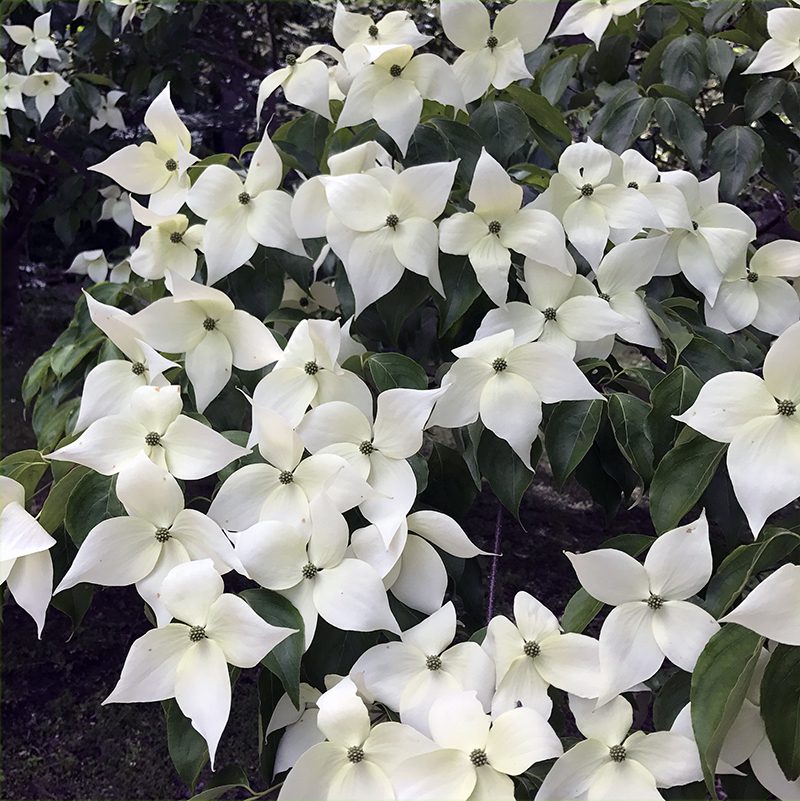
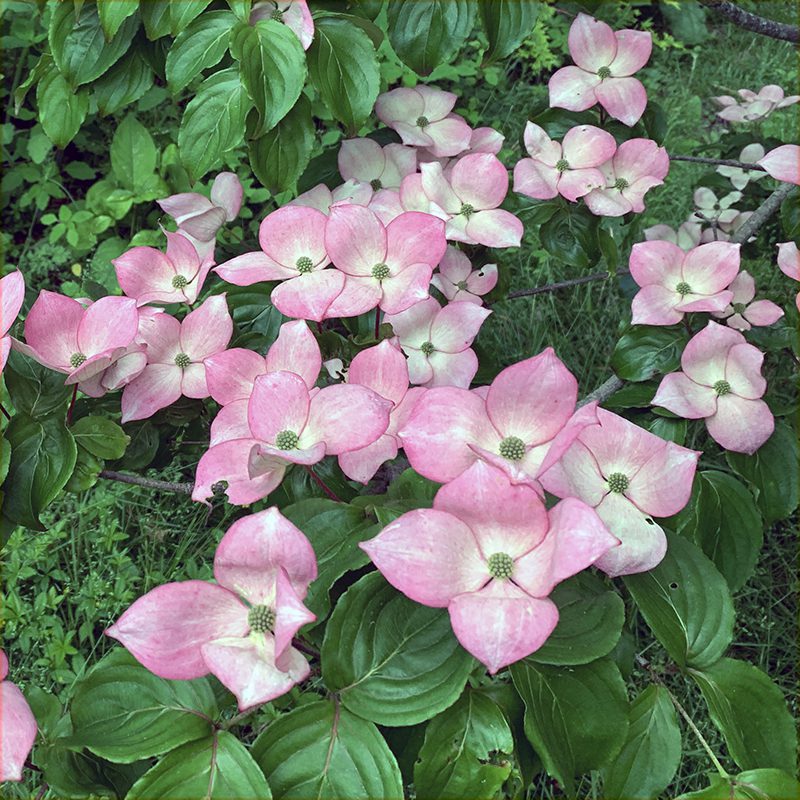
Q. What is the tree that is covered with white flowers right now?
A. Those are kousa dogwoods, Cornus kousa. These are also called Chinese dogwood, Korean dogwood, and Japanese dogwood. They are native to East Asia, but they do very well on Cape Cod. This is an especially good year for these trees. It’s typical for the kousa dogwoods to put on a spectacular show every three years or so, and 2025 is one of those years.
(Note: the other white-flowering tree that’s in bloom at this time is the lilac tree, Syringa reticulata. If you see a tree with fluffy, white spires in June, that’s the Syringa.)
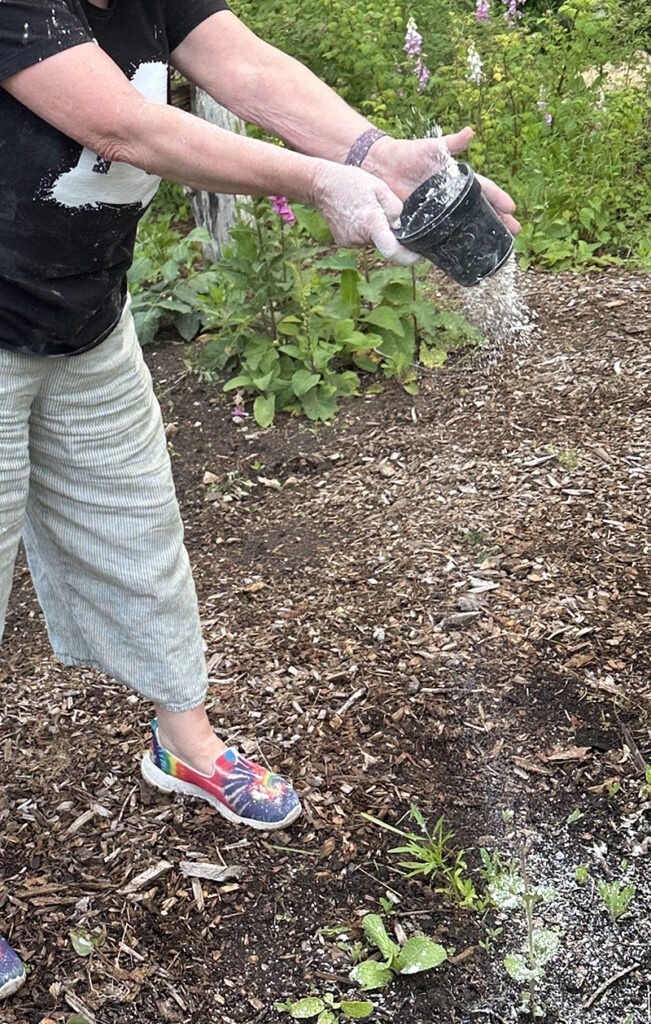
Q. Help! I planted zinnias for cutting flowers and something ate most of them. Those that are left now are getting shredded.
A. The two biggest problems for new zinnia seedlings are rabbits and earwigs. I was talking with staff member Roberta Clark about this just last week. We were saying that we’ve learned to do two things when we plant young zinnias. The first is to spray with Plantskydd immediately after planting so that the bunnies don’t eat them, and the second is dusting with DE (diatomaceous earth) to protect the plants from earwigs. Usually when the zinnias get taller and established in the garden both the rabbits and the earwigs are no longer a problem. But when the plants are young and tender, they may need first a spray, and then a dust. Be sure to spray and dust with DE when the plants are dry, so water the newly placed seedlings first, let them dry, then spray liquid rabbit repellant such as Plantskydd right on the foliage. Once that is dry dust with DE.

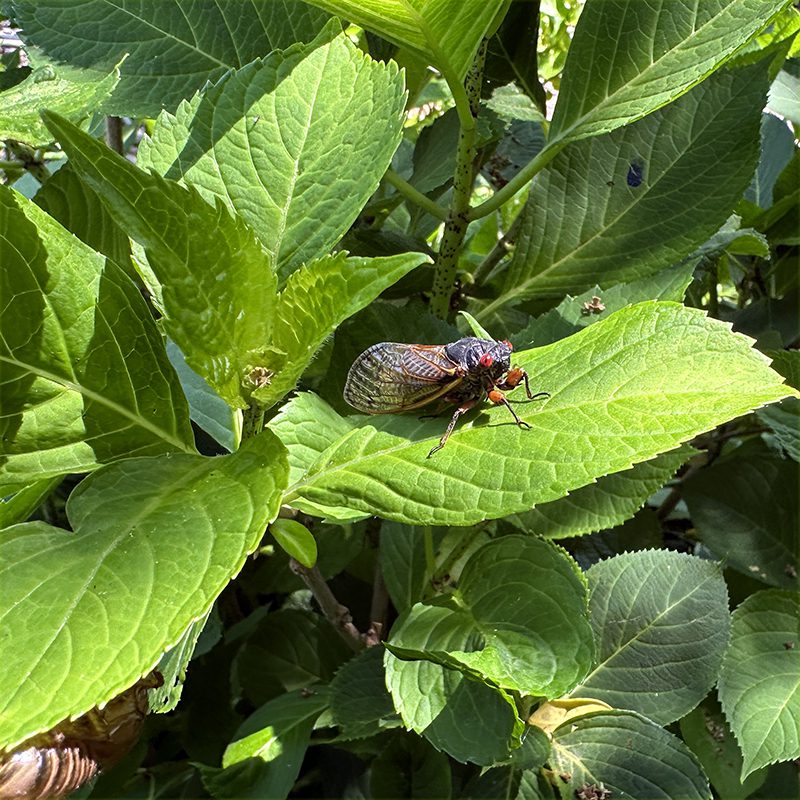
Q. There are cicadas in my neighborhood. I saw one on my hydrangea, and that shrub doesn’t have many flowers. Are the cicadas eating my hydrangea flowers?
A. The answer, short and sweet, is no. Cicadas aren’t eating flowers. If your shrub doesn’t have many blooms the plant either got cut back in the fall or spring, or it’s a variety that isn’t very bud hardy and the germ of this year’s flowers got zapped over the winter. Since flower buds on bigleaf hydrangeas are formed in the late summer for the following year, they should never get pruned back, neatened up, or cut shorter at any time. And some varieties are more likely to have those potential flower buds killed by cold winter temperatures.
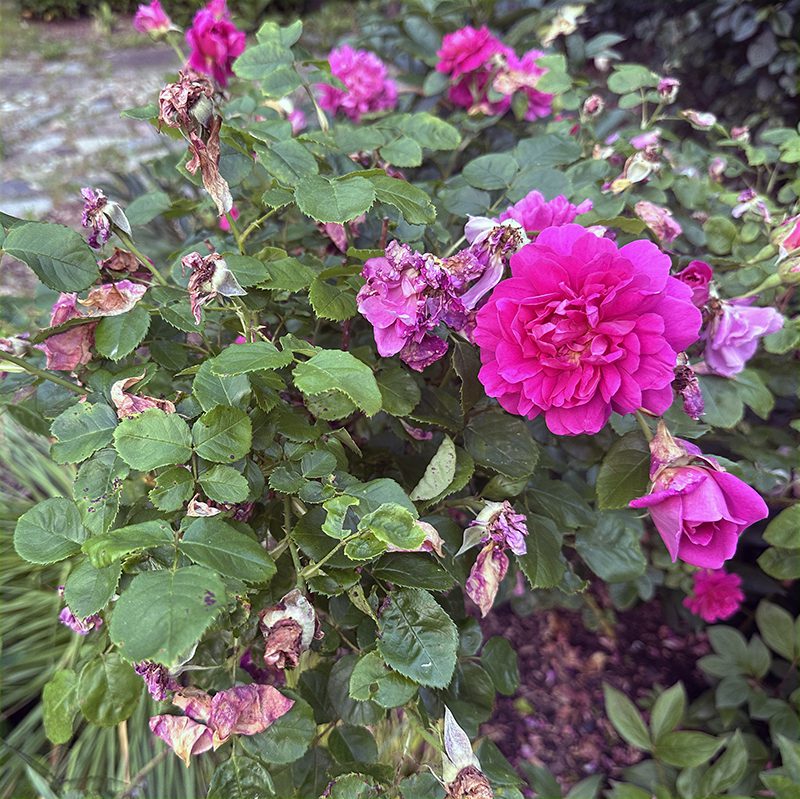
Q. My roses look terrible after the rainy weather we’ve been having. What can I do?
A. While our roses appreciate having the soil soaked, the rain can make the flowers look tattered and torn. To improve the look of your plants and hasten the production of more flowers, clip off those wilted, moldy, or finished blooms by cutting the stem right under where the old flowers were. This does three things to help. First, it removes the less-than-attractive old petals so the look of the plant is immediately improved. Secondly, you’ll be removing any developing seeds and this stimulates the shrub to produce more flowers. Finally, pruning always stimulates growth, and the flowers on roses appear on new growth. If you haven’t fertilized your roses this year, this is a good time to apply some Rose-tone to the ground around your plants.
Q. Will the smaller peony buds open after the first, large flowers finish?
A. Yes, those buds will open although the flowers will be a bit smaller than the original blooms. Clip off the finished or rain-damaged flowers so that no seeds are being formed elsewhere on the stems. You can also cut those buds and bring them into the house to open in a bouquet.

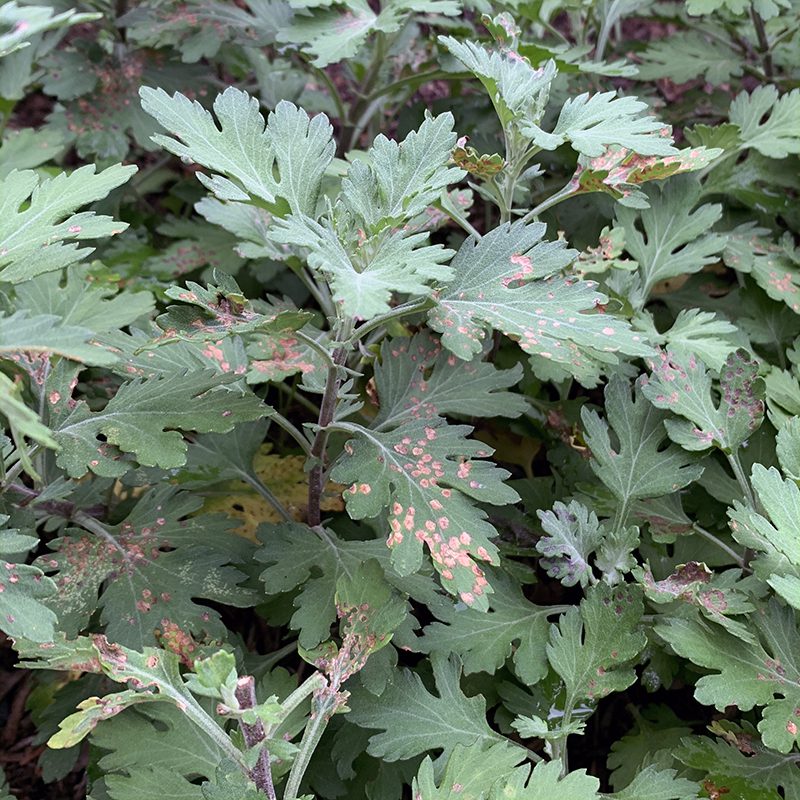
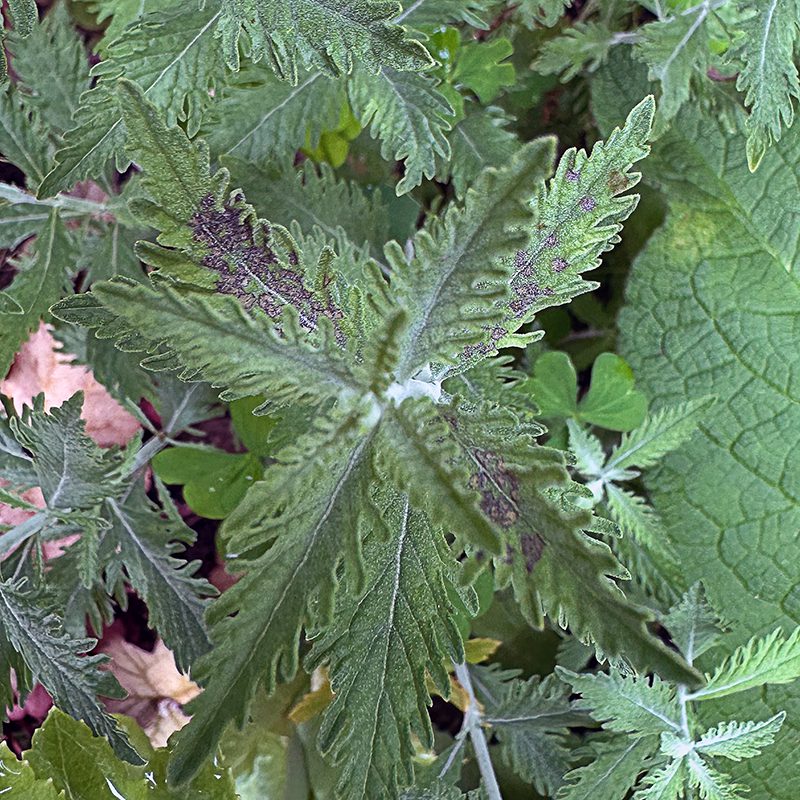
Q. There are dots on my bluebeard shrub and my Sheffield Pink mums. Is this a fungus?
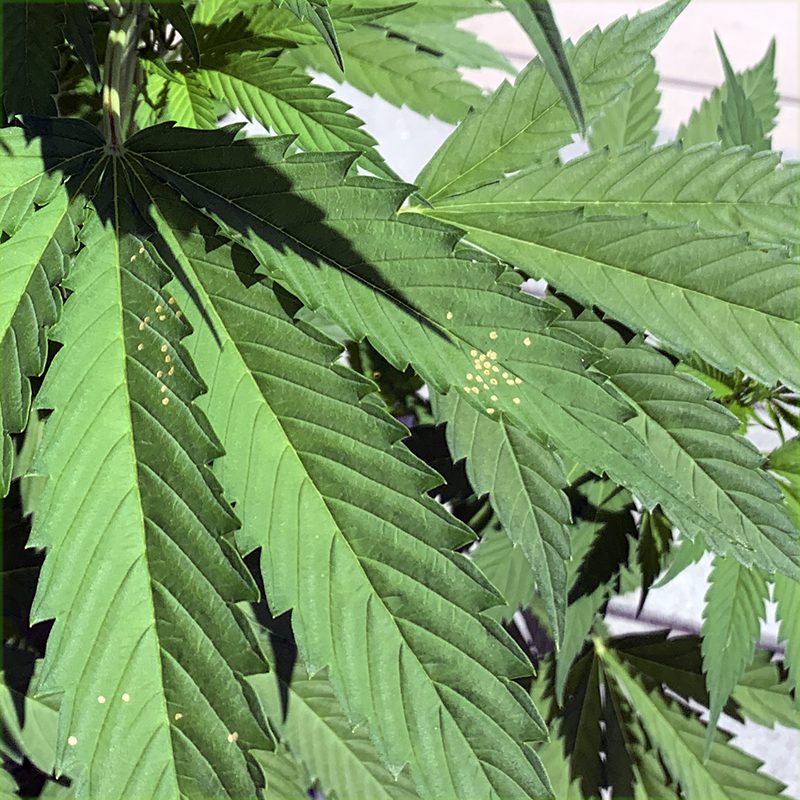
A. What you are seeing on these plants is probably four lined plant bug damage. This insect tends to target plants that have an herbal scent, such as your Dendranthema and Caryopteris. You might also see it on Russian Sage (Perovskia atriplicifolia), culinary sage (Salvia officinalis), and Cannabis. Occasionally, these insects feed on other plants as well. Recently a customer came in with a hydrangea that showed four lined plant bug damage.
Although the dots look similar to a leaf spot fungus, they are far more regular and grouped tightly together. You can see a photo of this insect here. There is only one generation of four lined plant bugs per year, and usually plants will outgrow the damage so treatment may not be necessary. If you want to knock back the population on certain plants, however, dust the plants once with DE at this time of year. These insects are hard to see since they hide when you approach. You can prune damaged leaf tips off of your Caryopteris in July if desired, since this plant flowers in the fall.
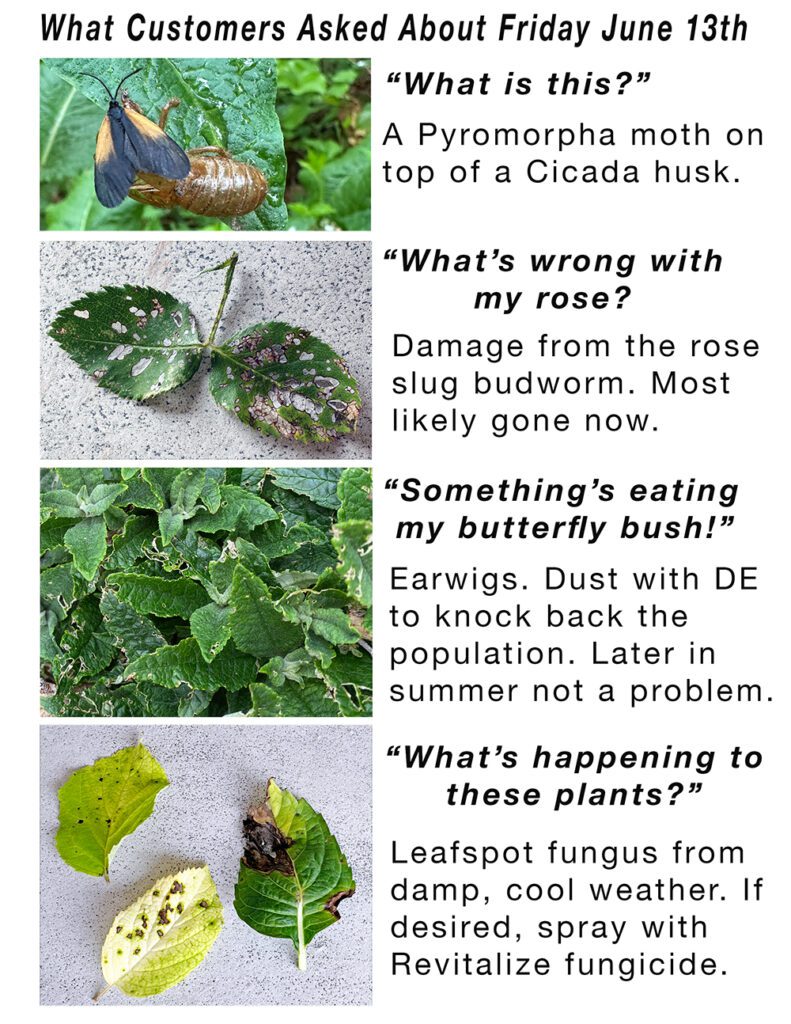
Here are some other issues and questions that people brought into Hyannis Country Garden last Friday.
Subscribe To Our Newsletter
Sign up for our weekly email about sales and events.