
Weed of the Week: Brambles
Weed of the Week: Brambles
Wild blackberries fill Cape landscapes with thorny canes.
Wild blackberries and other members of the genus Rubus are planted by birds throughout Cape Cod. They can be annoying because of their thorns, deep tap roots, and their ability to spread among existing landscaping. Some people leave them, thinking that they would like the berries, but this is usually a fantasy: these wild brambles make small, not-so-tasty fruits and the birds get them before people realize that they are there. Those who want to grow berry bushes are much better off buying a cultivated variety.
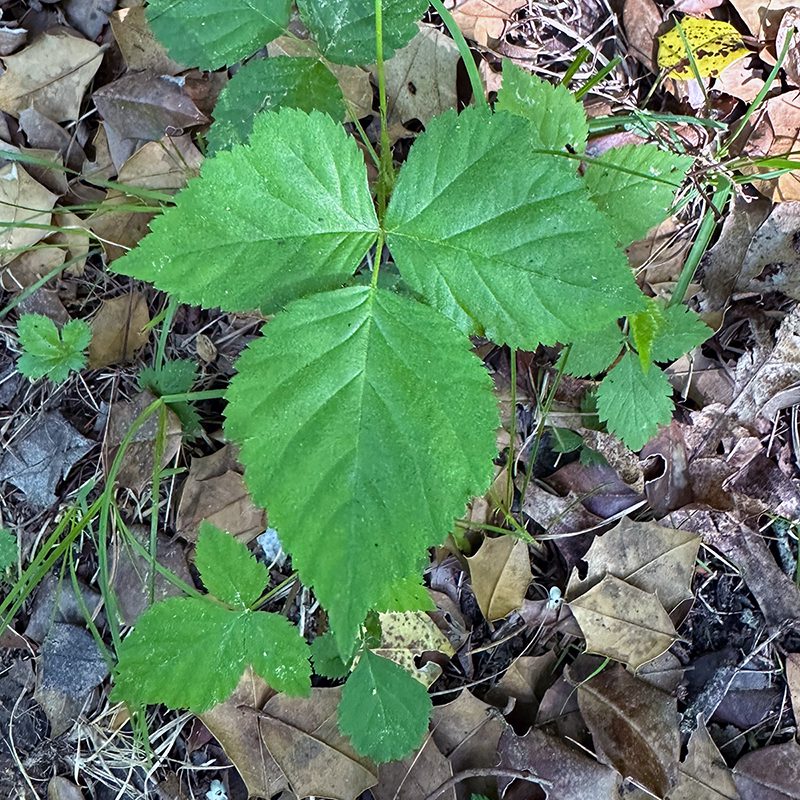
Bramble plants are frequently mistaken for poison ivy, since people notice the “leaves of three,” but it’s easy to tell the two plants apart if you look at the edges of the leaves. The edges of the Rubus leaves are jagged, also known in the plant world as serrated. Poison Ivy leaves, on the other hand, have smooth edges.
Brambles are best removed by pulling young ones – wear gloves! – and by cutting mature ones off at ground level. Since older plants will try and come back from the roots, remain vigilant and keep cutting off the stems that appear. Eventually you will starve the root system.
If you want to download the sheet about brambles, you can do so by clicking here.

Subscribe To Our Newsletter
Sign up for our weekly email about sales and events.