
Escape to Joy: Cape Cod Hydrangea Festival
Escape to Joy: Cape Cod Hydrangea Festival
Planning for the Festival and Keeping Your Hydrangeas Happy
The Cape Cod Hydrangea Festival is only a few days away, and our signature shrubs are putting on their finest for the event! Hydrangeas on the Cape are preparing the strut their stuff with hundreds of flowers in shades of blue, purple, pink and white. The rainy summer of 2023, followed by a moist fall and mild winter have helped the Hydrangeas grow full, lush and flower-filled. Here are some tips for making the most of this 10th anniversary festival, and for helping the Hydrangeas in your yard to thrive.
1. Spend time on the Cape Cod Hydrangea Festival Website.
The official website has a digital brochure you can page through to see lists of events and a day-by-day list of open gardens. Just under that brochure is a day-by-day list of gardens that has full descriptions of the property, addresses and other information. If you download the brochure, and print it out, you can then go through the descriptions and star the gardens that sound appealing, and plan out your route for garden visits on any particular day.

2. Visiting gardens? Have a notebook, sun hat and a phone charger.
You’ll want to take plenty of photos when you visit gardens, so be sure to have a phone charger in your car or a fully charged battery in your camera. If you see plants that you’re not familiar with, ask the garden owner to write down the name of the variety in your notebook: take a photo of the plant, then put that page in your book in front of the plant and take another picture.
Wear a hat to protect you from the sun, and have your refillable water bottle in the car. Most properties do not have restrooms that are open to the public, so make note of the public libraries or fast-food restaurants that will be along your route.
3. Take advantage of the educational opportunities.
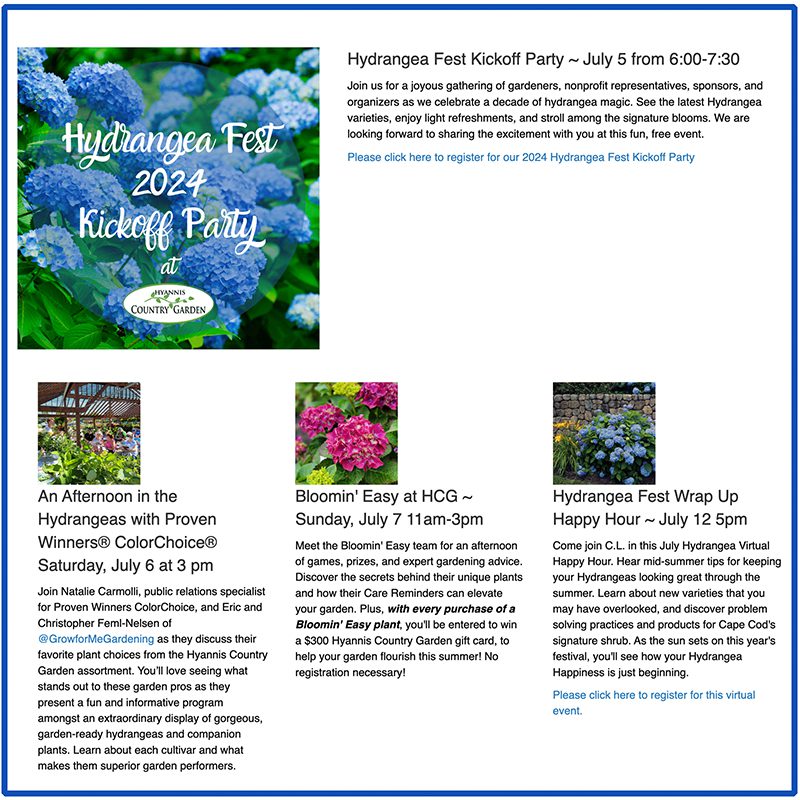
In addition to garden visits, there are many opportunities to learn from national Hydrangea experts. This festival draws the major Hydrangea breeders and branders to the Cape, and many of them are speaking in several venues. Register for the special events at Hyannis Country Garden here. You can also download a flyer that lists these events here, and share it with friends and family.
4. Make note of the many new Hydrangea varieties.
There are so many wonderful Hydrangeas available, you’ll be able to find just the right one for your garden. From the blue macrophyllas and serratas (mopheads and lacecaps) that thrive in part shade to the smooth arborescens and white-to-pink panicles that love full sun, there’s a plant that’s perfect for your property. Come into our Hydrangea Headquarters at Hyannis Country Garden to appreciate the range of Hydrangeas in different colors, sizes and types. When you visit gardens on tour, ask for the names of the Hydrangeas you see.

5. Keep your Hydrangeas happy with deep soaking and mulch.
Hydrangeas don’t want to be in constantly wet soil, but they do want to be deeply watered if there hasn’t been a weekly, soaking rain. These plants appreciate good drainage, which is one reason they do so well in our sandy soils. But when you water these shrubs, make sure to water the entire area beyond the dripline for an extended period…in other words, watering by hand, aiming directly at the base of the plant, isn’t enough. An inch or two of mulch around your Hydrangeas will help the soil to stay moist in between waterings.
6. Plant blue hydrangeas where they are shaded in the afternoon.
Although our signature plant will grow in full sun, and be lovely in early July, those mopheads and lacecaps that are in full sun will brown out pretty quickly. Their leaves and large flowers lose moisture quickly on hot, sunny days, and they will wilt even if the soil is moist because the plants can’t dry up the water fast enough to replace what the plant is losing through transpiration. If they wilt repeatedly, those flowers will turn brown. Plants that are shaded in the mid-day are more likely to keep their blue flowers into their “antique phase” in September.
7. Some reminders about Hydrangea color…
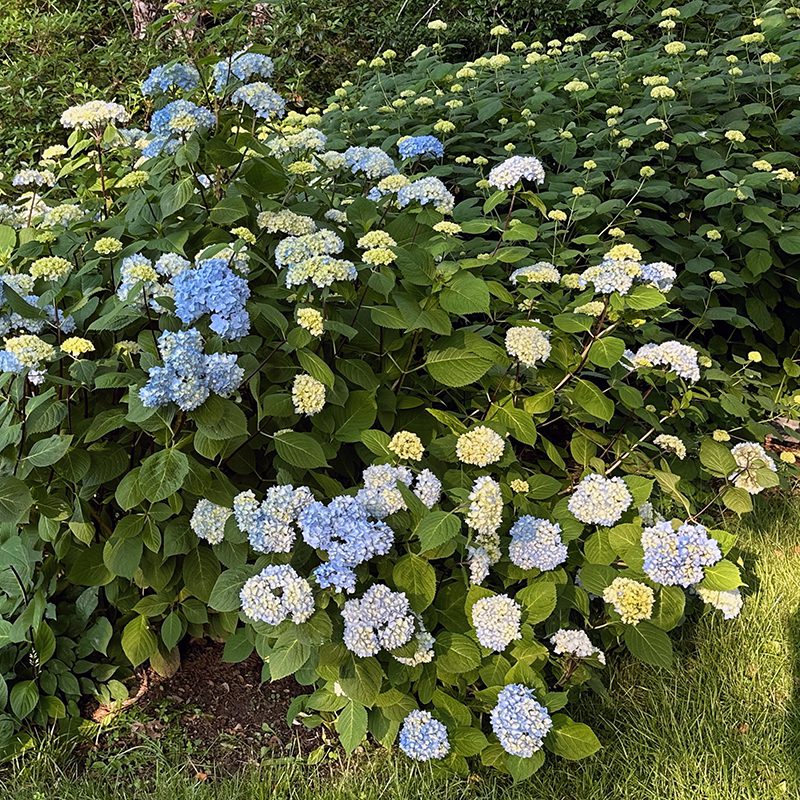
- The color of blue Hydrangeas develops over time as the flowers age. Just because they start out a greenish-cream color doesn’t mean that you need to use amendments to turn them blue. If you haven’t changed the natural pH of your soil, your mopheads and lacecaps will naturally be blue.
- Lime spread repeatedly on a lawn – or lime that is leaching from a nearby foundation or stone walkway – can raise the pH of your soil and turn mopheads and lacecaps to lavender or pink. You can lower the pH again using sulfur or aluminum sulfate. (Water your plants well before applying aluminum sulfate, and don’t over-do it. Making the pH of your soil too low can cause other Hydrangea problems.)
- No, coffee grounds do not acidify soil. Neither do pine needles or oak leaves. As these organic materials break down, pH comes to neutral. Besides…most of the acid in coffee came out into your coffee cup and you drank it!
- Not all types of Hydrangeas change color in acidic or alkaline soil. Smooth Hydrangeas (Hydrangea arborescens) and panicle types (Hydrangea paniculata) won’t ever be blue. Their flowers may turn greenish or pinkish as they age, but only a can of spray paint would turn them blue. (Not recommended!)

As your Hydrangea flowers grow larger and heavier, some varieties are prone to leaning toward the ground. See our previous blog post about Hydrangea stem strength.
Subscribe To Our Newsletter
Sign up for our weekly email about sales and events.