
Gardening With Purpose: Harvesting Garlic
Gardening With Purpose: Harvesting Garlic
It seems like just yesterday we were planting garlic cloves on Cape Cod. Now we’re getting close to the time when the heads of garden are harvested! Here is what you need to know about this crop on Cape Cod.
Right now, cut off the developing flowers. These are called “scapes.” They are cut so that the plant puts all the energy into the heads in the two or three weeks before harvest.

Garlic is harvested when the plants start to turn yellow.
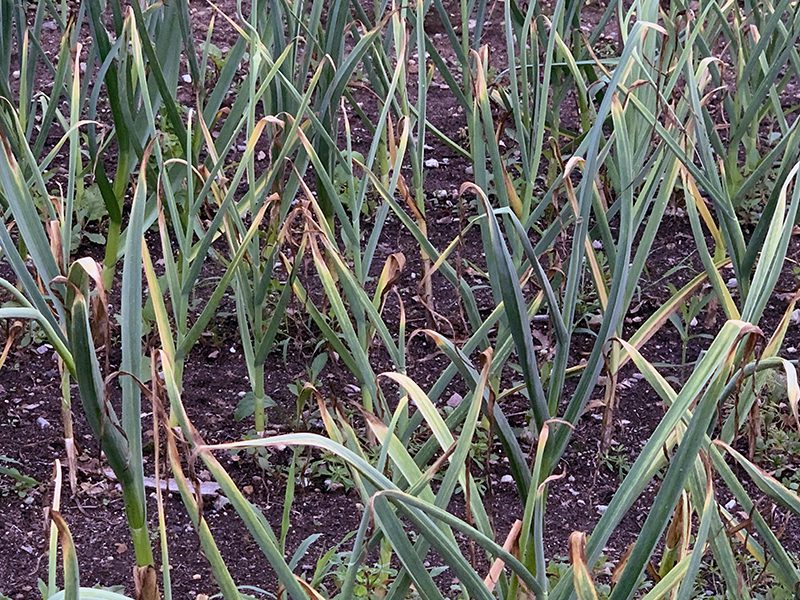
Pull the garlic plants and leave the top leaves attached.
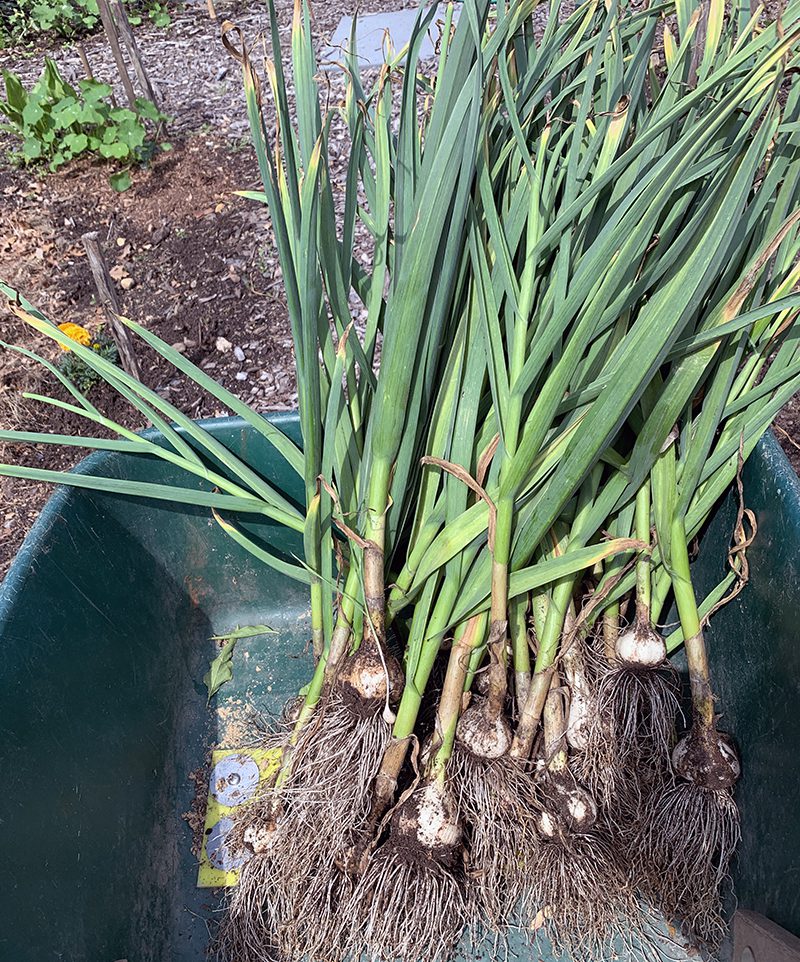
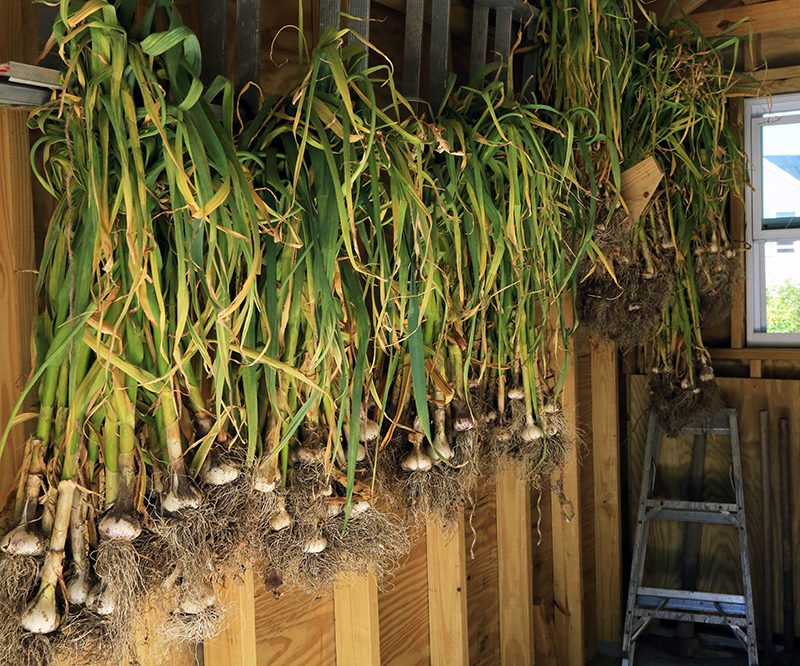
Tie bunches of garlic plants to hang while they “cure.”
It takes garlic a couple of weeks to dry out so that the roots are almost gone and the heads have their papery covering. Hang them in bunches in a shed, covered porch or garage. Know that they will have a very strong garlic fragrance…the one and only time we hung ours in the garage, my car smelled like a first-class pizza restaurant for a month. Now, we hand them in a garden shed and keep the windows open.
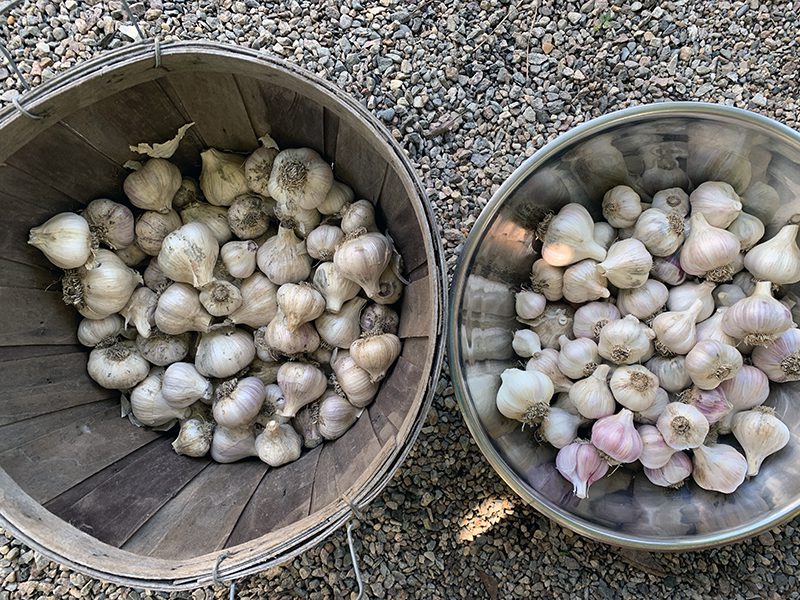
After the heads are somewhat dried, cut off the tops and the remainder of the roots, and brush off the dirt.
Posted in Uncategorized
Subscribe To Our Newsletter
Sign up for our weekly email about sales and events.