
Planting Shrubs and Trees on Cape Cod
Planting Shrubs and Trees on Cape Cod
Sandy Soils, Supports, and Watering
As the nursery at Hyannis Country Garden fills up with shrubs and trees, it’s a good time to remind our customers about recommended planting practices for Cape Cod. Most people on Cape have very sandy soils, and the best practices for planting in these conditions have changed since most of those folks started gardening. Additionally, it’s important to pay attention to how the plant may have been prepared for shipping, and to know how that shrub or tree is best handled after planting. Here are three tips for success for those who are installing new plants this spring.
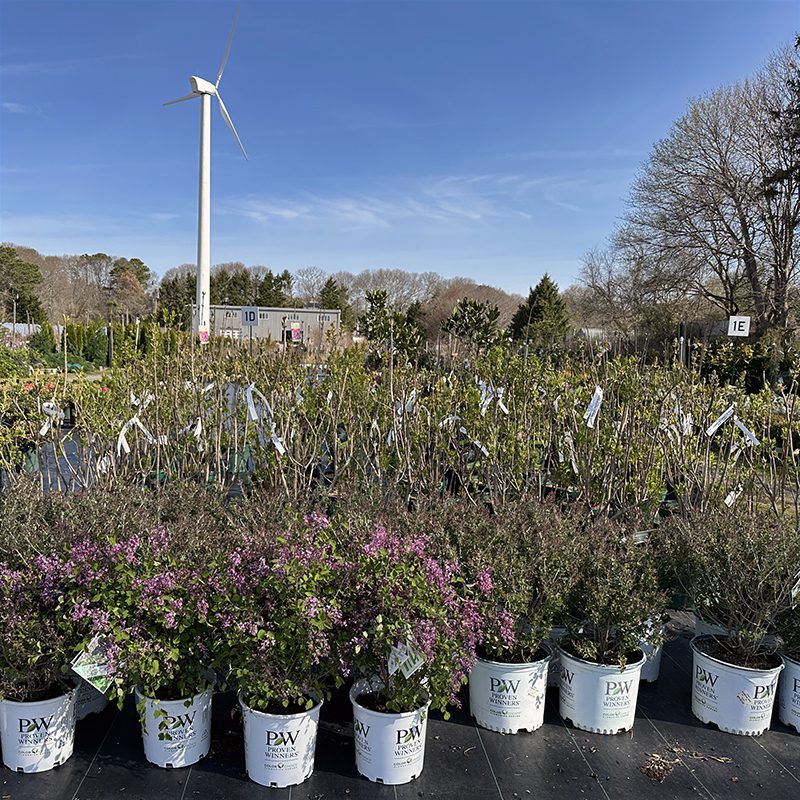
1. Amend from the top down, not in the planting hole.
University research has shown that people are better off if they improve soil as nature does it, from the top down. The old-school practice was to add organic matter to the planting hole, while the research from about 20 years ago showed that filling the hole with native soil, and then covering the soil surface with compost and mulch, created stronger shrubs and trees into the future. You can download and print our handout that shows this method here.
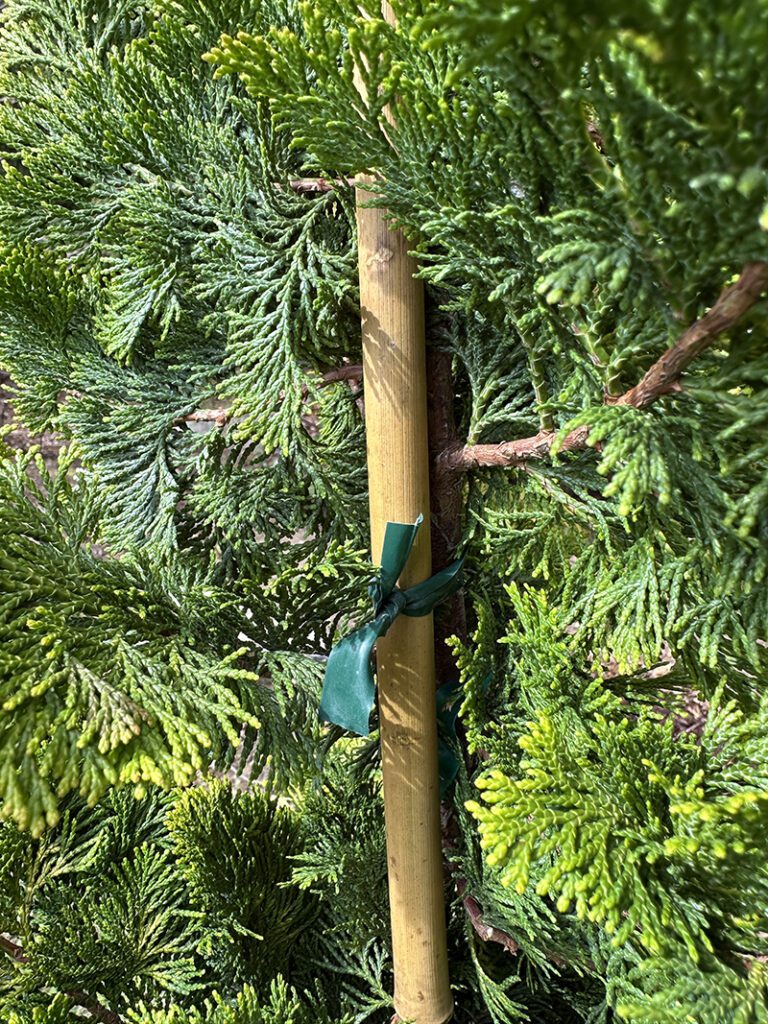
2. In most cases, remove staking that has come with the plant.
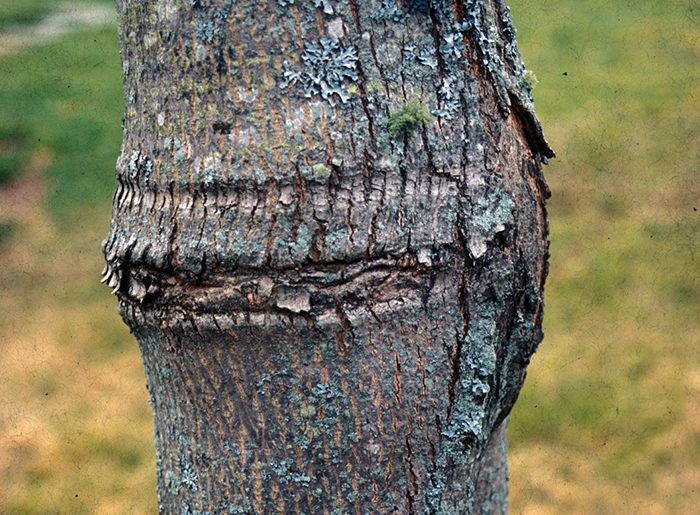
Some stakes are included with smaller shrubs and trees because they were used to keep the plants vertical at the grower, and others are put in place so that the plants are kept upright or otherwise protected during shipping. Although it doesn’t hurt to keep those supports in place for the first year, they aren’t always needed and can become a problem if they are left in place. The plastic ties used to hold the plant in place don’t degrade quickly, and if those ties are knotted not stapled, they don’t fall off as the plants grow. I have seen shrubs and trees with dead tops because the growing stems were constricted by green plastic ties, and the plants were choked.
Additionally, plants that are staked don’t grow as strong as those that are allowed to sway in the wind! It’s the action of movement in breezy locations that produce hormones that signal a plant’s root system to grow. It makes sense, doesn’t it: the plant has the means to tell that it’s in an exposed location and will need a strong root system to thrive in such an area.
If your new shrub or tree is very top heavy, and the root ball isn’t large enough to hold that plant upright, you might want to stake it for the first year. In such cases using three cords that go to individual stakes is better than leaving the single stake next to the stem. You’re less likely to forget about the three supports but the single stake is more likely to be hidden in the plant and forgotten over time.
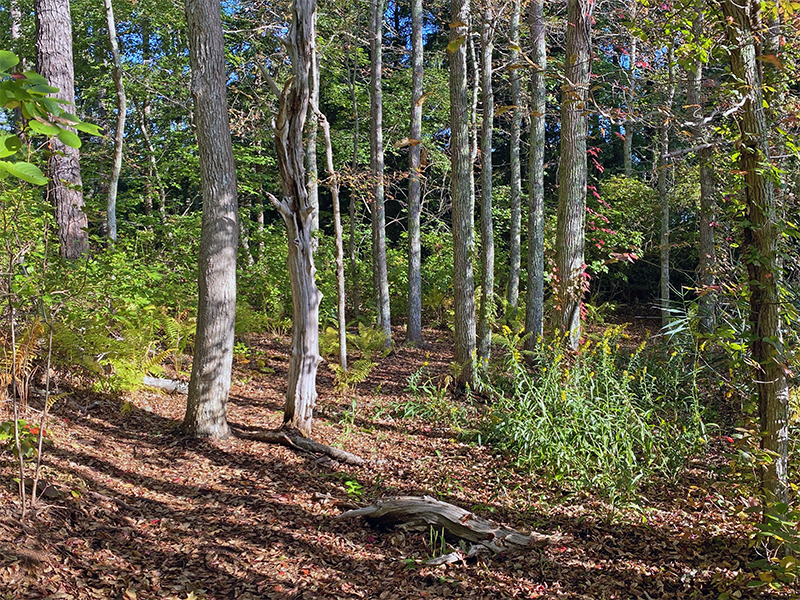
3. Watering newly placed shrubs and trees.
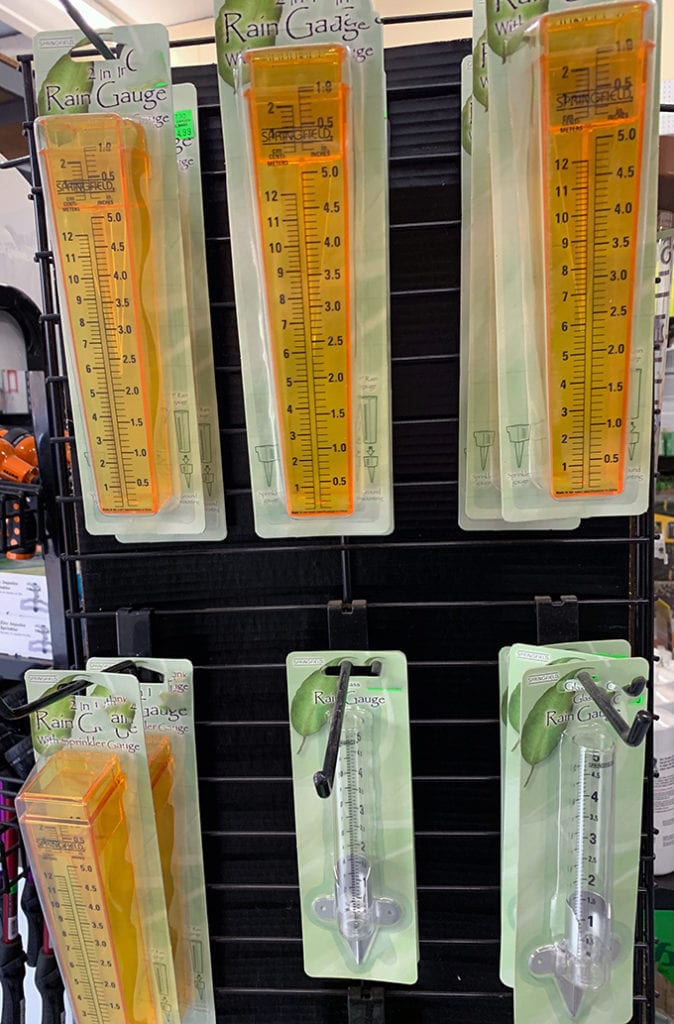
To give your newly installed plants the best start, water the entire area deeply once a week if we haven’t received an inch of rain. Water using a sprinkler, not by hand. The idea is to dampen the soil all around the new plant, not just the rootball. (Drip irrigation is often set up to water the ball itself, but not the area where you want the roots to grow.) A rain gauge is a good investment for determining if Mother Nature has watered your plants well or if you need to supplement with a sprinkler.
Subscribe To Our Newsletter
Sign up for our weekly email about sales and events.