Just as the cool weather plants such as bitter cress and chickweed disappear, the heat loving weeds are germinating, growing, or coming into bloom. Here are some of the most common weeds we begin to see in July, and tips for their use or their control. Notice that I’m not saying total elimination…weed seeds remain viable in the soil for years and years, and the perfect conditions for their germination are warm soil, sunlight and an occasional rain shower. It’s pretty much impossible to get rid of weeds forever.
Here are some common summer weeds, and below these photos, suggestions for weed control.
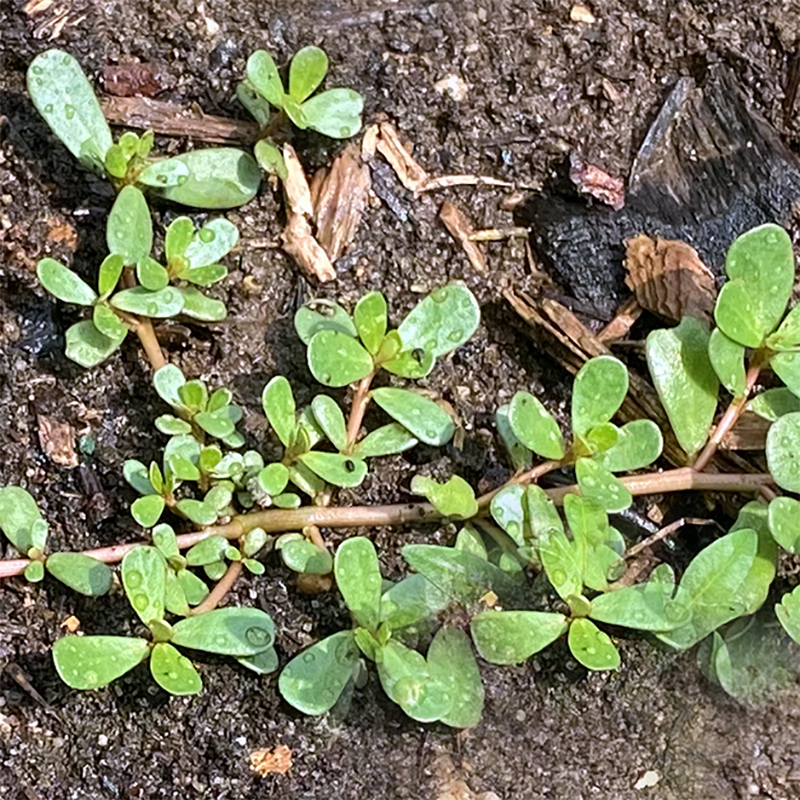
Common purslane (Portulaca oleracea) is a low-growing, succulent annual. It thrives in sunny places and will pop up in compact, bare areas of lawns, in stone walkways and in vegetable or flower gardens. There are many people who pull this weed, wash it well and then add the leaves to their salad. It’s a fairly easy weed to pull out of the ground. In vegetable gardens, a hoe works well on this plant. (Check out the Spear Head Hoe in our Garden Room!)
Crabgrass (Digitaria sanguinalis) loves hot, dry places, which is why you’ll see it flourish in lawns with compact soil and bare areas. It is an annual weed, so if you don’t like it, it’s smart to get rid of it before it goes to seed. Fun fact: crabgrass was brought to this country as a grain crop! Immigrants who came here didn’t know what growing conditions they would find, but they knew that this millet relative would grow anywhere…and so it does. Control in the lawn is best done by improving the growing conditions for the turf: top dress with compost to keep your soil healthy, mow 3″ high or taller, water deeply but less often. You might also consider adding clover to the lawn. Come into the store to talk with our Garden Room staff about how to have a thriving lawn that out-competes the crabgrass and other weeds.
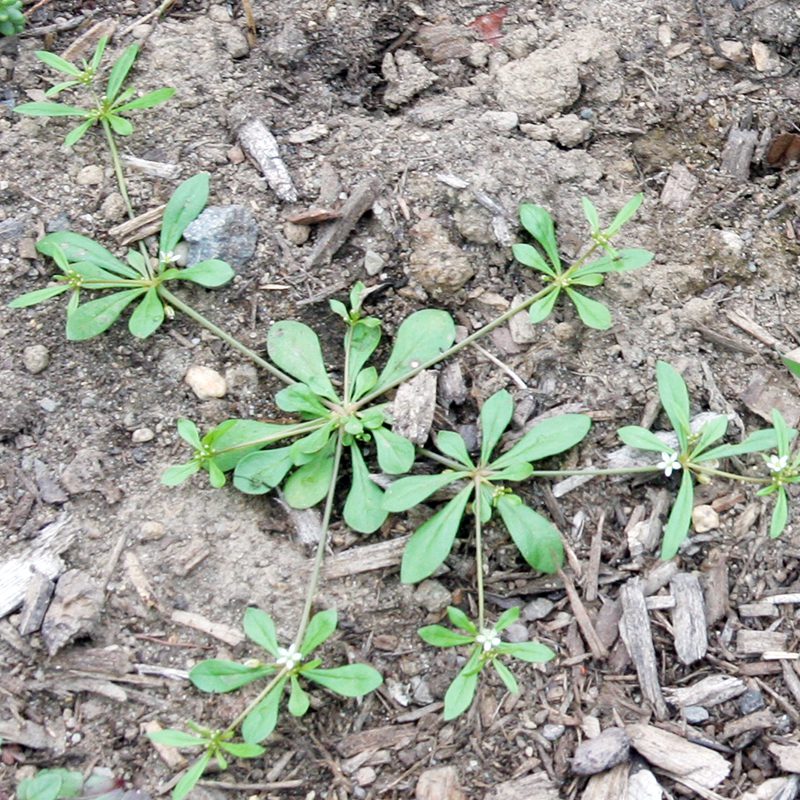
Carpetweed (Mollugo verticillata) is very flat and has a delicate appearance but a tough constitution. Carpetweed thrives in disturbed soil and is one of the weeds we see in gravel driveways or growing between pavers. It has a taproot, but since it’s so small the plant is easy to pull out by grabbing it with your gloved hand and yanking straight up. This weed is native to tropical America. The best way to keep carpetweed out of your lawn is to maintain thick, healthy turf as described above.
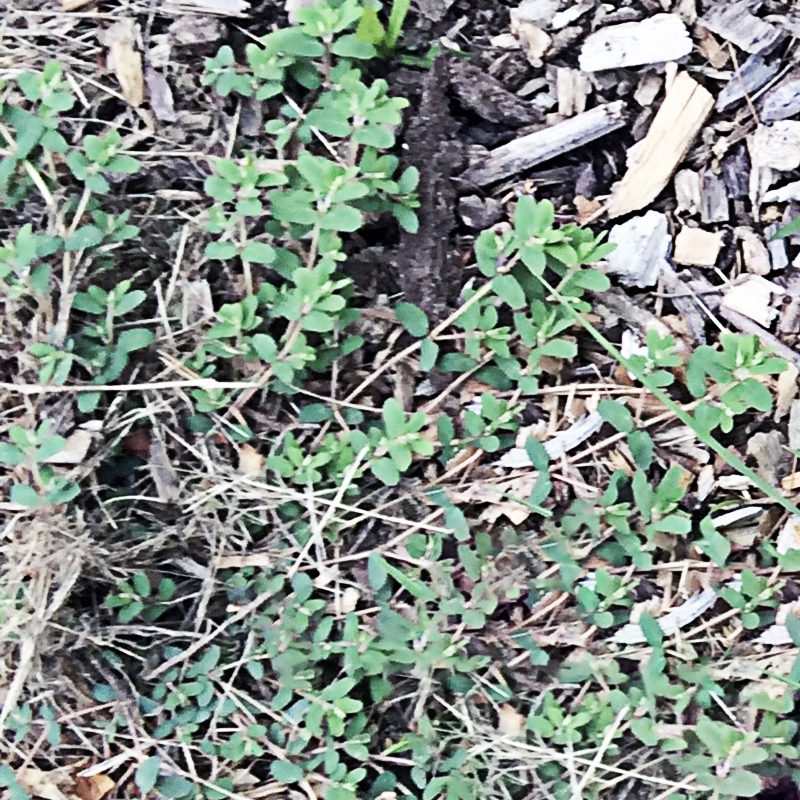
Another flat, heat-loving plant is spotted spurge (Euphorbia maculata). This plant is frequently seen growing with carpetweed, since they both thrive in similar conditions. This plant is native to the USA. If you need a plant that will thrive in sand, this annual is for you. But if you want to pull it, wear garden gloves and yank it straight up – the taproot comes out easily.
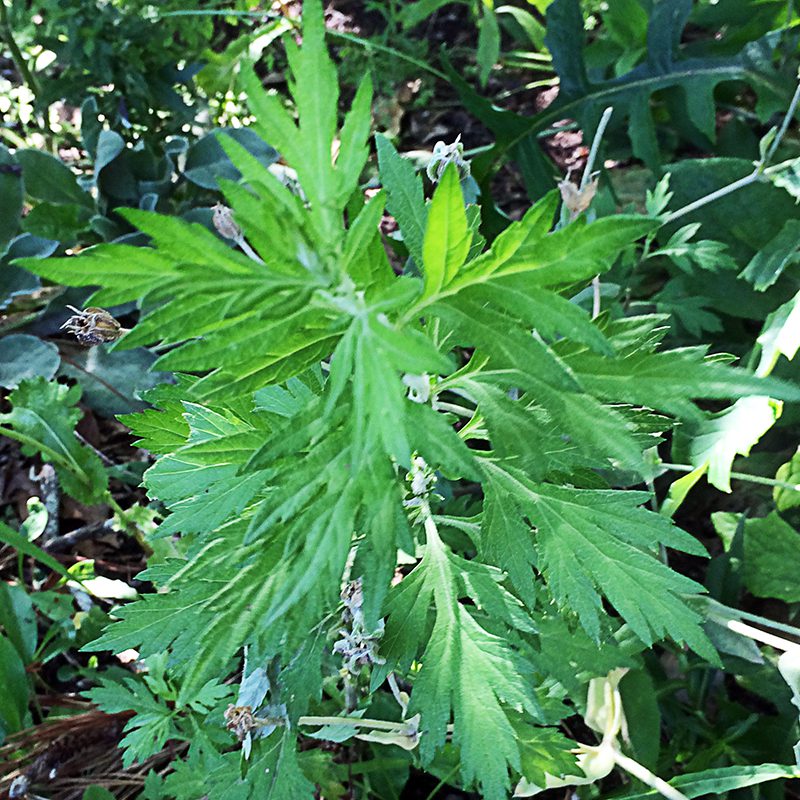
Many gardeners battle mugwort (Artemisia vulgaris), a perennial plant with an extensive root system. This plant is spread by birds, since they eat the seeds and distribute them. Unlike the annual weeds pictured above, this is a hard weed to eliminate once it gets established, so learn to recognize it and pull it out. The underside of the leaves is silver, which is one way to distinguish it from other perennial plants. Mugwort is not a native plant, and its pollen is one of the causes of hay fever. In addition to pulling and digging, try using an herbicide according to directions, applying repeatedly to weaken the root system.
“What is a weed? A plant whose virtues have not yet been discovered.” Ralph Waldo Emerson
Clearweed (Pilea pumila) is native to eastern North America. It grows in shady locations and moist soils, so you may see it near your hose hookups, or under taller plants. This is a weed that you might consider leaving where you can, since caterpillars of several butterflies – including the Milbert’s Tortoiseshell, Comma, Red Admiral, and Question Mark – feed on the leaves.
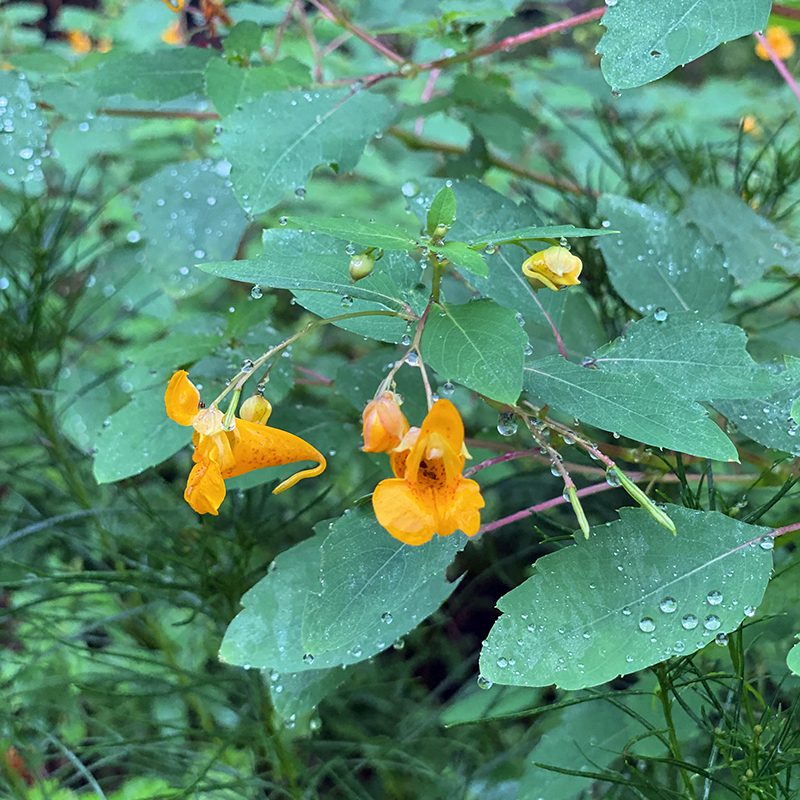
Jewelweed (Impatiens capensis) is another native weed that you might want to leave in some parts of your landscape. The flowers are favorites of hummingbirds, butterflies and bees, and caterpillars of several types of moths eat the leaves.
Methods of Weed Control
One of the best ways to control weeds is to keep your garden or lawn healthy and filled with thriving plants. A flower garden that is filled with perennials or a lawn where the grass is lush will host fewer weeds. Bare soil is an invitation for weeds, so using mulch to prevent the light from triggering seed germination is helpful. Mulch should be applied either every year or every other year, an inch or two thick; more mulch isn’t better, since it can absorb rain water or irrigation, and prevents good circulation of air in the soil. Plant roots need oxygen just as much as water! Read more about over-mulching here.
In addition to weed control, organic mulches also help to amend soils on an on-going basis, and help to hold moisture in the soil. Regular mulching is how nature keeps soil healthy, as leaves and stems fall to the ground and decompose in place. Since home gardeners often remove fallen leaves and stems, using an organic mulch is a way to copy how nature improves all soils. Organic matter, applied on the top of the ground on an annual basis, is the way to improve both sandy and clay soils.
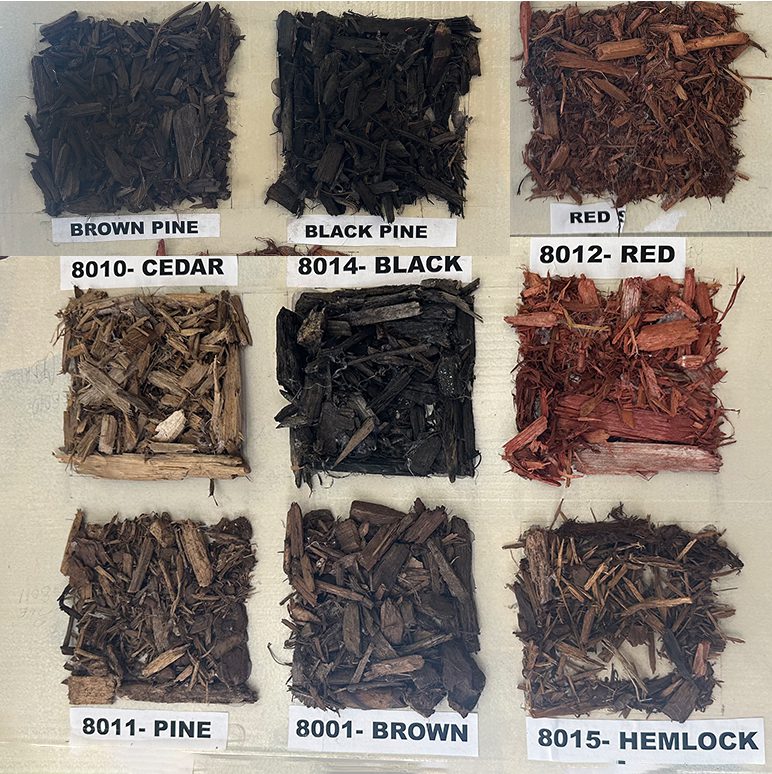
An inch or two of these fine mulches is the perfect amount for controlling weeds. Which mulch you choose is totally dependent on how you want it to look, since they all function in the same way. The top three mulches in this photo are available in bulk, either picked up or delivered. The bottom six types are available in bags.
Mulch can be helpful for weed control in a vegetable garden. We stock Mainely Mulch, pine straw, buckwheat, and cocoa hulls that are all good mulches in vegetable gardens. See the chart below.
Here is our list of mulches, with current prices as of July, 2024.
There are times when our customers want an herbicide to help with weed control. There are many options available, including those that are labeled for organic gardening. Some herbicides will kill certain weeds but not lawn grass, while others will kill whatever they touch. Come into the store to see the range of products that are available. Note: it’s very important to read the labels on weed control products. Some plants, such as our beloved Hydrangeas, are very susceptible to herbicide damage, even when the product isn’t over-applied.
There are numerous weed control products available in our Garden Room. Bring your reading glasses when you come in, or ask for our help in reading the labels, so you will find right product for your situation.