
Hardy Hibiscus For Cape Cod Gardens
Hardy Hibiscus For Cape Cod Gardens
Perennial flowers for the August garden.
Last Friday three of my consultation customers came into the store to ask about perennials that would add flowers to their garden later in the summer. All of these people were seeing that while their flower beds were filled with color in May and June, those flowers were finished or winding down in July. “What can I plant that will flower in August?” they asked. One of the plants I suggested was the hardy hibiscus (Hibiscus moscheutos varieties) because this plant is reliable and large, impressive flowers. Here are tips for success for growing this plant on Cape Cod.
Plant hardy hibiscus in full sun.
This perennial should be grown in at least five hours of direct sun that includes the noon hour, when the sunlight is strongest.

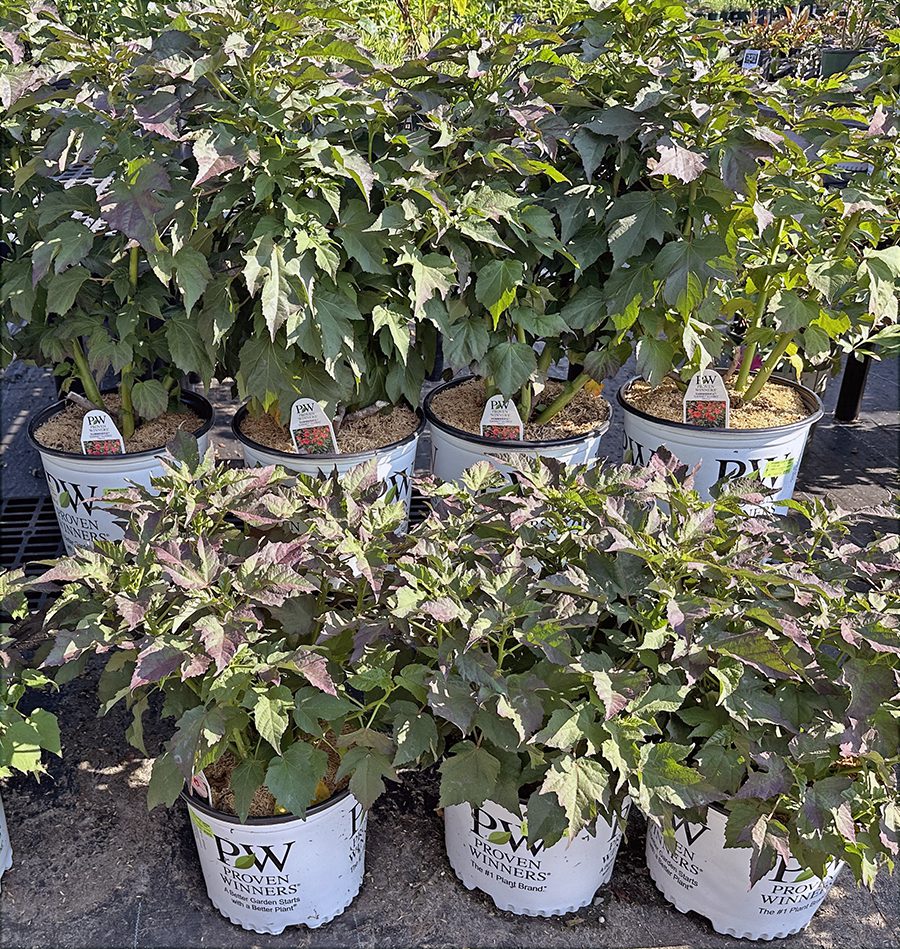
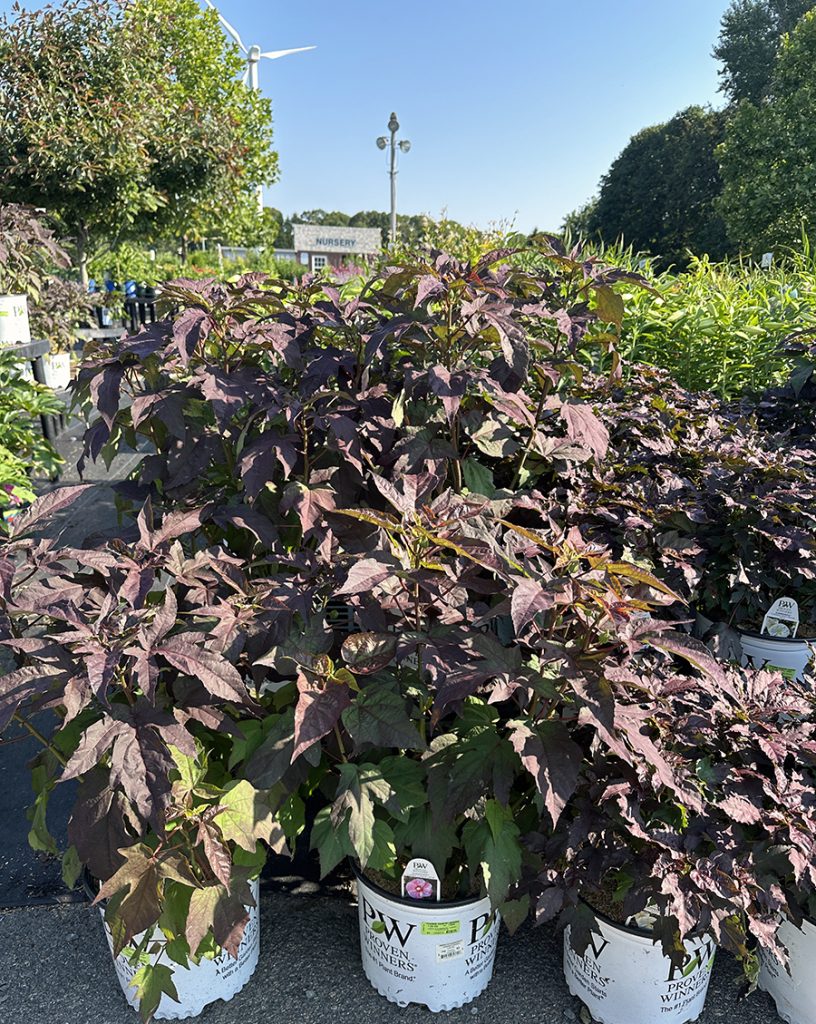
Hardy hibiscus varieties come in several sizes. Use the variety that is the right height for your garden.
There are some Hibiscus moscheutos that grow very tall, and others that only reach three to five feet tall. Read the label in the plant you select to see how high that variety will grow so you can place it appropriately in your garden.
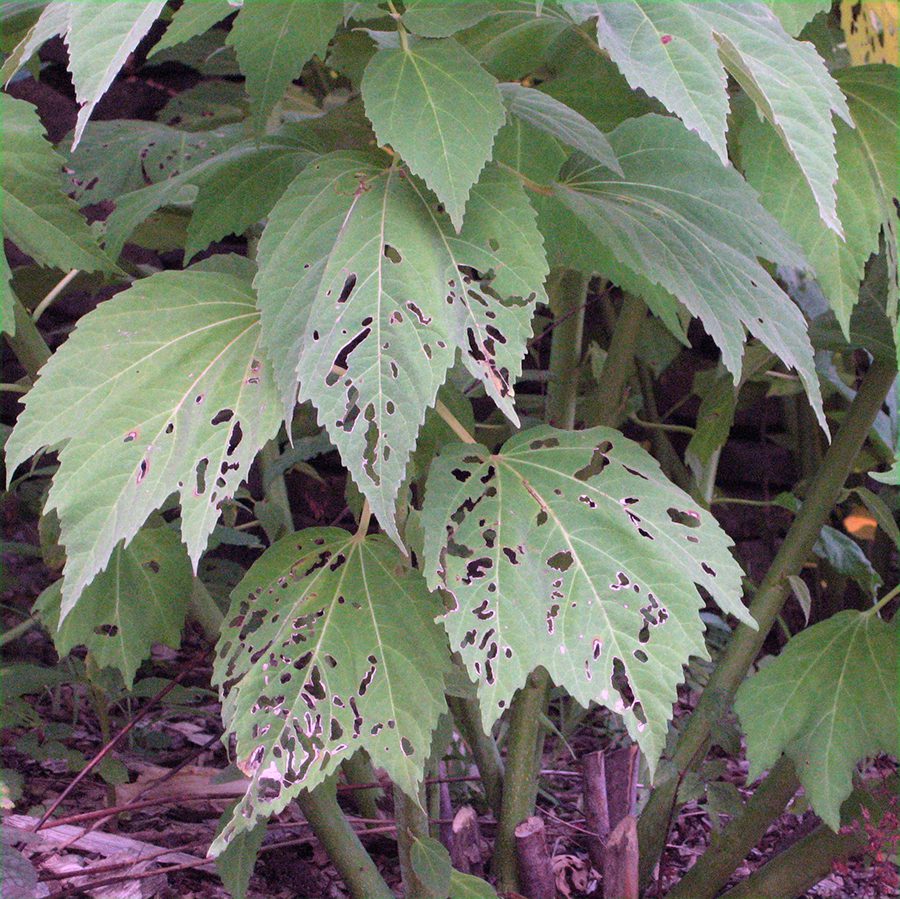
Spray hardy hibiscus in late June for the hibiscus sawfly larvae.
If your hardy hibiscus leaves start to look like lace, you most likely have the hibiscus sawfly larvae at work. This tiny green worm (Atomacera decepta) is hard to see as it blends in well with the edges of the holes it creates. It’s easily controlled by spraying the leaves in late June with spinosad (Captain Jack’s). We recommend that people put an annual reminder on their phone to spray the third week in June when the plant has reached its mature size but before the larvae come out. You usually only have to spray once and the damage will be minimal.
Hardy hibiscus forms many flower buds that open one per day.
This perennial is similar to the daylily plant in that the flowers are open for one day. Because the plant produces many buds, the display lasts for three or four weeks.


Hardy hibiscus care in your garden.
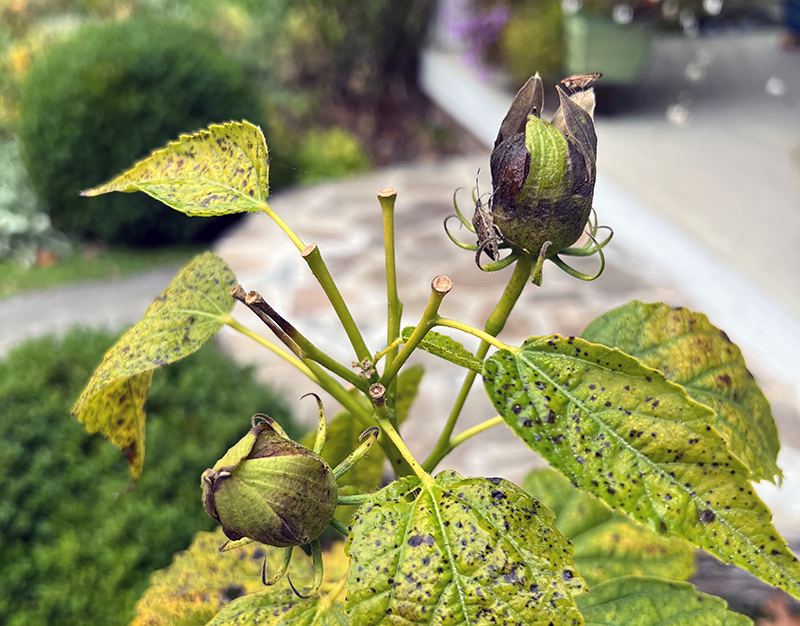
Other than spraying with spinosad in June, and watering deeply once a week, these are remarkably carefree perennials. Leave them in your garden into the fall so that you can enjoy the fall foliage since many varieties have yellow leaves in autumn. Once those leaves are gone you can cut the stems to the down, leaving stumps of about two inches so that you will remember where they plants are located. Hardy hibiscus are very late to break dormancy in the spring; the rest of your perennials will be up and growing, but these plants are waiting for warmer soil temperatures before they begin to grow.
2 Comments
Leave a Comment
Subscribe To Our Newsletter
Sign up for our weekly email about sales and events.
This is our second year of a lovely orange/peach hibiscus. We brought it in the house last fall/winter. It survived, at one point yellowed and dropped leaves, we cut off the dead, then brought it out this spring. It is spectacular! Do you think we could keep it in the garage (attached) this winter? It’s gotten quite large and heavy! and if so, keep it watered, sparingly?
Thank you.
This type of hibiscus is tropical – it does not like temperatures that go below 50 degrees, and it wants bright light. So a garage isn’t the best place. Either bring it into the house again, or decide to let it go and get another next year.