
Winter Pruning of Forsythia
Winter Pruning of Forsythia
How and when to prune Forsythia shrubs.
You may have heard that one general rule of pruning is that you cut spring-flowering plants right after they finish blooming. By and large this is good advice. If you were to cut your spring-flowering azaleas or lilacs back in the fall, winter, or early spring you would be cutting off the flower buds for the coming season. But one exception to this rule is the Forsythia shrubs. There are several good reasons for pruning these plants in February.
1. The Forsythia stems are easier to see in the winter.
If you wait to prune until after the shrub finishes flowering, the leaves will have opened and it’s harder to see into your plant clearly. You see, the way to prune Forsythia is by first removing the biggest, oldest stems, cutting them down to 6″ high or even to ground level. When you take out the oldest stems every year or every other year, you will automatically keep the plant smaller, while at the same time stimulating newer, more vital growth.
Forsythias are cane-growing plants. When you take out the oldest stems, new canes will come up from the ground.
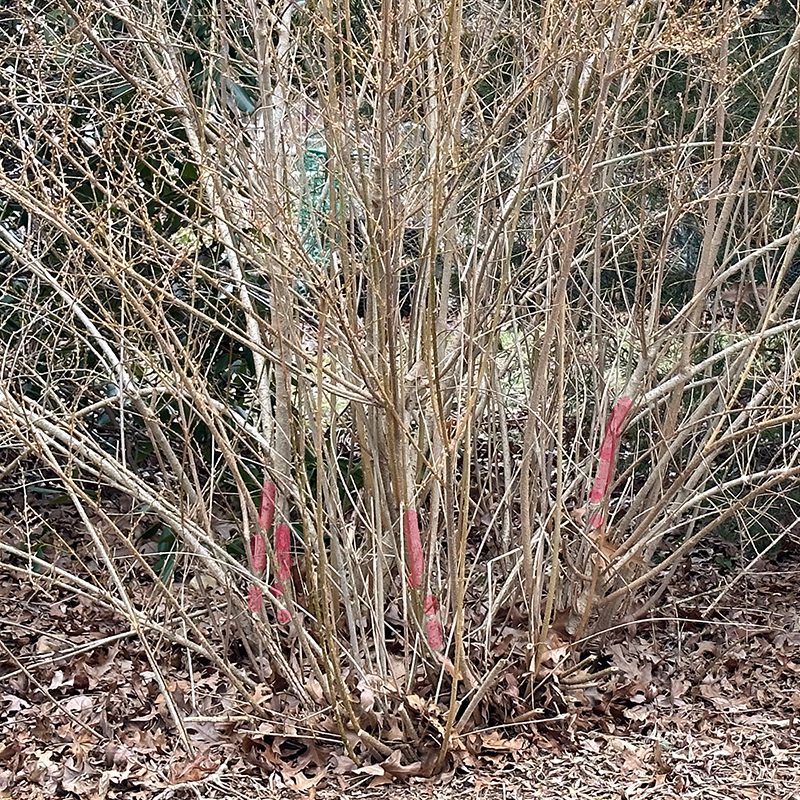
2. Removing Forsythia stems near the ground maintains the pretty, fountain shape.
One of the things that makes this plant attractive is the cascading fountain shape that it naturally has. But if you cut the plant back from the top down, you lose that vase-like form.
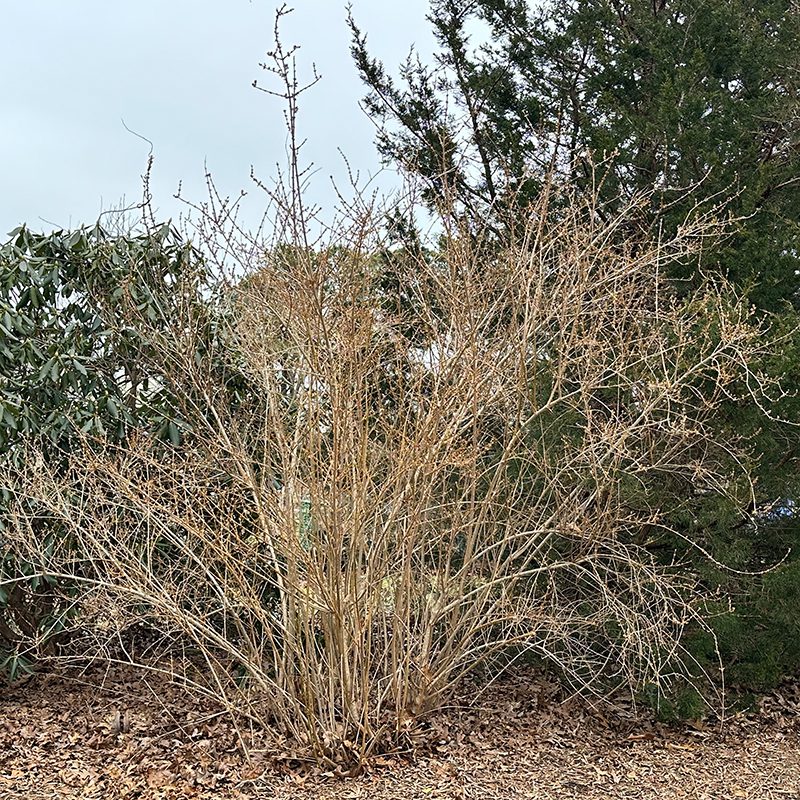
3. Cutting back from the top encourages bushy growth under that cut.
When you cut any plant back by pruning the top off of the stems, you stimulate bushier growth right above the cut. This is useful when you have a plant that you want to make more bushy, but if you routinely prune or shear the Forsythia this way you end up with all the flowers and leaves on the top and bare ankles below…plus you lose the graceful fountain shape that the plant normally has. If you remove the oldest canes every year or every other year, however, it automatically keeps the plant shorter while also maintaining the full, natural form.
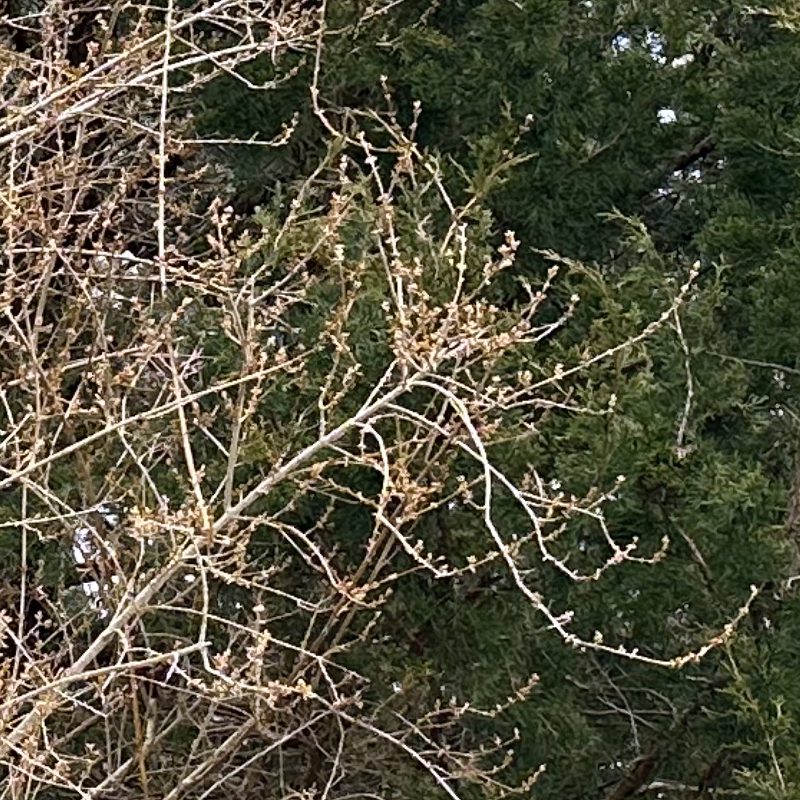
4. After removing the oldest stems down low first, then tweak the top.
After you’ve cut out the oldest stems down low and removed them, you can fine-tune the shape or make any straight up growth fuller by clipping back a few of the canes from the top down.
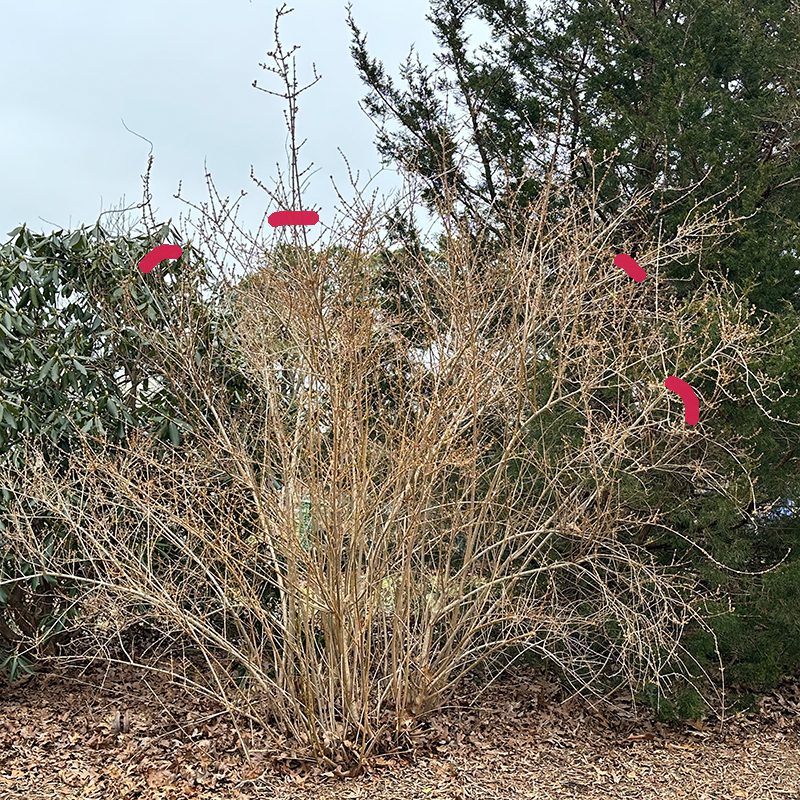
5. Bring the canes you remove into the house.
Another reason to prune Forsythia in February is that you can bring what you cut indoors where water in a vase and the warmth of your home will bring them into bloom in about two weeks. Brilliant yellow flowers indoors, at the time of year you need it the most!
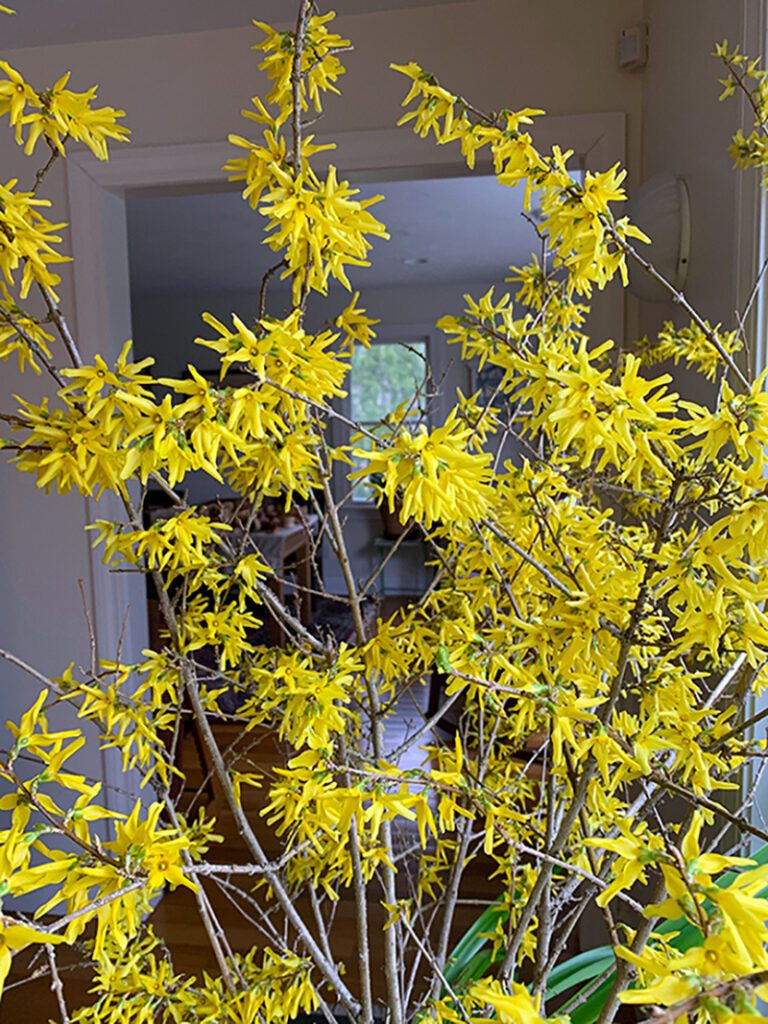
6. Pruning tip: You might need a saw.
If it’s been a few years since you’ve pruned Forsythia by removing the oldest stems down low, you will probably be taking several out and they may be large enough to require a pruning saw instead of your loppers. Take it from me: a good Silky or Felco pruning saw makes any pruning of larger stems SO much easier.
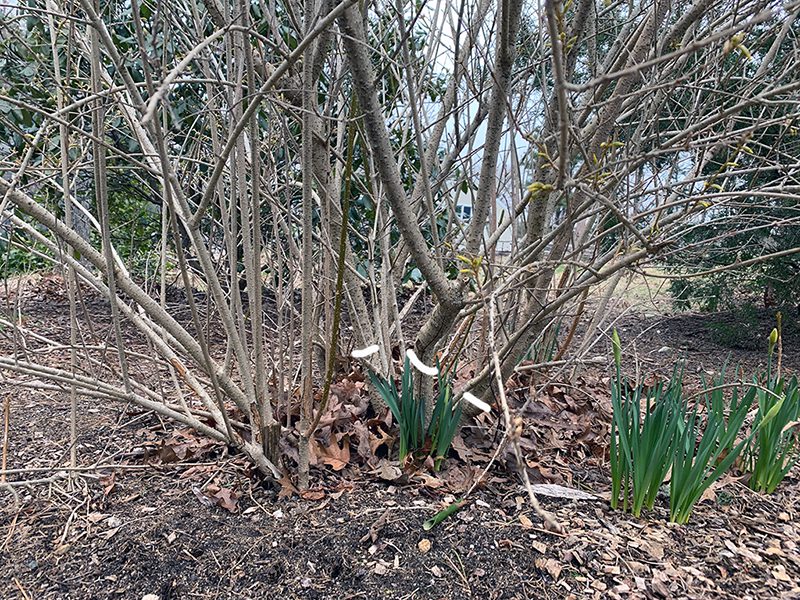
7. Yes, a total renewal is possible on Forsythia shrubs.
I have consulted with some homeowners who had very large, very overgrown Forsythias. In a couple of cases, the most prudent thing to do was a total renovation of the plant or hedge. This is accomplished by cutting the entire shrub down to 6″ tall, and letting the plant come back from the ground. This is a drastic pruning, however, and only done if the plant is so large and all the stems to old that there seems no other way. If you’re planning on this type of renewal pruning, wait until April, right as the plant has finished flowering, to do it. It will take about 3 years for the plant to be large and graceful again, but it will come back.
Since these plants are cane growers, they also become wider over time. If your Forsythia is extending into a space where it blocks your vision or sticks into a sidewalk or road, cut the stems that are arching where they don’t belong to the ground. The photo above shows that several stems on the outside of that plant were removed even though they were not the oldest. They were growing into the road where they would hit a truck when snow was being plowed, so those stems were removed.
8. Forsythias are easily transplanted.
Sometimes people place these shrubs where they are too large for that space. In such cases, pruning isn’t the answer since it ruins their shake and they will continue to grow larger. In such cases, the plant should be moved. When planting or transplanting a Forsythia, assume that it will grow over 6 feet tall and 8 to 10 feet wide. This makes it a great addition to a mixed shrub border or privacy planting.
6 Comments
Leave a Comment
Subscribe To Our Newsletter
Sign up for our weekly email about sales and events.
Very informative. I have never known how to manage forsythia.
Thank you
Great article! We always pruned the top and never knew the forsythia was meant to have that beautiful fountain shape!
I’m glad this was helpful!
Great info about bringing the cut stems into the house. I’m going to try that now. Thank you!
I have a nearly 25 year old forsythia that had never been pruned from the bottom. It was a mess. Yesterday, before blooming, I cut it down to about a foot high and burned the branches. There are several arm sized trucks. How hard would it be to dig this up to move it? Can it be split? I want to cut it down to the ground, but it may take a chainsaw!
Yes, this plant could be split but yes, it will be an effort to dig it up and do so. You might want to have someone scoop it up with a bobcat. Once it’s out of the ground you could cut off pieces or divide it in half. In the future, if you remove older stems near ground level at least every other year it will keep the plant smaller and tidier, while maintaining the natural shape. Note that if you don’t dig it up the plant will send up a bunch of straight up shoots this year that will branch out the following year. So expect it to look a bit weird in 2025.