
Q & A From Hydrangea Joy Happy Hour
Q & A From Hydrangea Joy Happy Hour
There are always more questions than we can get to during the HCG Horticultural Happy Hours…especially when the topic is our favorite shrub: Hydrangeas! Here are the questions that we didn’t have time for last Friday.
Note about the image used for this blog: the cocktail pictured is Hydrangea in name and color only. Hydrangeas are not edible, so don’t use them in any beverage!
Q. From D C: I’m looking for a new large plant. Is blue enchantress bud hardy?
A. In my experience Blue Enchantress® is quite bud hardy. It was one of the few Hydrangeas in my garden that flowered last year after our sub-zero night in February. It’s a shrub that’s very stem-sturdy, as well. Since the flowers are a bit smaller than other blue Hydrangeas, this is also a good variety for cutting flowers, since often a huge bloom dominates a bouquet.
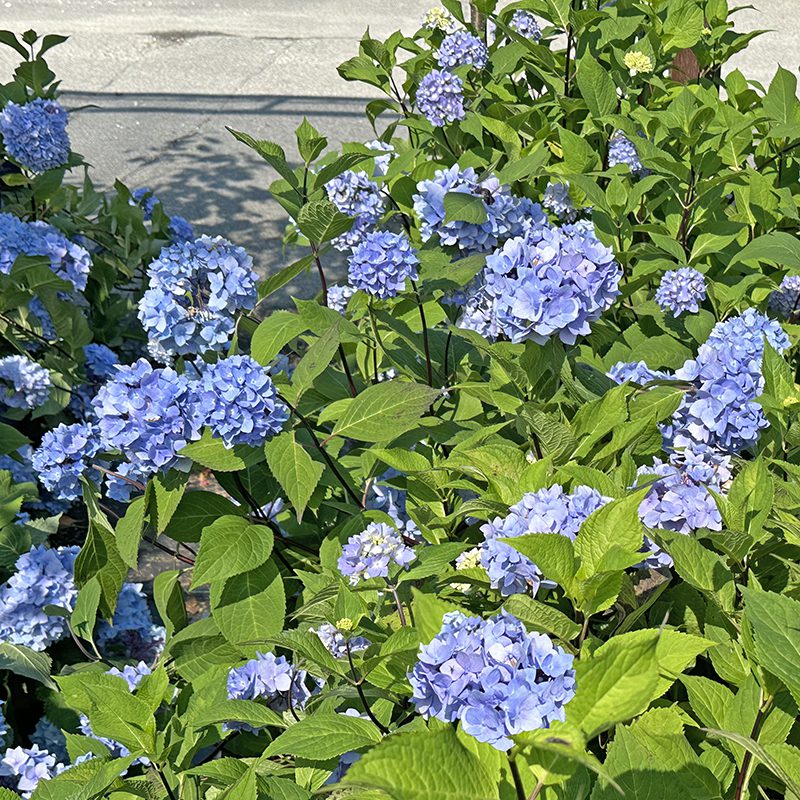
Q. From Meredith: Do Hydrangeas need to be fertilized? With what?
A. It can be beneficial to give your Hydrangeas a light application of Holly-tone in the spring, but avoid over-fertilizing. If your plants look good, and you’re mulching around them regularly, you may not need to fertilize every year. If you’re curious about the fertility of your soil, have a soil test done by the UMass Soil Lab.

Q. From Michelle: Best varieties of Hydrangeas for part-shade?
A. The big-leaf (Hydrangea macrophylla) and the mountain (Hydrangea serrata) are best in part-shade, especially when they are shaded during the noon hour, which is the hottest part of the day. Oakleaf (Hydrangea quercifolia) are also good in part-shade, although they are perfectly fine in full sun as well.
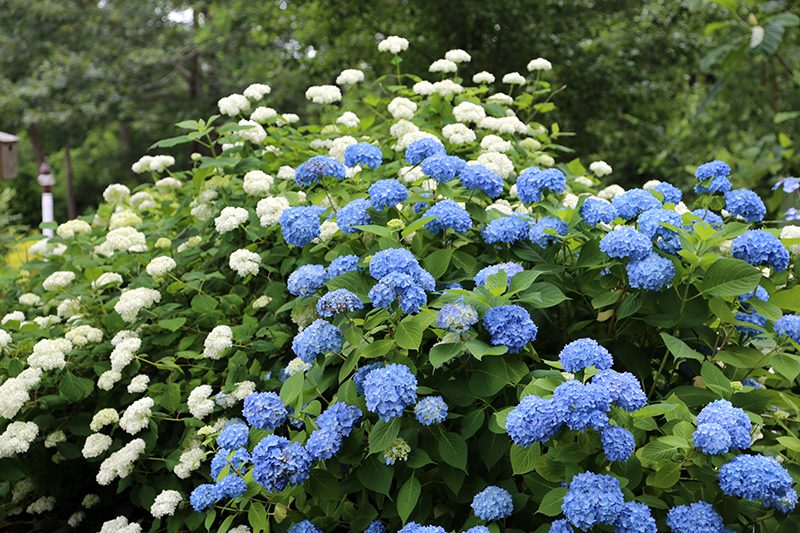
Q. From Evelyn I am trying a BoBo in a large container for the first time. Outside all winter or in the garage?
A. If the Bobo® Hydrangea is in a large pot that won’t crack in the winter, it should be fine outside. You mentioned in the chat that the pot was near the road and you were worried about salt burn, and if that’s the case you might want to pull it back from the road. You could also bring it into an unheated garage for the winter. If it’s inside, feel the soil once a week and water when it’s dry. Pull the plant outside in April so it can break dormancy normally in May.

Q. From Wayne: How often and how long should a drip on Hydrangeas be run? Mine are on a drip system, 1/2 gallon per hour per emitter 8 inches apart.
A. It’s impossible for me to answer this accurately since even knowing the emitters are 8 inches apart I have no idea how many there are total and how close they are to your plants. Differences in water pressure and possible clocked ports also can come into play. I encourage everyone who has a drip system to leave it off for four or five days when it’s sunny. Then dig down in that bed in two places, one next to the hydrangea and another a foot away from the outside edge of the shrub. See how dry the soil is in those areas when you dig about 10″ down. (Move the mulch aside before you dig.) Then run your system for an hour and dig two other holes near the first. Is the soil more moist? Is it wet in one place but not the other? If the soil isn’t moist, or if it’s only damp three or four inches down, run your system for another hour and see what the moisture is like. Your best guide for knowing how long to run your irrigation is some time spent gathering data.
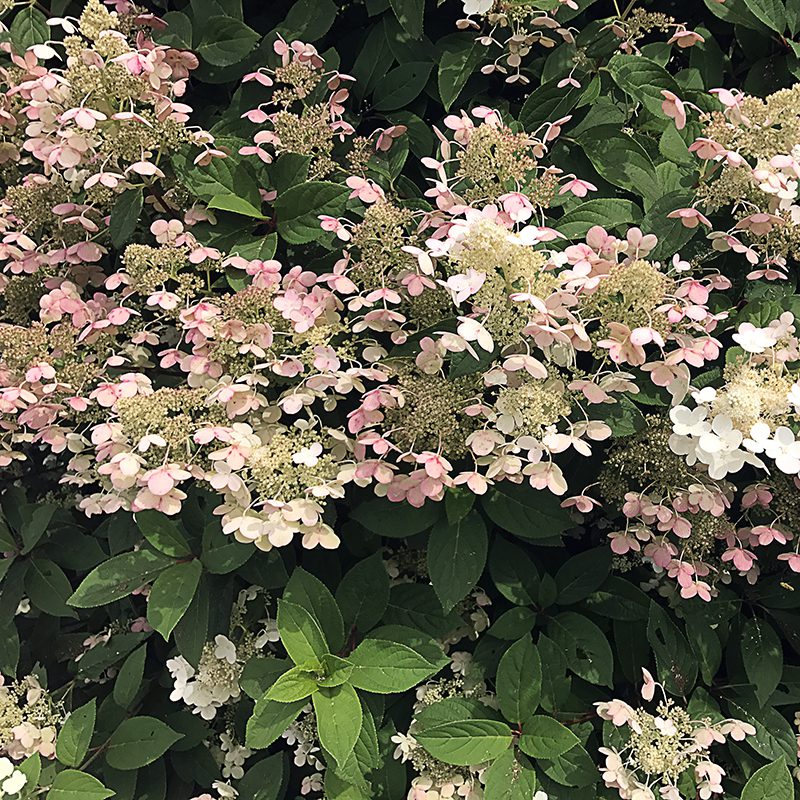
Q. From Charlotte: How can you tell you have a vanilla strawberry hydrangeas?
A. Vanilla Strawberry™ Hydrangeas, from First Edition Plants, has large, cone-shaped flowers that turn red from bottom to top. There are similar paniculata varieties, and they are all very nice plants. You can tell the difference between Vanilla Strawberry™ and Quickfire®, for example, because the Quickfire™ has lacier flowers.

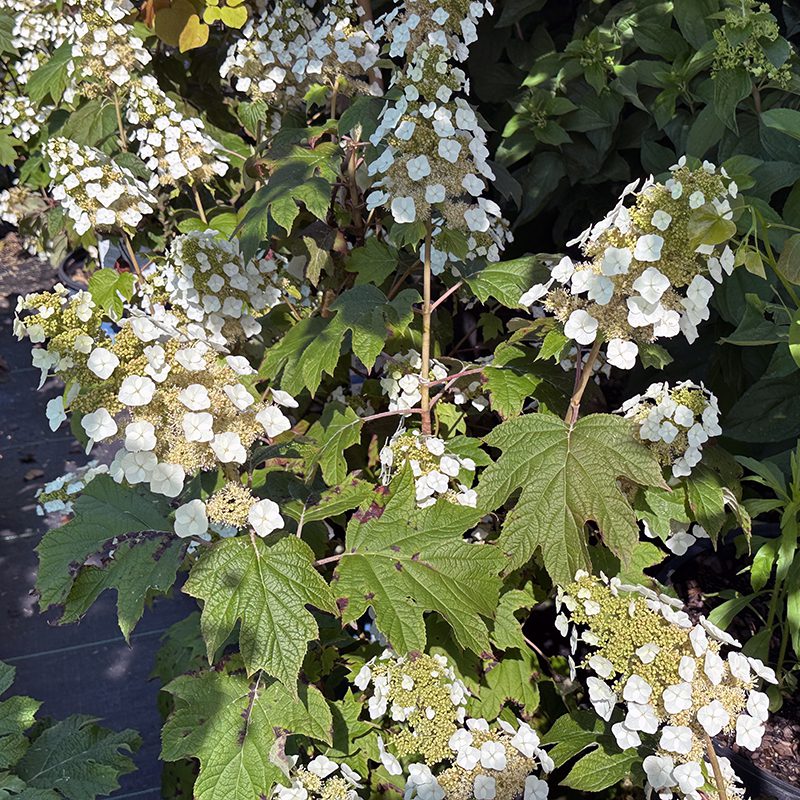
Q. From Kimberly: Is there a hydrangea for deep shade? Also do oak leaf hydrangea bloom on old or new wood?
A. If you have deep shade, that is solid shade with no sun at all, most Hydrangeas won’t flower well. The oak leaf, mopheads and lacecaps will do pretty well in dappled shade, however, if they are getting some sun that’s filtered through the canopy of trees. On the north side of a house, look to see if either end gets sun either in the morning or late afternoon; a couple of hours of direct sun at that time would be fine for these varieties. Oak leaf shrubs (Hydrangea quercifolia) form their flower buds in August for next year, so like the mopheads and lacecaps, shouldn’t be pruned much because you’ll be removing flowers for the coming year.
Q. From Nancy: Tallest hydrangea instead of a fence? Limelight? I would plant 8’ apart.
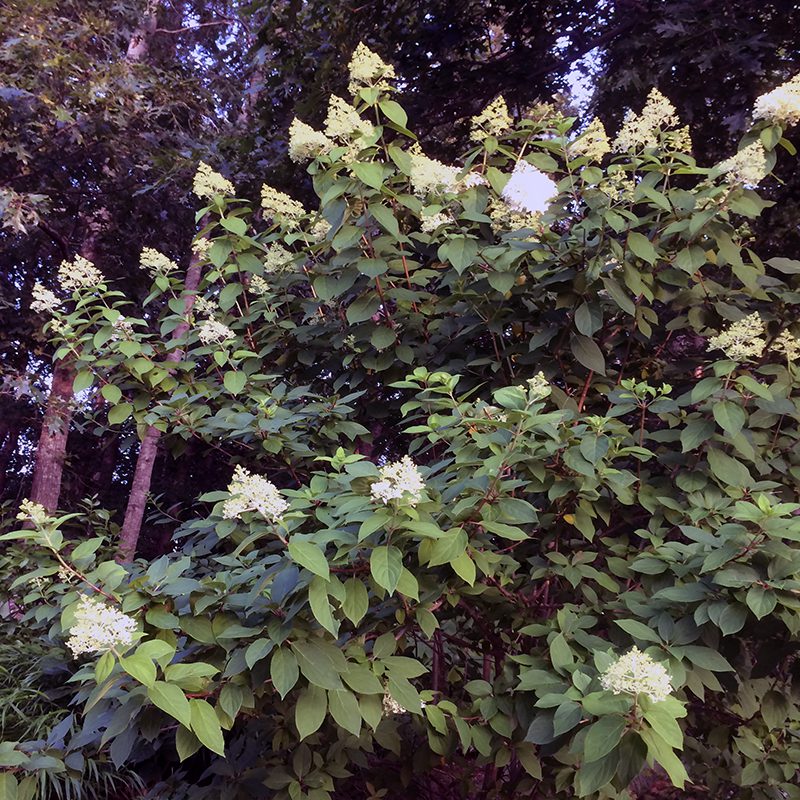
A. ‘Limelight’ Hydrangeas would be a fine variety to use in a shrub border. They grow 8 to 10 feet tall and wide. Pinky Winky® and Quick Fire® are also tall growing, but they stay a bit more narrow.
Q. From Zachary: Does HCG carry LA Dreamin?
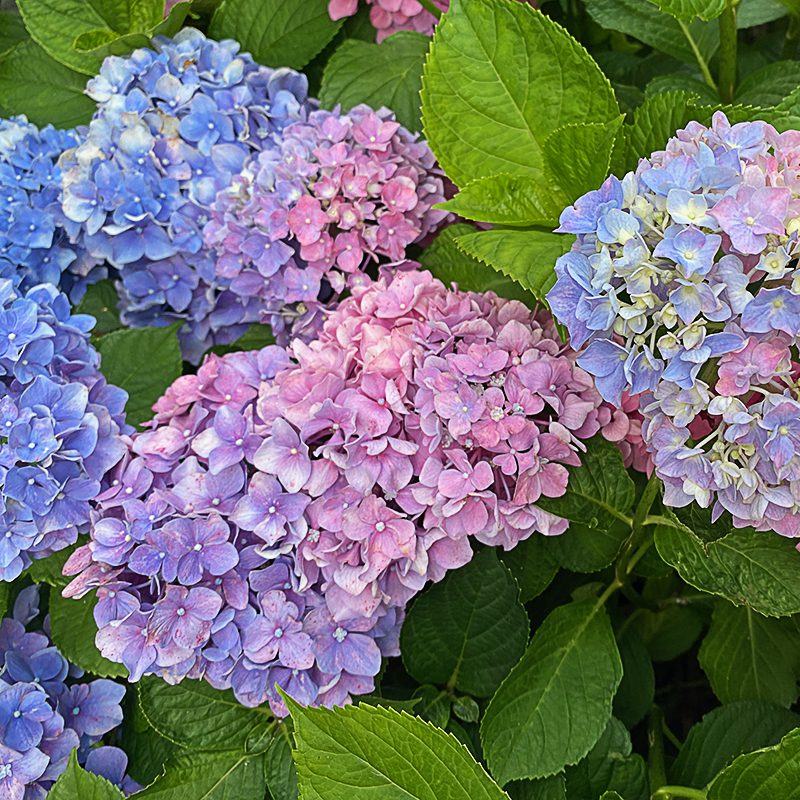
A. I have not seen LA Dreamin in our Hydrangea area, but know that you can pretty easily produce the same multi-color blooms on other remontant varieties. (For those who aren’t familiar with the term “remontant” is simply means that the Hydrangea flowers heavily with buds formed the previous summer, but lightly on new growth as well. Endless Summer® is the remontant variety that most people are familiar with on Cape Cod.)
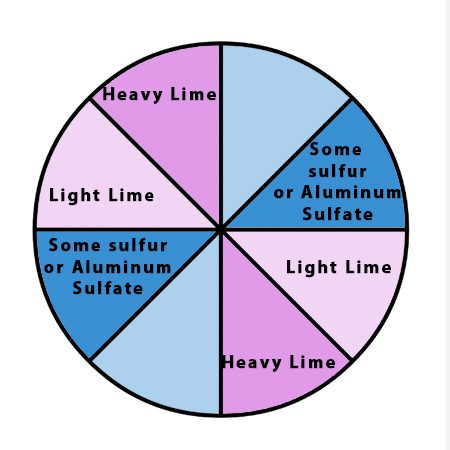
To have a multi-color plant, mentally divide the area under your shrub into quarters, and designate two opposite sections to be where you will add lime. Heavily lime half of those two areas, and lightly lime the other half. Then put some sulfur or aluminum sulfate on half of the other quarters, leaving the other half of those untouched. Since on Cape Cod we have naturally acidic soils, if you do nothing here our Hydrangeas will be blue, so don’t go overboard on the sulfur or aluminum. You can damage the plant if you use too much! With this approach you’ll have some pink, some blue, and some lavender flowers, plus most shades in between!
Q. From Randy: Do you have the new Eclipse hydrangea?
A. Yes! Right now in our nursery you’ll find some lovely Eclipse® Hydrangeas.

Q. From Charlotte: Do hydrangeas that you bring in get a lot of bugs and ants?
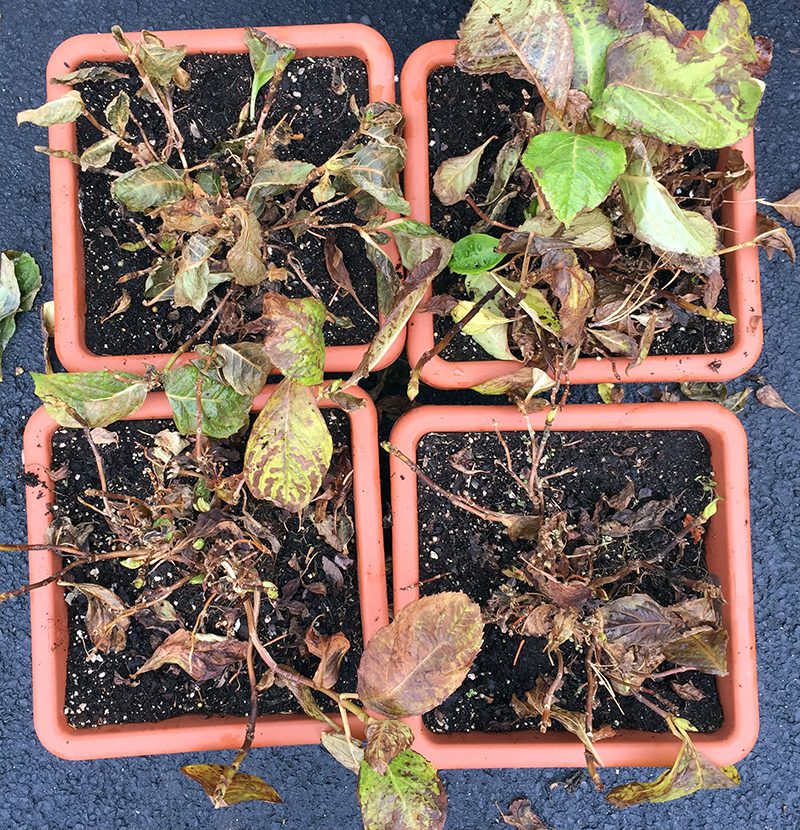
A. It’s never been my experience that there is more than a random insect when I bring my potted Hydrangeas into the garage. Leave them outside until October or even early November, when their leaves start to turn color and fall, then pull into an unheated shed or garage. If you’re over-wintering them in a shed, don’t forget to check them weekly to see if they need watering.
Be sure to join me in the Cape Cod Hydrangea Fest Round Up Happy Hour in July. Register to get the link.
Subscribe To Our Newsletter
Sign up for our weekly email about sales and events.