
Box Tree Moth: New Pest Alert for Cape Cod
Box Tree Moth: New Pest Alert for Cape Cod
Just when we think that it’s safe to relax…a new insect hits town.
On Friday when I was in the store to answer questions, identify plants and help our customers with garden design, a couple from Sandwich arrived with a plastic sandwich bag of plants. As soon as I took it into my hands, I knew what it was. The Cape Cod Cooperative Extension has been reporting that the Box Tree Moth (Cydalima perspectalis) had arrived on the Cape for the past few months, so I had it on my radar. And that was indeed what the boxwood springs in the bag were infected with.
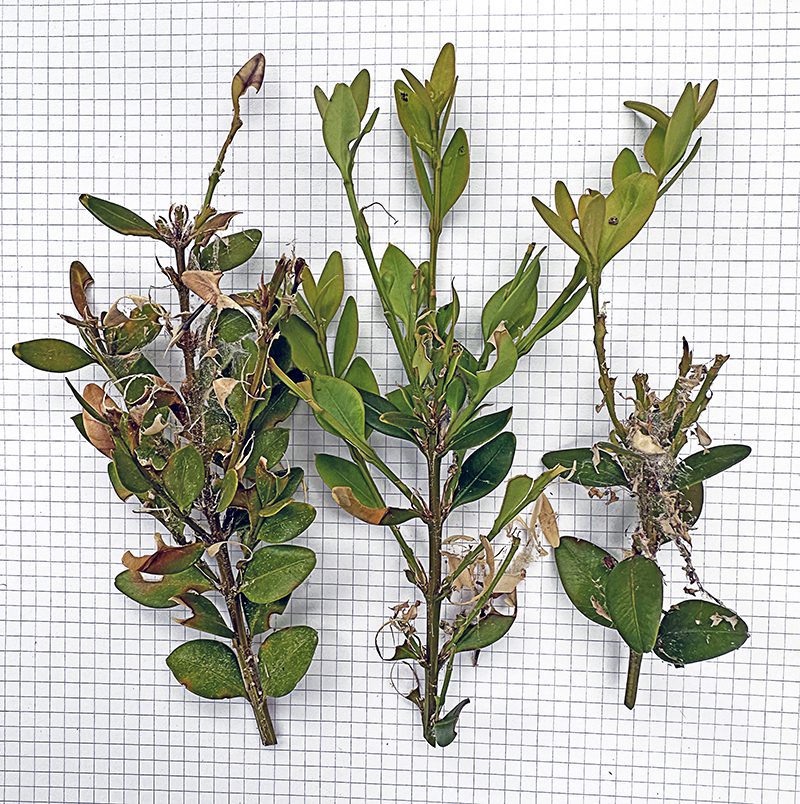
The box tree moth is an invasive insect that has been spreading world wide, but has only been found on the Cape since 2023. The larvae has been seen to be a very destructive pest on boxwood plants, although in other parts of the world it has also fed on other species of shrubs. When left unchecked, it can completely defoliate boxwoods pretty quickly.
After talking with this couple, I came home to my Sandwich garden and looked at my boxwoods, and sure enough, the variegated boxwoods that I so love are infested. Here’s what to look for on your plants, and recommendations below about how to treat your boxwood shrubs.
The UMass Extension is aware of the insect activity in Bourne, Sandwich and Barnstable. But if you spot box tree moth in another location, go to this form and fill out the report.
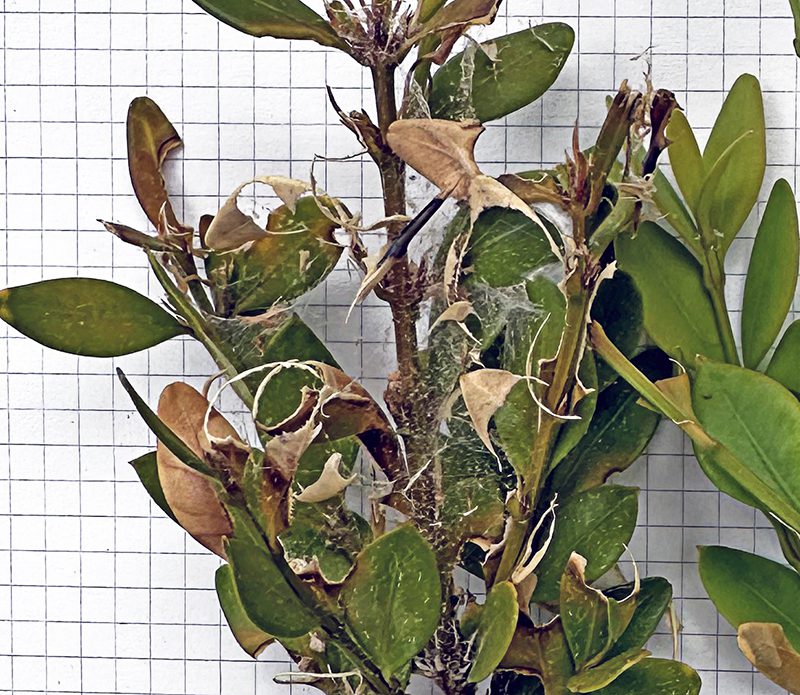

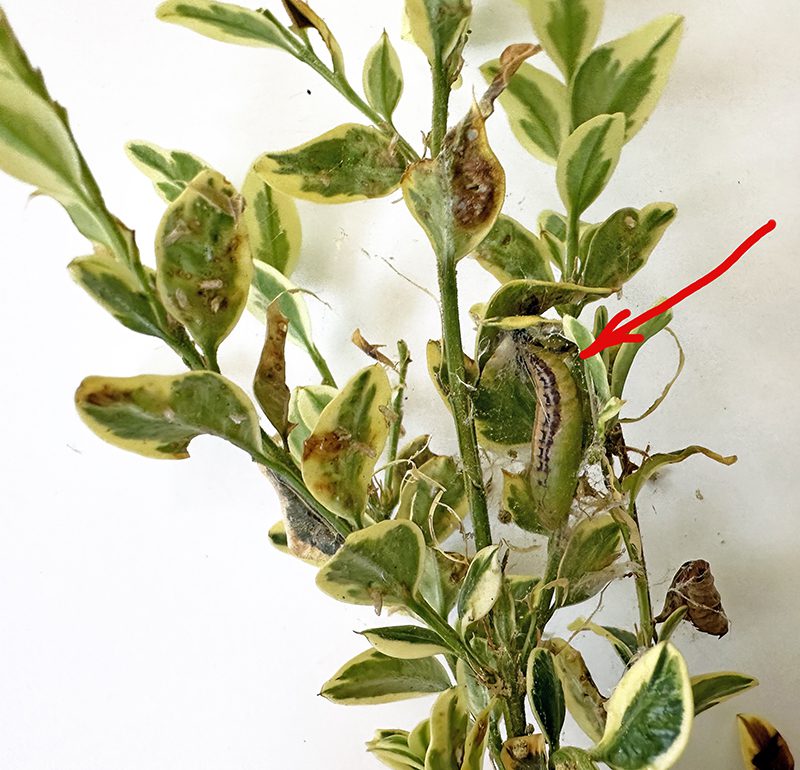
What can you do? First of all, look closely at all of your boxwood shrubs for signs of this insect. If you can see those areas that are congested and tied with webs, clip them off and throw them away so that the pupa don’t get a chance to live and complete the life cycle.
Secondly, spray your plants with spinosad (Captain Jack’s Deadbug Brew) and use some Turbo in the sprayer so that it sticks on the leaves and stems. Begin spraying at the end of April and do so once a month through September. This will kill any other larvae that hatch out and begin to feed. Based on information in the University of Massachusetts Extension Fact Sheet about this pest, it’s not clearly known how many generations of the Cydalima perspectalis are with us in a single summer, although Tawny Simisky, Extension Entomologist, is thinking that there might be 2 or 3 on Cape Cod. In 2024 we definitely had two generations.


See this Extension page about monitoring and trapping the box tree moth.
What is important is that this doesn’t seem to be a “live and let live” situation if you value your boxwood shrubs, since the box tree moth can do such extensive damage so quickly.
Let us know how we can help.
Subscribe To Our Newsletter
Sign up for our weekly email about sales and events.