
Your Pond: The First 30 Days
Your Pond: The First 30 Days
The first 30 days of spring are the most critical period in pond health.
This is where most pond keepers make their biggest mistakes. As water temperatures begin to rise, people assume their pond is “coming back to life” and shift into feeding, cleaning, and normal operation.
In reality, this is the most unstable time your pond will experience all year; fish are weak, bacteria are accelerating, and parasite populations are exploding. Timing is everything!
As temperatures climb into the 50s and 60s, fish become more active. They start swimming more, showing interest in food, and appearing healthier. However, it takes time for our fish to gain immunity back after a long, cold winter. If your filters were removed last Fall, get them up and running now so they can establish the bacteria that they need to remove harmful toxins in the water. This is a slow process and water parameters should be tested more frequently at this time.
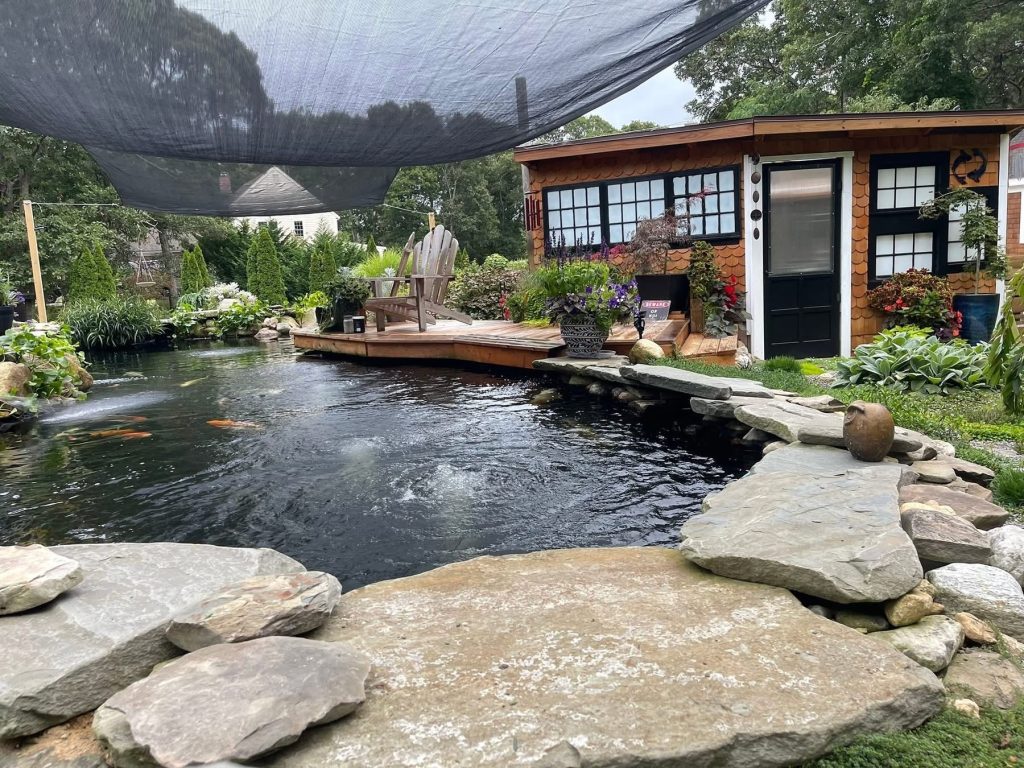

Our Pond Expert Katie’s own pond.
Water changes
Remove water and sludge from the bottom of the pond, but no more than 50% at a time. Add water back slowly so as not to shock the fish with extreme temperature fluctuations. Make sure to use dechlorinator when adding new water and set a timer so you don’t overfill the pond. Chlorinated water can kill fish easily, as can extreme temperature changes.
Feeding
Start slowly. Feed small amounts starting at every other day and build up slowly. Feeding too aggressively is a common mistake. Digestion and immune systems in fish are still recovering, and biological activity in the pond and filter is also not in full swing.
Spring cleaning should be kept to a minimum…
Pressure washing the entire pond or deep cleaning everything strips all the biofilm from the surfaces and resets the pond at the worst possible time. Spring cleaning removes biological stability that the fish depend on just as they are coming out of their most vulnerable state.
This forces the pond system to re-cycle while fish are already stressed, creating the perfect conditions for ammonia spikes, parasite outbreaks, and bacterial infections.
Focus cleaning efforts on removing leaves, debris, and sludge from the bottom of the pond.
The first 30 days of spring should be focused on stability and prevention – not reaction.
Fish need a clean pond, low parasite pressure, strong aeration, and stable water chemistry. Check water parameters at least weekly. All parameters, especially KH, should be maintained. Filtration should remain active. Sudden changes should be avoided.
Key water parameters list: here.
Read about the role of KH: here.
Read about the Nitrogen cycle: here.
Most importantly, monitor fish for any health issues and address them early. Clamped fins, isolating, bloating, swimming erratically, rubbing and scraping on rocks (flashing), gasping the surface for air (piping), are all signs of an issue.
Treatment protocols, water tests, questions, or concerns can all be discussed with Katie at Hyannis Country Garden Tuesday through Saturday between 9am and 4pm, or schedule an appointment for a one-on-one consult. We have a wide selection of high quality pond care products in store that are sure to get your pond spring-ready.

Subscribe To Our Newsletter
Sign up for our weekly email about sales and events.