I took a walk through the perennial sections and our “Native Corner” of the nursery today, taking photos of just some of the native plants we have available. There were so many that at one point I had to stop taking pictures, since compiling the image would take me most of the day. Nevertheless, I was impressed with the selection and variety of plants.
Here is just a small sampling of North American natives that are in our garden center on June 3rd, 2024. Many of these will come into flower later in the summer. With a mix of native plants that are selected for your growing conditions, you can grow a garden that has a variety of colors and textures of foliage, along with flowers that draw birds, butterflies and pollinators.
There are many reasons that people want to grow native plants. For some, it’s a matter of matching the right plant with their growing conditions. Some of these perennials thrive in dry shade, sandy soils, or in wet locations, and when a plant is in the right spot it is likely to thrive. Other people want natives that support out local wildlife, be it pollinators, butterflies, birds and beyond. And most gardeners and home landscapers desire to have a kaleidoscope of color throughout the season: there are native perennials that bloom at different times, spring, summer or fall. Here are a few that are Cape Cod favorites.
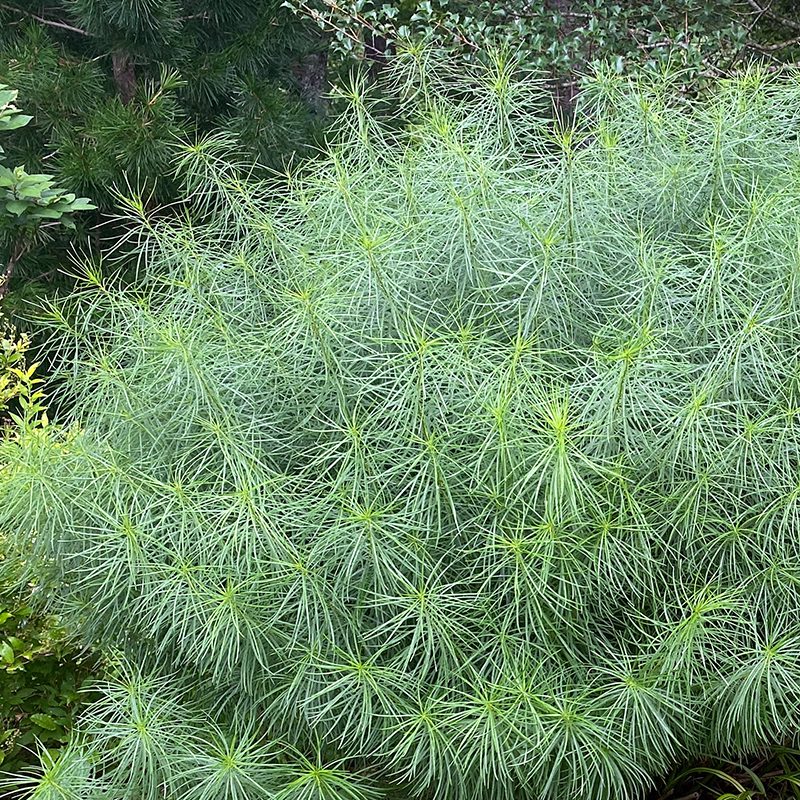
Narrow leaf bluestar is an Amsonia, (Amsonia hubrichtii), and this drought-tolerant perennial is an asset in the garden even in mid-summer when it’s not in bloom. This bluestar flowers in early June and the leaves turn a brilliant yellow in the fall.
Mountain mint, (Pycnanthemum muticum) attracts pollinators and has long-lasting flowers. This silver-toned plant blends well with plants that have purple foliage.
Mountain mint spreads, but not as aggressively as herbal mints. It looks at home in perennial gardens or on the edges of wild places.
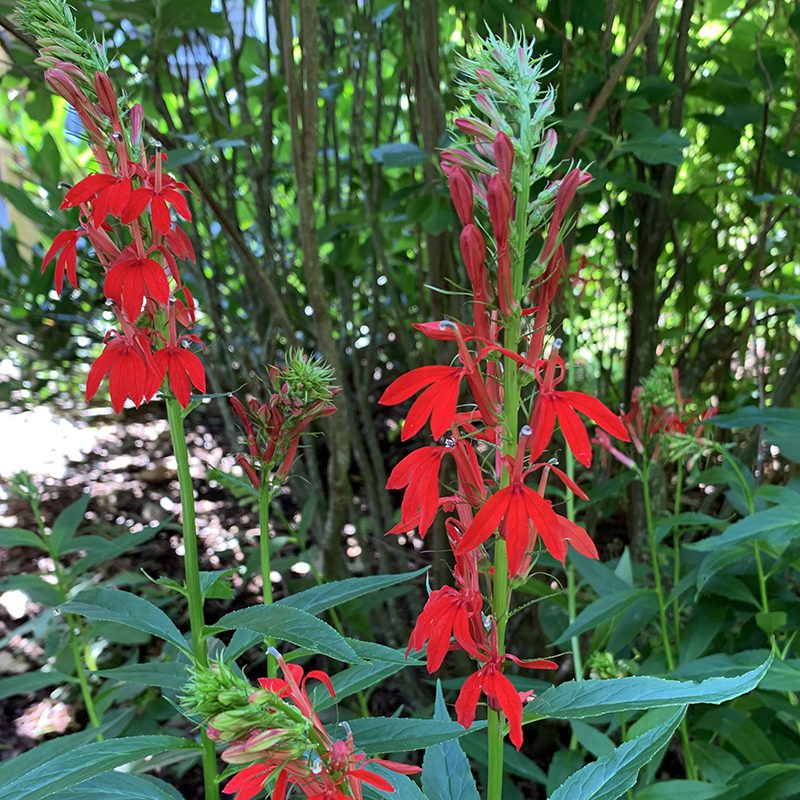
Cardinal flower (Lobelia cardinalis) comes into flower in July. It’s a draw for pollinators and hummingbirds.
Many native plants will self seed around gardens, and the cardinal flower is such a perennial. Since these plants grow well in part-shade, and they are tall and thin, they make good companions to traditional, non-native shade perennials such as Hosta.
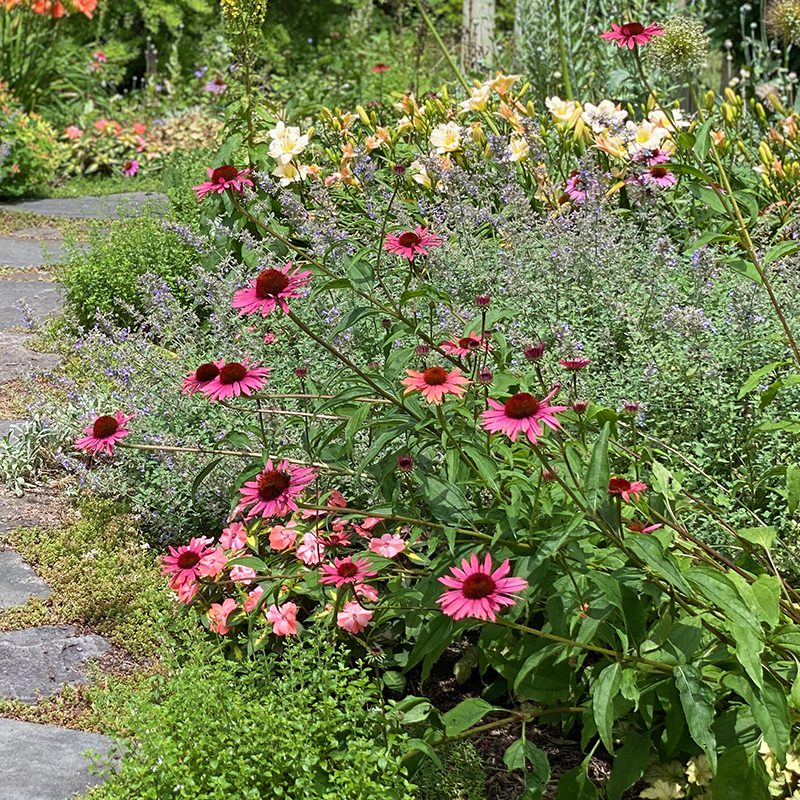
Coneflowers (Echinacea purpurea) are prized in sunny perennial gardens. They are good flowers for cutting, pollinators, and birds. Leave the cones in place once the flowers go by, and you’ll enjoy watching the gold finches eat the seeds.
Purple coneflowers come into flower in July, when the daylilies are in bloom. They can gently self-seed in gardens, so watch for young ones to appear. If rabbits are regular visitors, spray your Echinacea with Plantskydd early in the season and again in late-June as the plants grow.
Many gardens are lovely when natives and non-natives grow together. Here the yellow-flowers of the native golden Alexander (Zizia aurea) thrive next to a native sedge (Carex pensylvanica), while a non-native Clematis vine scrambles up the stumps.






Love the info, pictures, knowledge!
Wondering if “white” is supposed to be “while” under picture of Alexander, sedge and clematis.
Good catch, Julia! I love readers who are so attentive. Thanks.