In August many people discover that most of the perennials in their garden flower between April and July, so going into the fall their garden has little color except for the green foliage. There are several fixes for this situation, all starting with a trip into our annuals or perennials section. Here are suggestions.
Add Later Flowering Perennials
There are so many perennial plants that flower in late summer or fall. Whether you need something with height, or a lower plant for the front of the border, here are just a few of the possibilities.
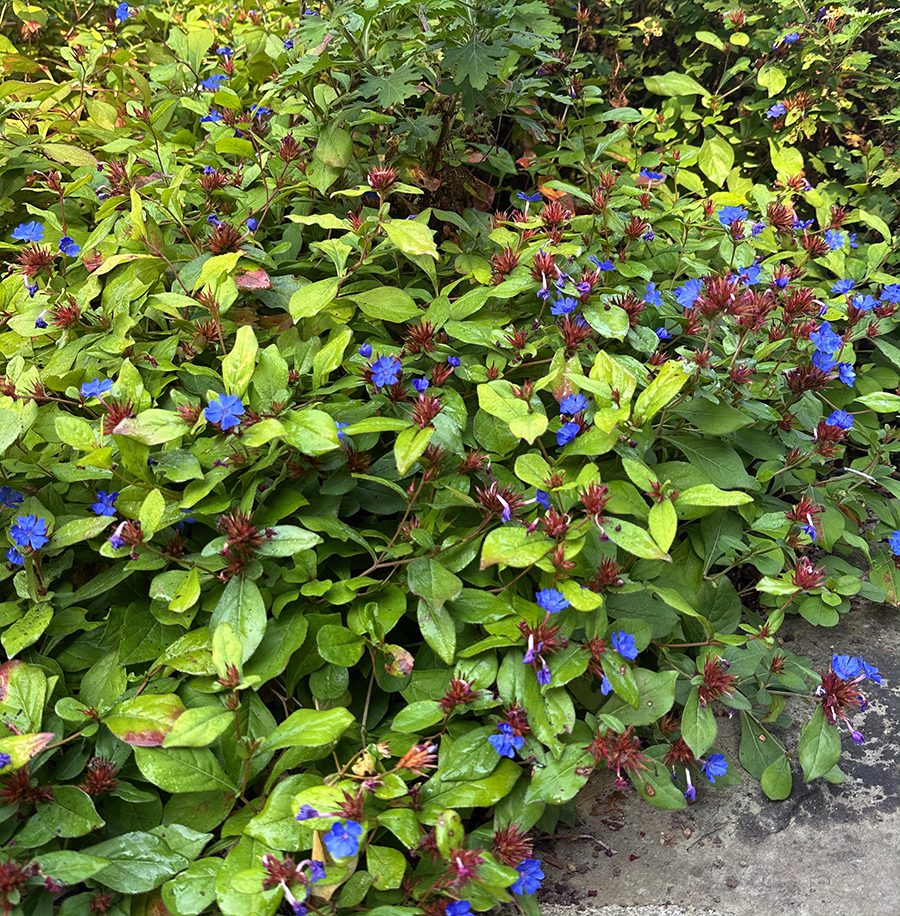
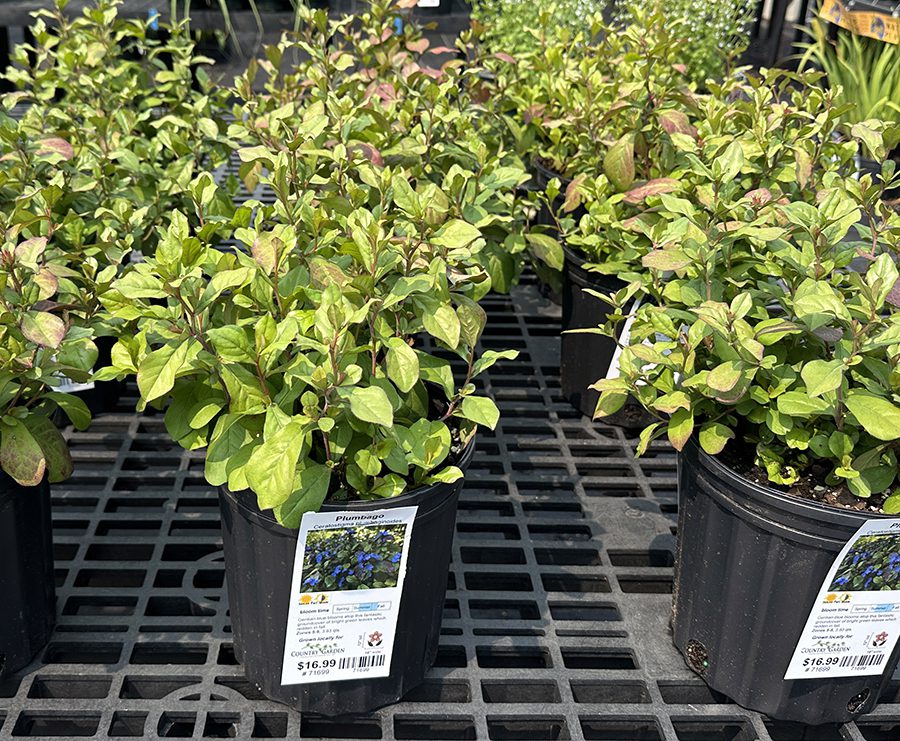
Blue leadwort (Ceratostigma plumbaginoides) is a low-growing perennial with true blue flowers with reddish stems and calyces.
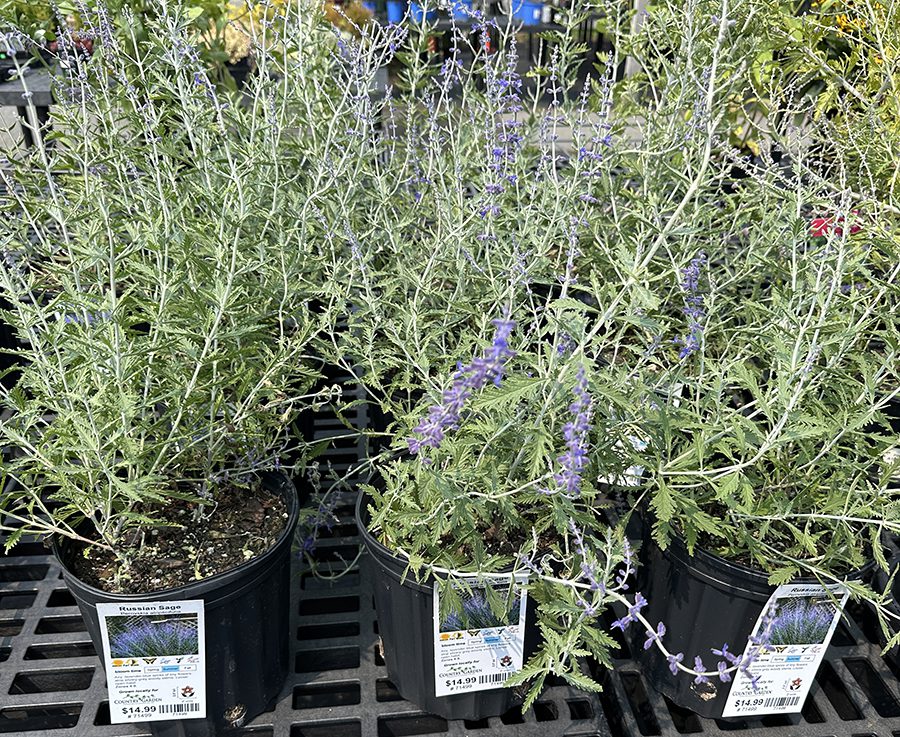
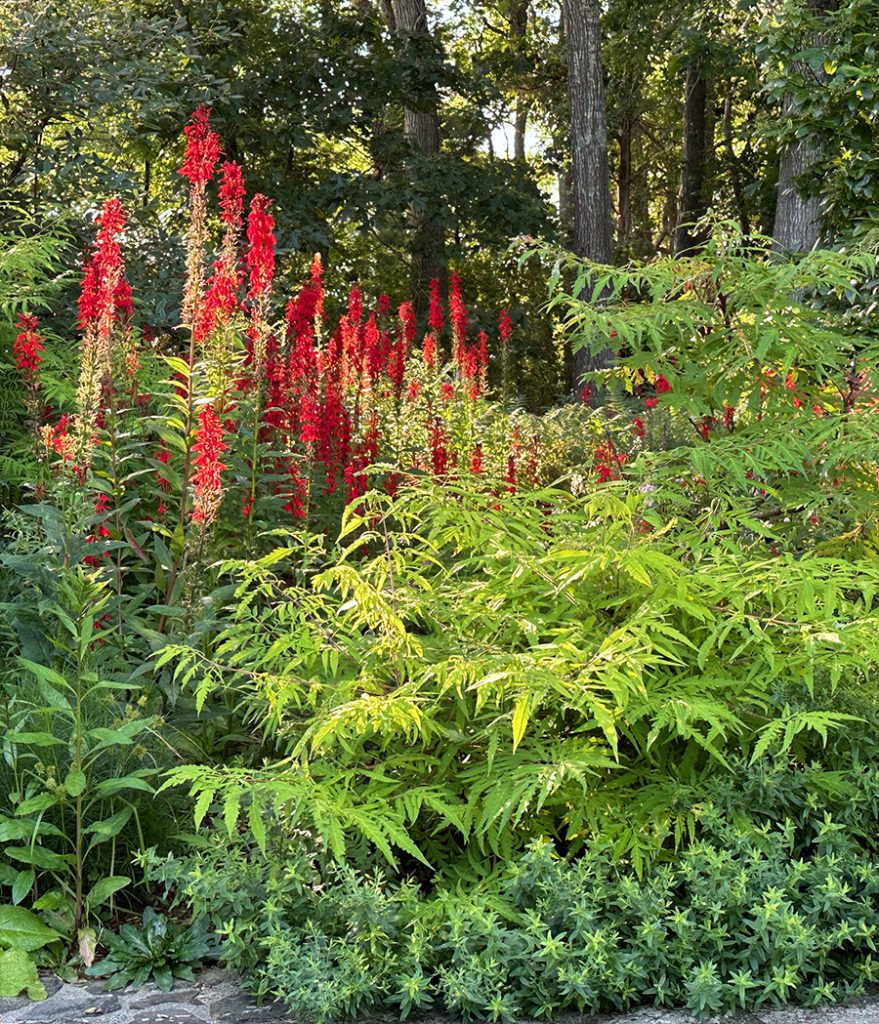
Plumbago will spread, so you can place them three feet apart if desired.Russian Sage is one of the longest flowering perennials. It comes into bloom in July and lasts into September. Grow this plant in full sun and group three to seven about 2 feet apart for the best show.Lobelia cardinalis, aka cardinal flower, is a native perennial that will self seed where it’s happy. Although it will thrive in sunny locations that are wet, it also grows well in shade. Cardinal flower starts blooming in late July and continues into September. If you want it to spread in your garden, don’t deadhead it but let the seeds form and fall.
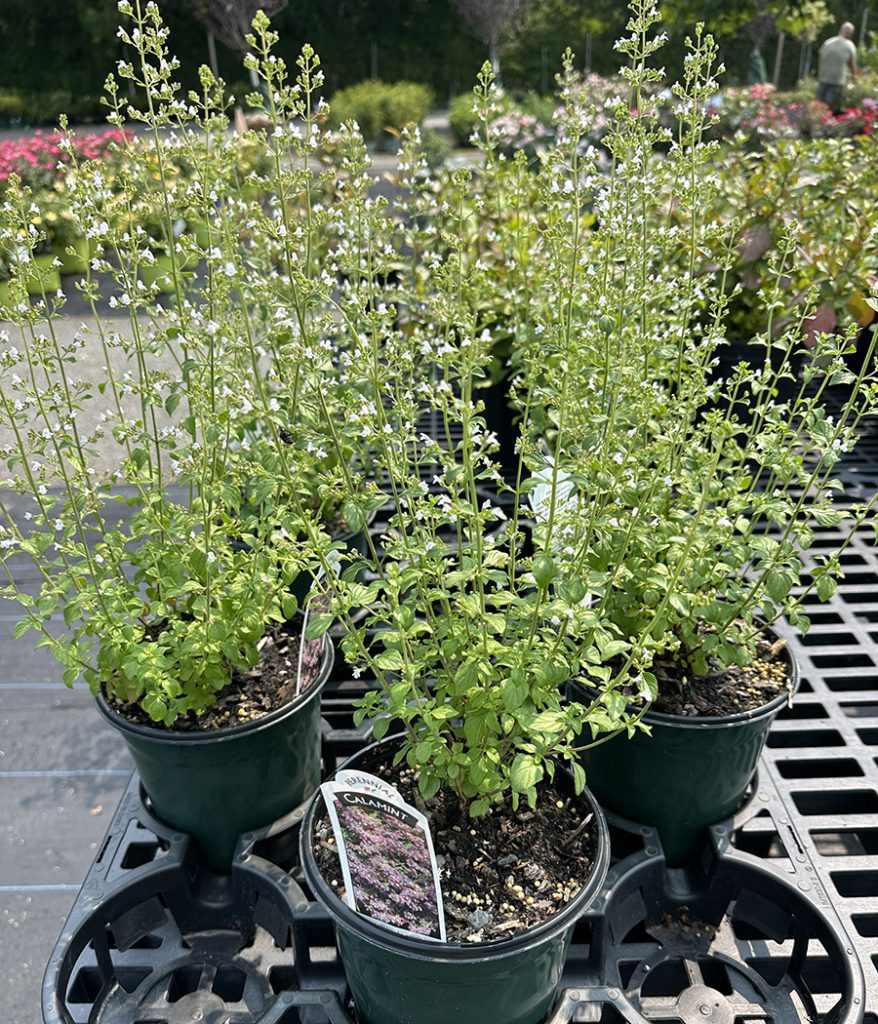
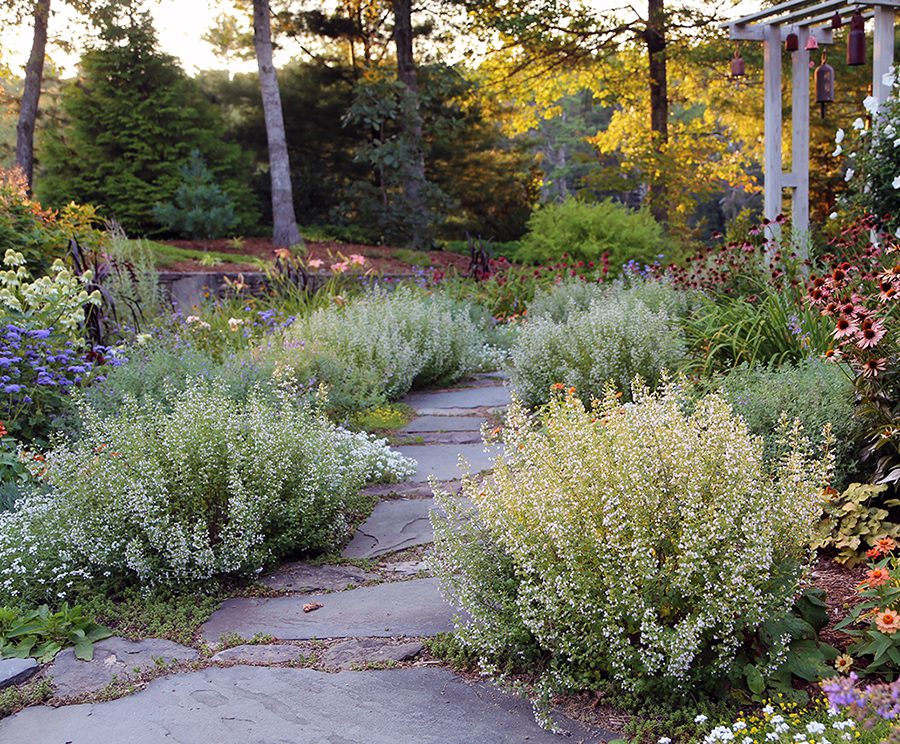
Calamint is a plant that waits until it’s in the garden before it shows you what it can do. (See the next photo.)
C.L. planted calamint along the path in this perennial garden. It looks like small, round boxwood shrubs in May, but in July it bursts into bloom with hundreds of tiny flowers that are extremely attractive to pollinators.
Add Plants With Foliage Color
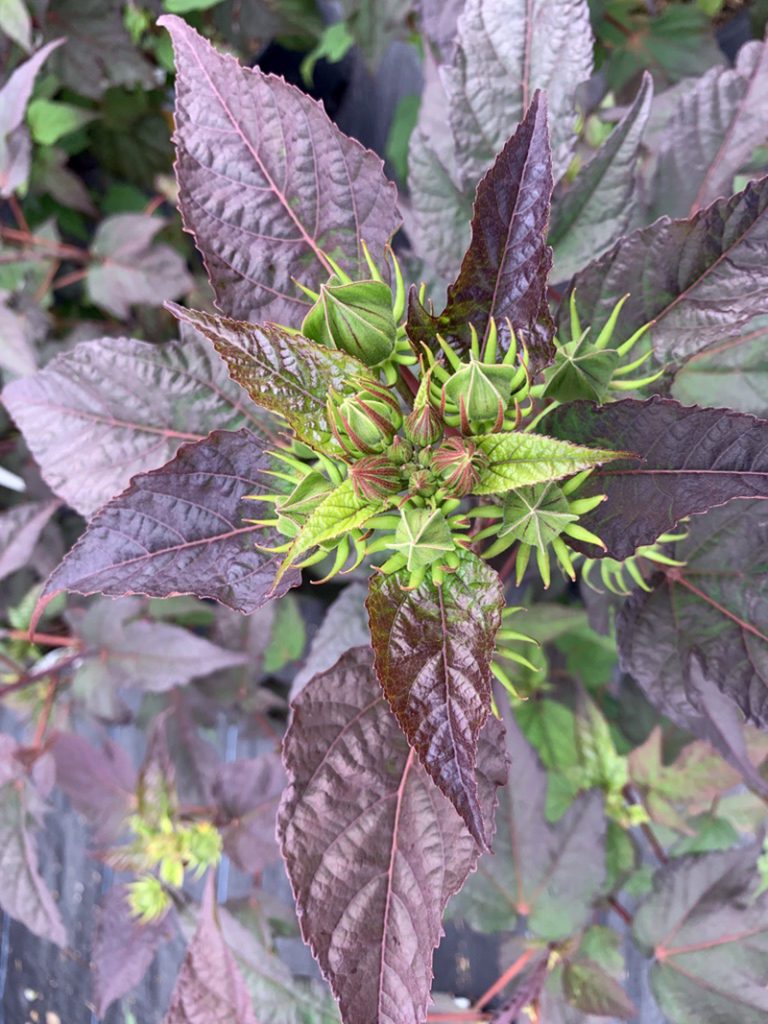
When you have plants with blue, purple, yellow or butterscotch colored leaves in your garden, there is color from spring until hard frost. Many perennials have colorful leaves, and some are late flowering as well. For example, in our perennial section there are several hardy hibiscus plants with dark foliage.
It’s not too late to plant perennials that will add color now and for years to come. This hardy hibiscus has purple leaves and buds that are striking even before the flowers open.
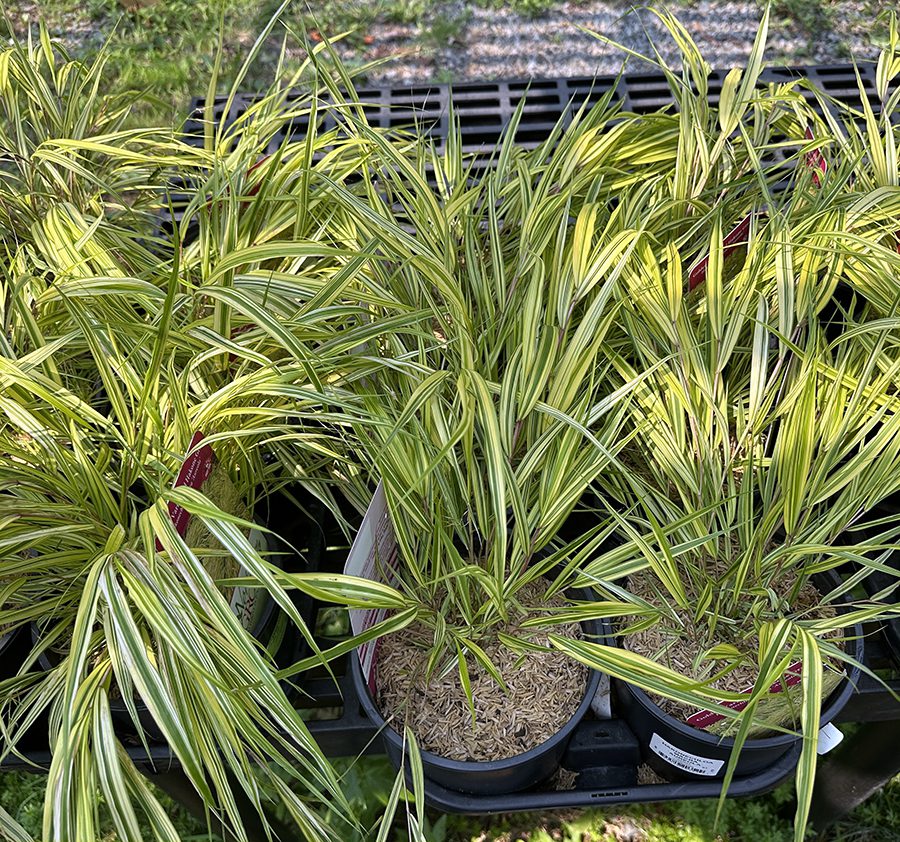
Hakonechloa maca ‘Aureola’ is one of the best perennials for color and texture in the garden. Look for these under our Shade Perennials house.
This is how an established ‘Aureola’ grass looks after 15 years in the garden. The color on this grass is a brighter yellow when the plant is young, but becomes a softer shade in the middle of summer. The plant in the upper left is our native Eupatorium, aka Joe Pye weed. Behind the hakon grass is a purple leaf hardy hibiscus, and the plant in the upper right is a Heliopsis, also known as false sunflower.
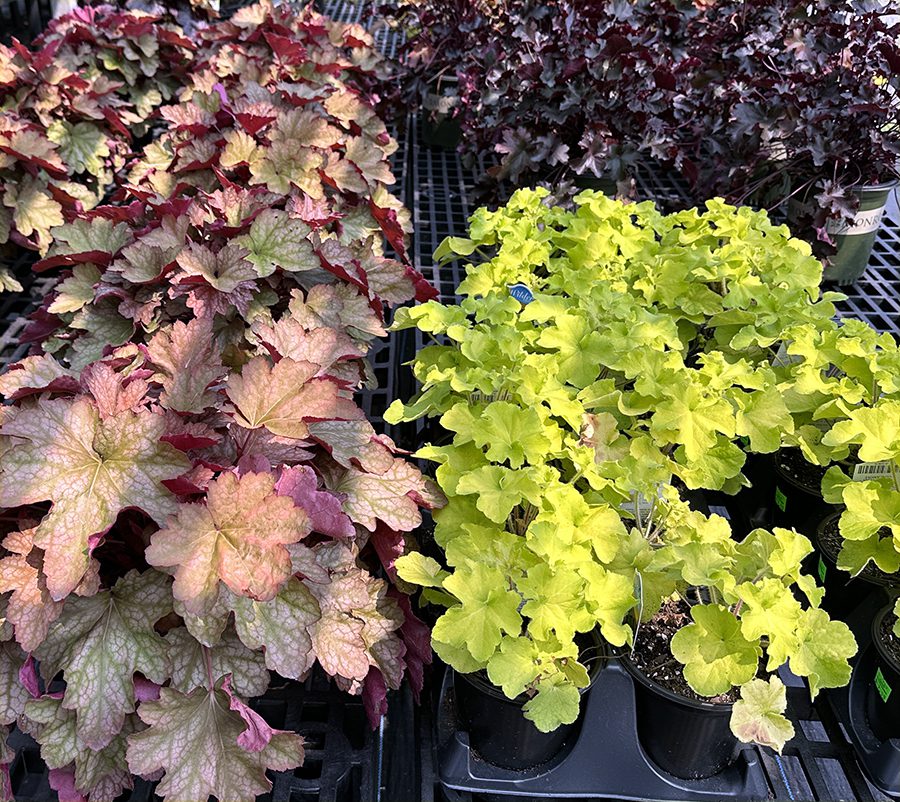
Heuchera has colorful foliage and grows best in part shade. The ones with dark purple foliage also do well in part sun.
Add Annuals to Your Perennial Garden
There are many advantages to tucking annuals into your perennial garden. First of all, you can go with different colors every year. One year you might decide to plant bright pink annuals, but the next summer go with yellows or orange. Many annuals bloom well into October, and you can add them to a perennial garden anytime. I put some annuals in my gardens in late May or early June, but I’ll also plant a few more in July or August when I have “a pause in the action” and spaces for more flower power.
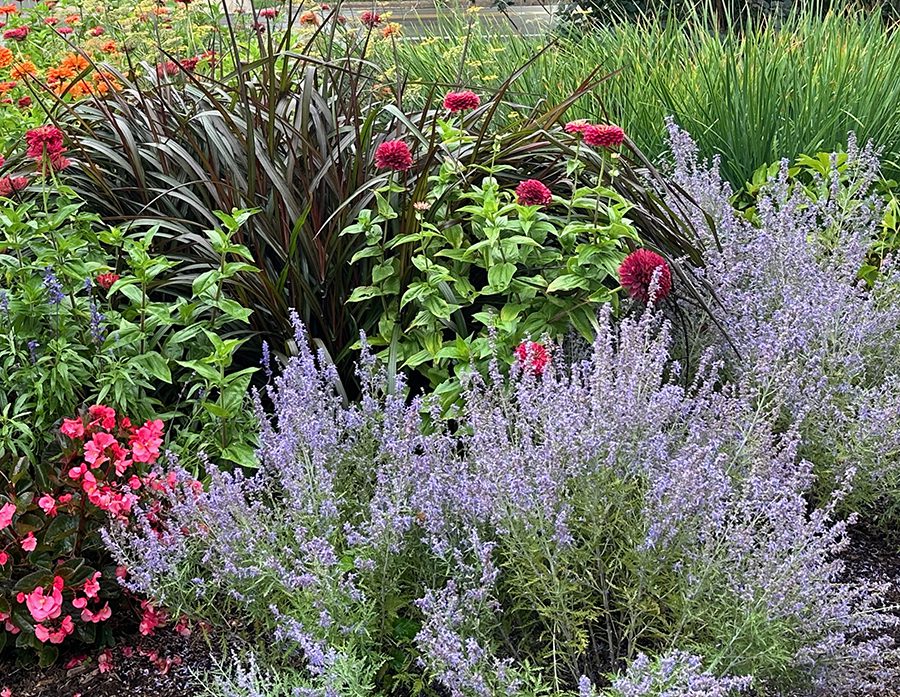
This garden combines perennials with annuals, and shows what a dash of dark foliage color can add as well. The Russian sage at the bottom of the photo is perennial. On the left is a dark foliaged wax begonia. Above these are zinnias, annual salvia, and a dark annual fountain grass.
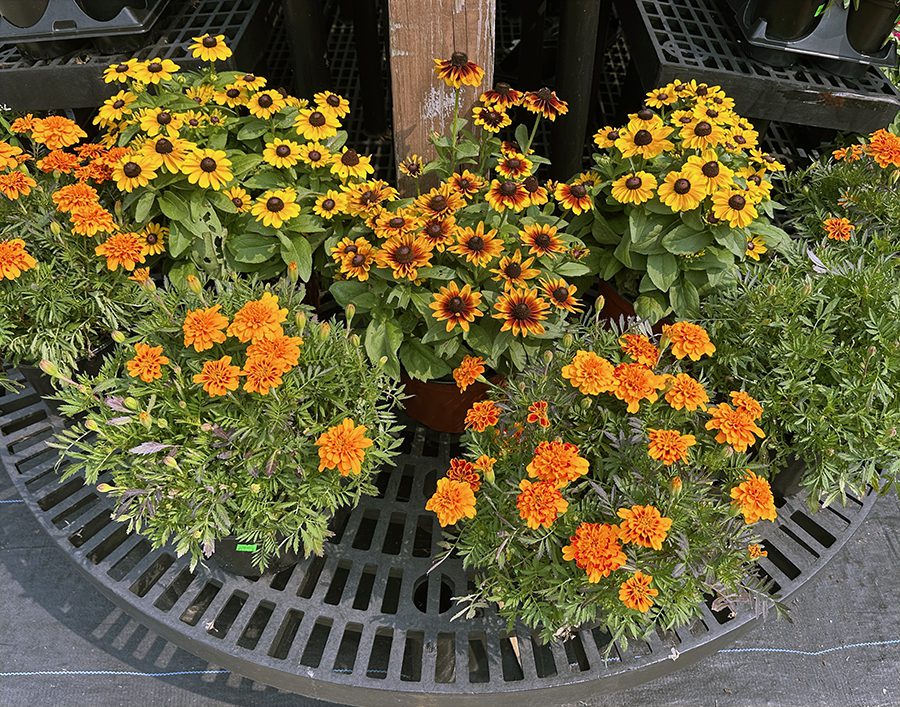
Our front annual section has zinnias and marigolds in shades of gold and orange. Both of these plants are good sources of nectar for butterflies and bees.We have several sizes of annuals in stock. If you’re choosing smaller plants, toss some time-release, synthetic fertilizer in the area where you’re planting, or mix up a liquid and apply it after the plants are well watered. Larger plants such as those in this photo are well fertilized already, and shouldn’t need additional feeding to do well.
Join C.L. Fornari for a Summer Garden Happy Hour on August 8th at 5 PM. Register here.