
In Praise of Panicle Hydrangeas
In Praise of Panicle Hydrangeas
As I travel over the Cape, I am continuing to marvel at how amazing the panicle hydrangeas (Hydrangea paniculata) are looking right now. Although most blue-flowering macrophylla mopheads that were planted in full sun have turned brown, the panicles are strutting their stuff, even in direct sunlight. And there are SO many new varieties of this shrub to choose from now.
Thirty years ago we had a choice between the straight species Hydrangea paniculata, and the large flowered Hydrangea paniculata ‘Grandiflora,’ which was commonly called the “PG” or “pee gee” hydrangea. The flowers on the pee gee are so large that they bend the stems over, so when grown as a shrub the flowers ended up in the mud and when grown in tree-form it looks like a weeping type of small tree. Pretty, but not for every location. Now we have a choice of panicle hydrangeas that are small, medium and large. Many are also now more stem-sturdy and earlier to come into flower.
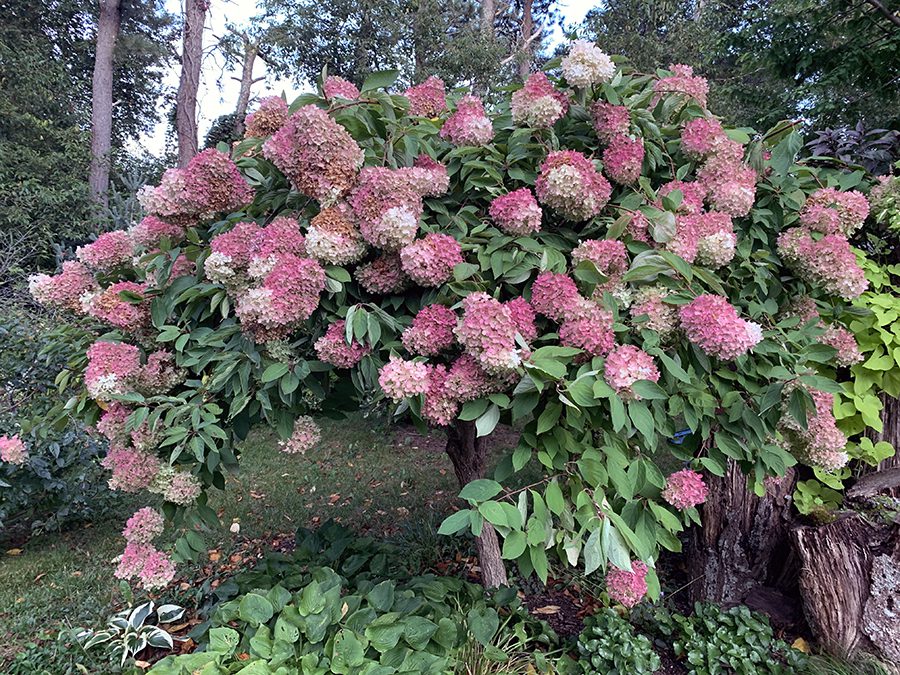
Panicles Flower on New Growth
Unlike our beloved blue hydrangeas, panicle varieties do not form flower buds in August for the following year. Paniculata varieties form flower buds in the spring so there is no danger that flowers will fail because of an extremely cold winter or being pruned at the wrong time. Panicle hydrangeas can be pruned in fall or spring without affecting the flowering.
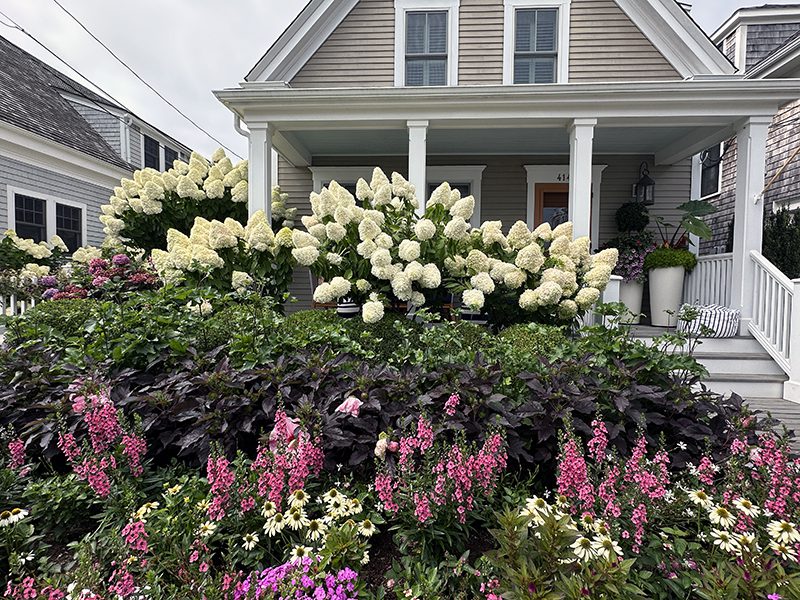
Choose Them According to Size
When choosing a panicle hydrangea, either pick the variety that will be right for the location where you will be placing it, or find the proper location for the plant that you want to grow. In other words, don’t put a large growing plant like a Limelight or Quickfire where it can’t grow over five feet. Read the labels about future size and add a foot or two beyond that prediction…plants always grow larger than the labels claim.
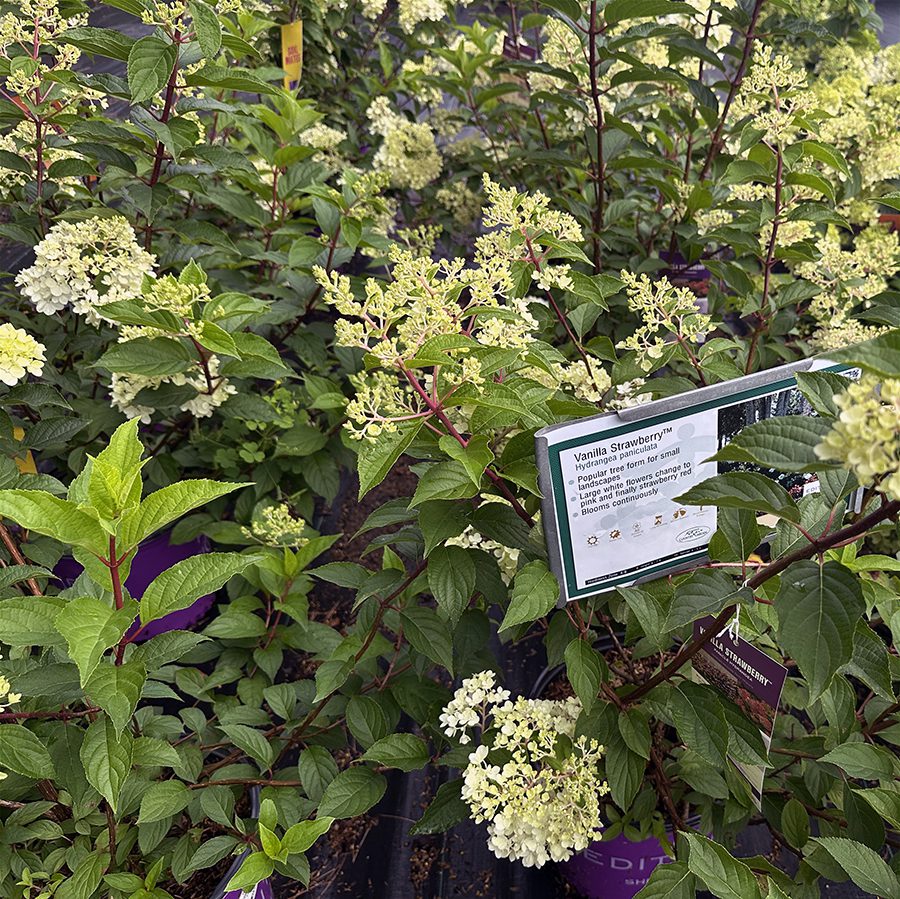
Hydrangeas For The Bees
For those who want more pollinator friendly flowers, choose a panicle that has a combination of fertile and sterile flowers. The sterile parts are long lasting and showy, but the fertile parts offer pollen and nectar for bees. Quick Fire, Little Quick Fire, Puffer Fish, Vanilla Strawberry, and Pink Diamond are just a few varieties that are pollinator support plants.

Plant Panicle Hydrangeas in Full or Part Sun
These are hydrangeas that prefer a sunny location. When planted in shade they won’t flower well.

Pruning Panicle Hydrangeas
Prune these plants in the late fall or early spring. In general, you 1. Remove dead stems and broken branches. 2. Look for stems that head into the center of the plant instead of out and away from the middle, and take those off. 3. Clip from the outside back to shape, but not removing more than 1/4 of the plant’s total height.
Subscribe To Our Newsletter
Sign up for our weekly email about sales and events.