
Drying Your Garden Flowers
Drying Your Garden Flowers
This is the time when those on Cape Cod can pick their hydrangeas and dry them for long-lasting bouquets and flower displays. When the hydrangeas are new and fresh in July they will shrivel instead of drying well, but from late August into September, most of them are thicker and more mature, and these flowers dry nicely. To dry hydrangeas, you can simply put them in a vase with a little water and then let the stems dry once that water is used up.
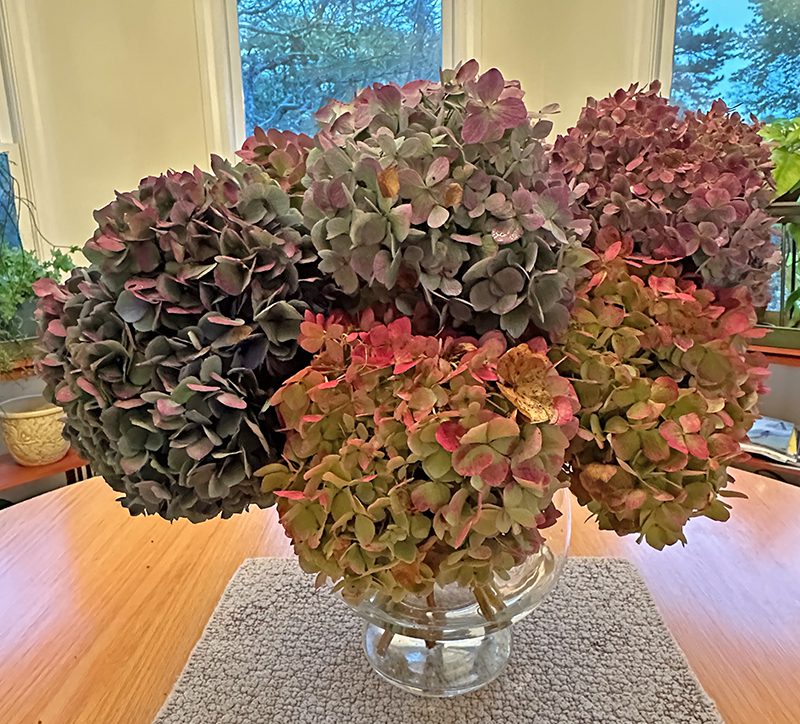
Drying Flowers in the Vase
But hydrangeas aren’t the only flowers that are good for drying. Many common garden flowers can be dried and used in arrangements or wreaths. It can be fun to experiment with what is in your garden, and although those who create dried arrangements for sale often use silica gel to hold the shape and color well, you can also dry flowers either by letting them be in a vase without water or by hanging them upside down.
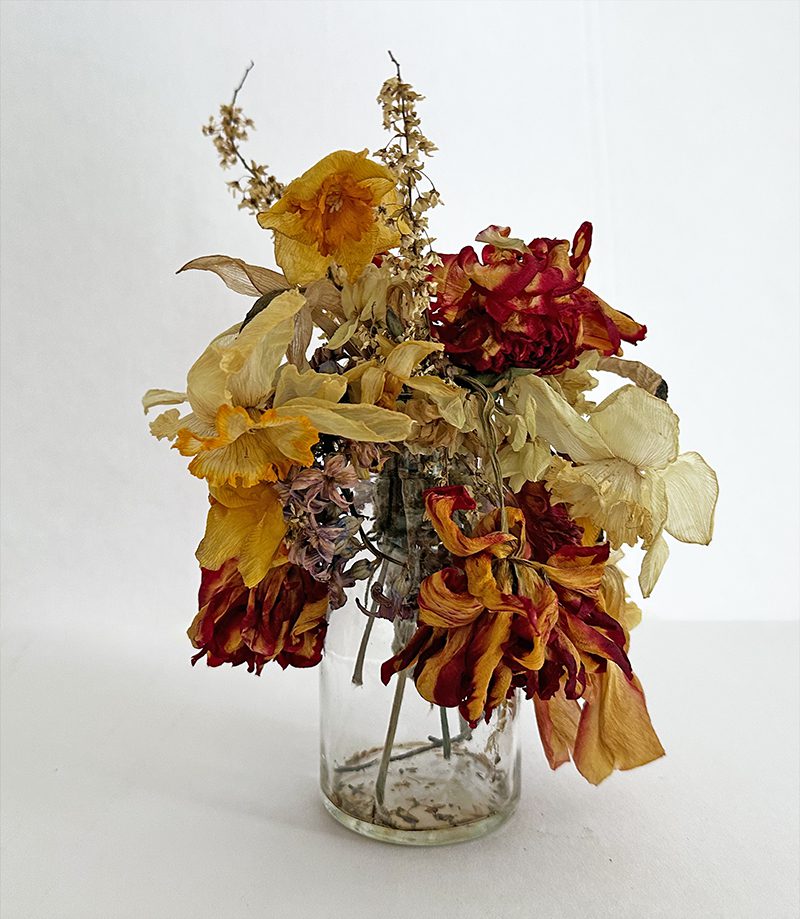
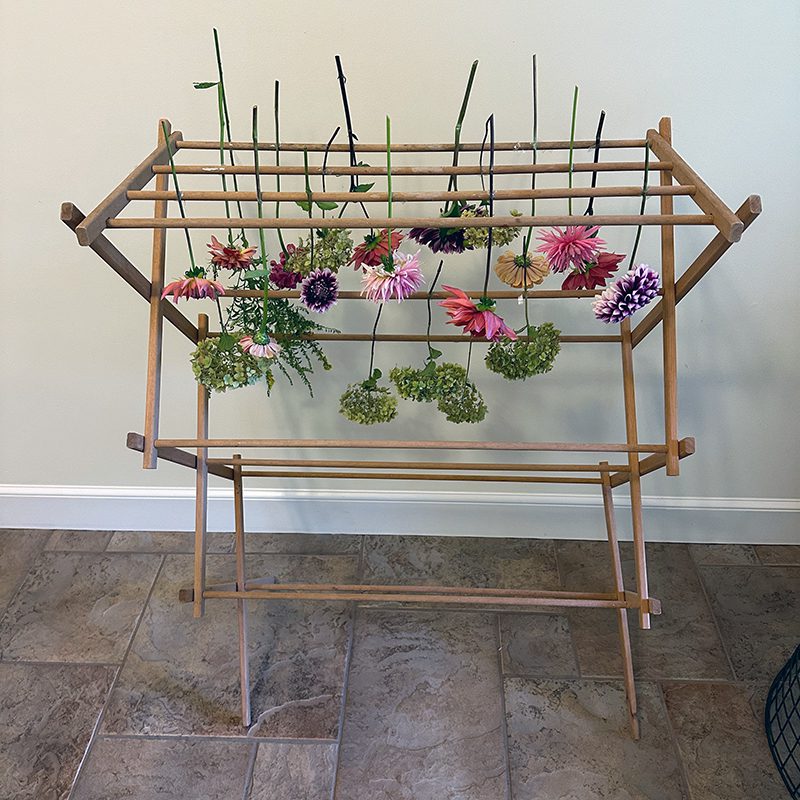
Hanging Flowers Upside Down
When flowers are dried by hanging them upside down they keep straight stems and retain much of their original shape. Use this method for dahlias, zinnias, marigolds, gomphrena, and strawflowers. Some people clip the stems onto wire clothes hangers using the small clothespins you can buy in craft stores. Others use those same clothespins to hold the flower stems onto cords or twine strung in a garage, porch or seldom used room. (Note: keep such cords away from the walls because sometimes drying flowers can stain a painted wall.) Another way to dry flowers is by taping the stems onto a folding clothes-drying rack.
The dahlias that dry most successfully are the pompom types, but experiment with any that you have growing and see what happens.
Seed Pods are Also Decorative
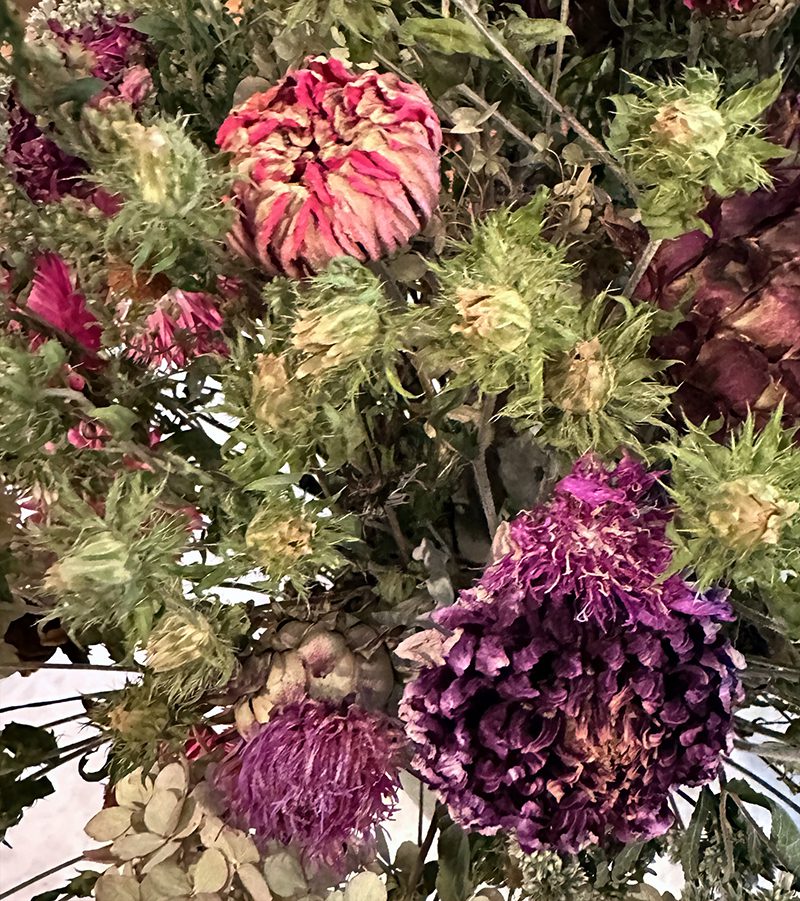

Arranging Dried Flowers
When arranging the blooms that were dried by hanging upside down, handle them carefully; dried flowers are often brittle and can shatter easily. It’s helpful to use dry floral foam such as Oasis Sahara, and poke the stems into that. You can also use the thin, clear floral tape to create a grid over the top of a vase that will help hold the center flowers upright.
Some people spray their dried flowers with hairspray, lacquer, glycerin or a clear acrylic. Note that although many people use hairspray, it alters how a dried flower looks. There are also sprays that are simply called dried floral preservative, and these usually keep the flower’s natural appearance.

Keep all dried flowers away from windows and out of direct sun. They will brown and fade quickly if placed where the sun hits them.
Note: We are offering a Hydrangea Wreath workshop on September 14th at 2 PM. Bring in 20 to 30 freshly cut Hydrangea flowers and create a wreath that will last for months. Registration here.
Subscribe To Our Newsletter
Sign up for our weekly email about sales and events.