
I Have Brown Leaves on My…
I Have Brown Leaves on My…
We are hearing from customers about plants that have brown leaves. Most of these people say that their perennials, shrubs or trees looked fine until last weekend, when suddenly there were brown or white patches on the foliage. What Cape Cod gardeners and property owners are seeing is probably damage from the very hot weather on June 23, 24, and 25.
Although Cape Cod can have temperatures in the 80’s and above in July, such highs aren’t typical in June. Many of the plants have more tender foliage earlier in the summer, which is more likely to be damaged. And when the weather has been cooler and often cloudy in early June, the sudden spiking to very hot, sunny days can take an even greater toll on plants.

On some plants the sun alone is enough to cause leaf scorch. But browning leaves might also be a combination of sudden, hot temperatures along with other factors. For example, a plant that’s fed with a synthetic fertilizer just before a hot spell can be more prone to foliage burn. Other garden products that are sprayed on leaves to prevent or cure fungal or insect conditions can be damaging in very hot weather. Or occasionally, when someone picks up a hose to give a plant a squirt, they don’t realize that the sun-heated water that comes out at first can kill leaf tissue, turning the foliage brown a few days later. Even our much-appreciated sea breeze can contribute to browning leaves since the wind blows the moisture away from a plant’s pores more quickly.
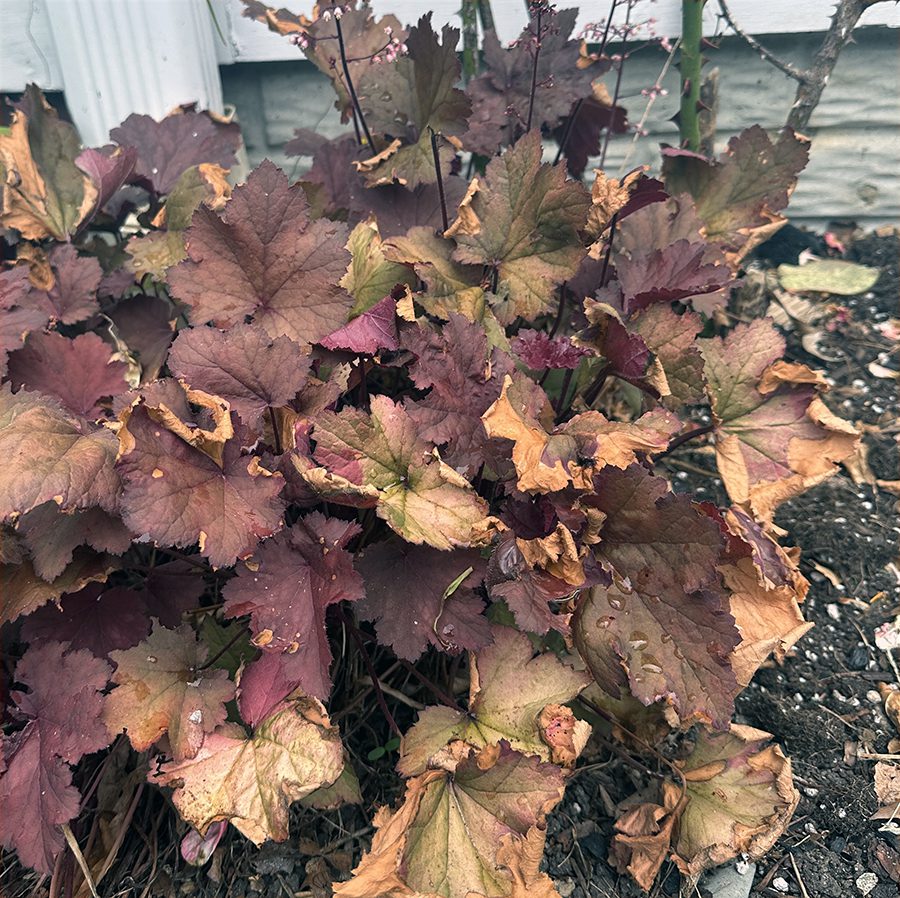
What do you do if you have plants that were damaged? Clip off the worst of the leaves, since they aren’t really capable of good photosynthesis anyway. Most plants will have plenty of time to grow new foliage this summer. If an entire perennial is toasted, you can clip those right to the ground, but don’t cut shrubs down at this time of year. When in doubt, remove the worst of the browned leaves and let the rest of the plant continue to grow. Do not fertilize in hot weather.
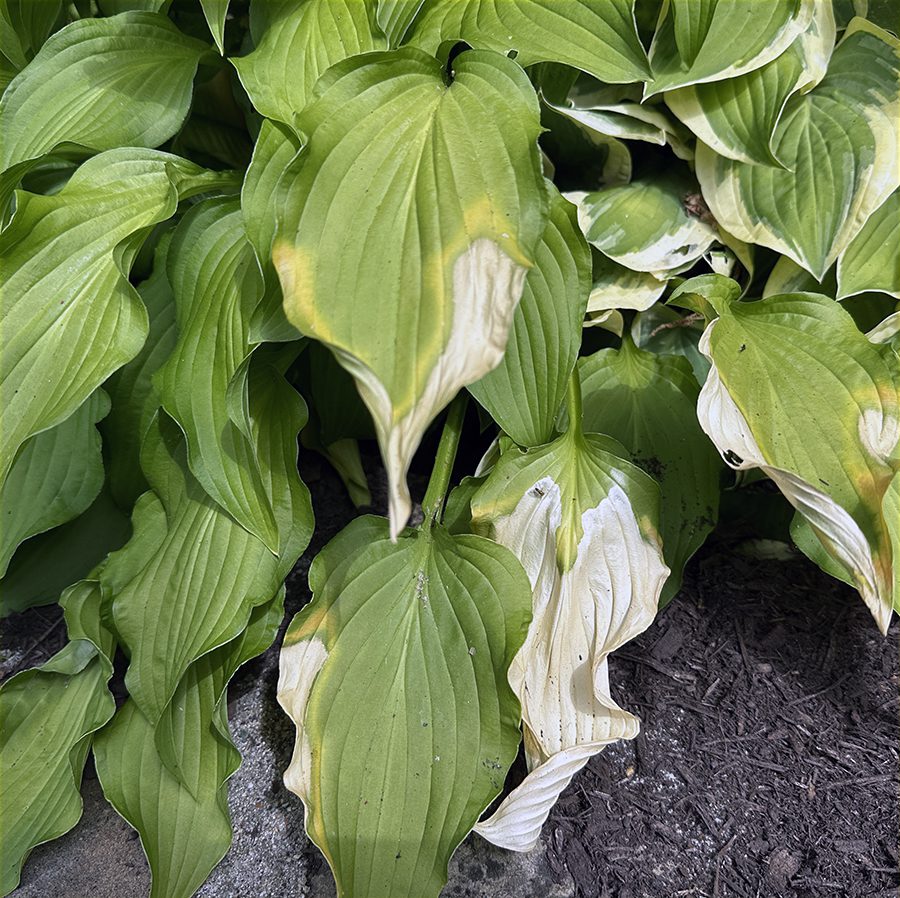
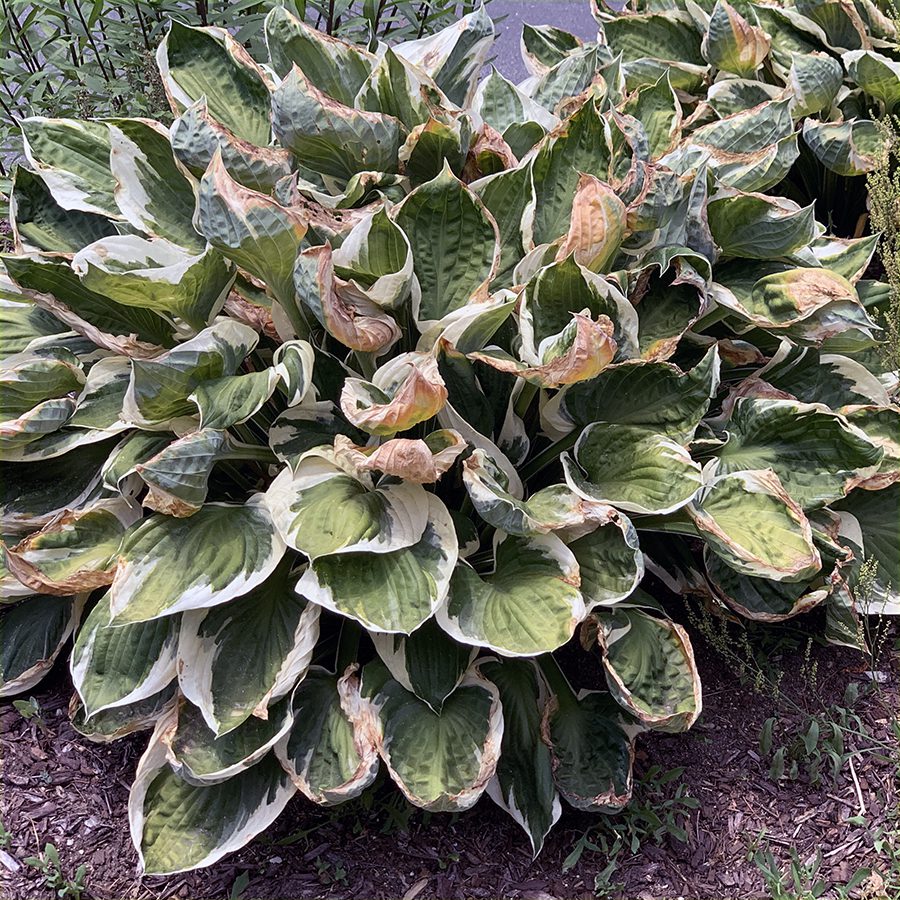
Make a list of plants that are placed in locations where they are likely to be scorched again, and plan to move those in the early fall. In the meantime, when the forecast shows that another heat spell is approaching, be sure that your beds have been deeply watered in advance of that weather. Water entire beds with a sprinkler if your town permits this; hand watering seldom soaks the areas around or in between plants, leading to plants with greater heat damage.

Best practices for landscapes in hot weather.
- Water deeply less often, not every day.
- Water plants in the morning whenever possible. Having wet foliage at night encourages leaf spot fungi.
- Let sun-heated hoses empty before the water hits the leaves of plants.
- Soak the ground when you water…spraying the plant down doesn’t “refresh them.” Plants want water that their roots can absorb.
- Plants with large leaves will often wilt on very hot days even if the ground is moist. Hydrangeas are famous for this. This is because they lose water through their pores faster than the root system can draw moisture from the ground and keep the leaves firm. If your plants perk up in the evenings, that’s likely to be what’s going on. When plants wilt every day in this manner, however, their leaves and flowers are likely to brown quickly and look toasted by mid-summer. Make plans to move such plants to places where they are shaded from hot, afternoon sun.
- Don’t apply pesticides or other garden products during the hottest weather.
- Never fertilize a thirsty plant.
- Water any newly placed plants more frequently, since they will have a root system the size of the pot they were grown in.
- Follow the guidelines for water usage provided by your town.
1 Comment
Leave a Comment
Subscribe To Our Newsletter
Sign up for our weekly email about sales and events.
VERY helpful information. Thank you!