
Success With Bulbs in Containers
Success With Bulbs in Containers
Tips for “lasagne planting” of spring bulbs in pots.
As the temperatures cool in October it’s the perfect time to put spring-flowering bulbs in the ground and in containers. Planting in the garden is straight forward, and summed up the bulb industry’s slogan: dig, drop, done! But planting in containers requires a bit more planning in order for your bulbs to make it through the winter and produce a good show next spring. Here are six pointers for success.
Great drainage is a must.
Containers must have drainage holes and be filled with new potting mix. Why new soil? Older potting mix is likely not to drain well, since most of these mixes are high in peat and other organics, which break down over time. If summer annuals have been grown in the containers, their roots also contribute to poor drainage. So to give your spring pots or boxes the best chance for success, use new potting soil. Note that after the bulbs finish flowering you can transplant them to the garden and use the potting mix in your containers for summer annuals.

Consider when the bulbs will bloom and how tall the plants will be.
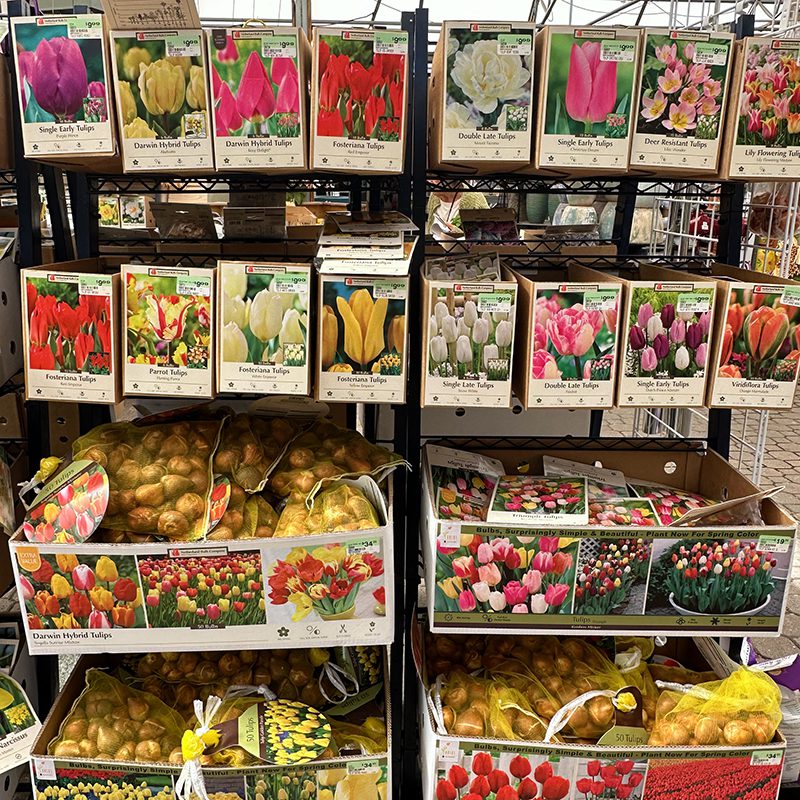
Spring bulbs are usually labeled as early, mid and late season bloomers. If you want all of the bulbs to be in flower at the same time, make sure that you’ve purchased varieties that are labeled as flowering in the same period. Some people want to have a longer show of flowers, with some opening up early, some mid-spring and others later. Decide before planting how you want your containers to look.
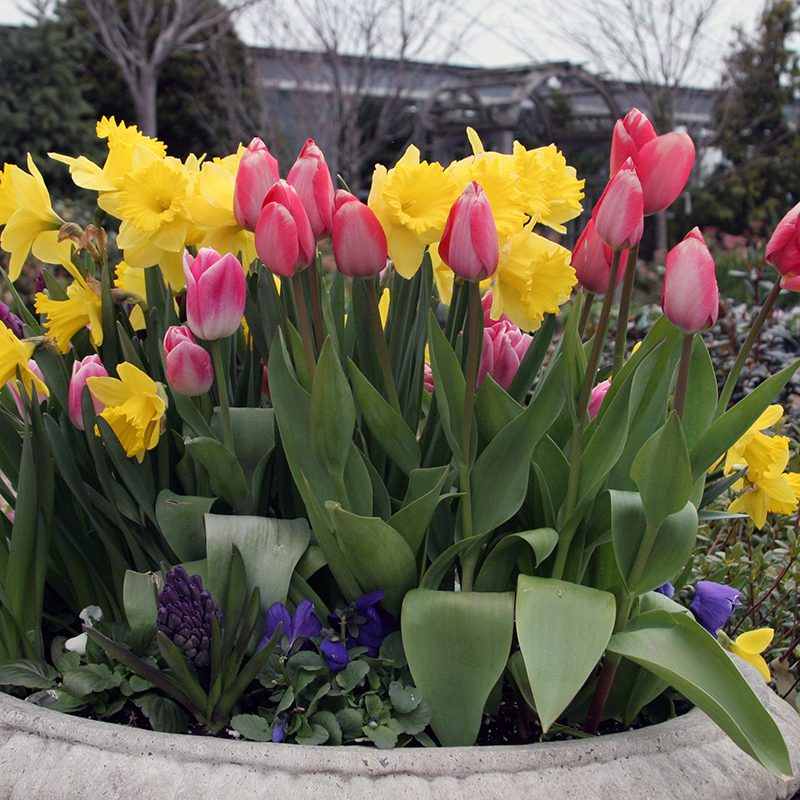
In general, it’s best to group the taller growing flowers in the center of a container and the shorter ones around the edges. If you place tall, medium and short throughout the entire pot or box, the larger plants will hide the smaller flowers.
The bigger the container, the better.
If your pots are going to stay outside all winter, use containers that are at least 20″ across and 16″ deep. Smaller pots or boxes are better put into an unheated garage or basement in late November or early December, but those will need to be watered when the soil is dry, and they will start to break dormancy in February. If you’re keeping your pots inside, you’ll need to bring them into the house once they poke out of the soil, or move them outside at that point before they grow much higher than 2″ tall.
Plant small bulbs above larger ones.
In the lasagne style of bulb planting, larger bulbs such as daffodils and tulips are planted six inches deep, medium bulbs such as hyacinths three inches deep and the small ones such as crocus, grape hyacinths, and blue Scilla are place two inches below the surface. When planting only one type of bulb you can crowd them in, putting one bulb right next to another for a full display next spring. But if you’re layering, you’ll want to space the bulbs further apart so that the growth from below can push up between the bulbs above.
Another option would be to group the larger bulbs thickly together in the middle of the container and place the smaller varieties around the edges.
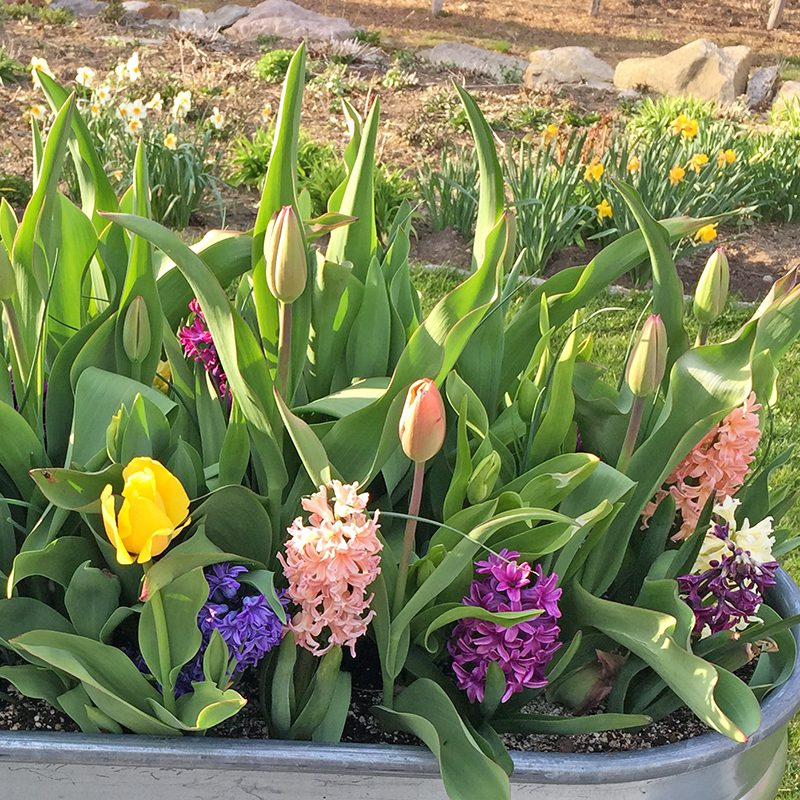
Daffodils usually bloom later
If your vision is to have daffodils blooming with the tulips and hyacinths, you’ll be better off buying all of those in pots next spring and putting them into the container at that time.
Bulbs and critters
Just as the squirrels and other animals sense disturbed ground in the garden after bulb planting, they do in containers as well. In both cases, they will often dig in an area they know has recently been dug just to see what is there…a tasty treat or not? In order to prevent this, water the areas where you’ve planted bulbs very well to settle the soil. Rat Magic, a product made from natural oils such as peppermint and clove, also discourages squirrels. After watering the area well, sprinkle Rat Magic on top of the soil.

Subscribe To Our Newsletter
Sign up for our weekly email about sales and events.