Planting & Improving Your Privacy Screening
Planting & Improving Your Privacy Screening
When people want to plant for privacy they often think of a row of all one plant. And if they’re in a hurry, they’ll turn to an evergreen that grows quickly, such as the ‘Green Giant’ arborvitae (Thuja hybrid ‘Green Giant’). There are, however, advantages to growing a number of different plants in a privacy screen in addition to the lovely ‘Green Giants.’ And if you already have a row of all one plant, adding a layer of other selections in front of the existing screen can add color and an extra layer of privacy.
You Won’t Lose It All
New insects and diseases move onto the Cape all the time (box tree moth!) and if a pest or problem is introduced that attacks the plant in your screen, you could lose the entire planting. This happened about thirty five years ago when the Hemlock Woolly Adelgid arrived in Massachusetts, causing many to lose their hemlock screens. Weather conditions can cause problems as well since some plants have dieback during dry summers and others can get fungal problems in wet seasons. By using a mix of different types of plants in a privacy planting, you are less likely to have the entire border be damaged or die.

Color! Texture! Flowers!
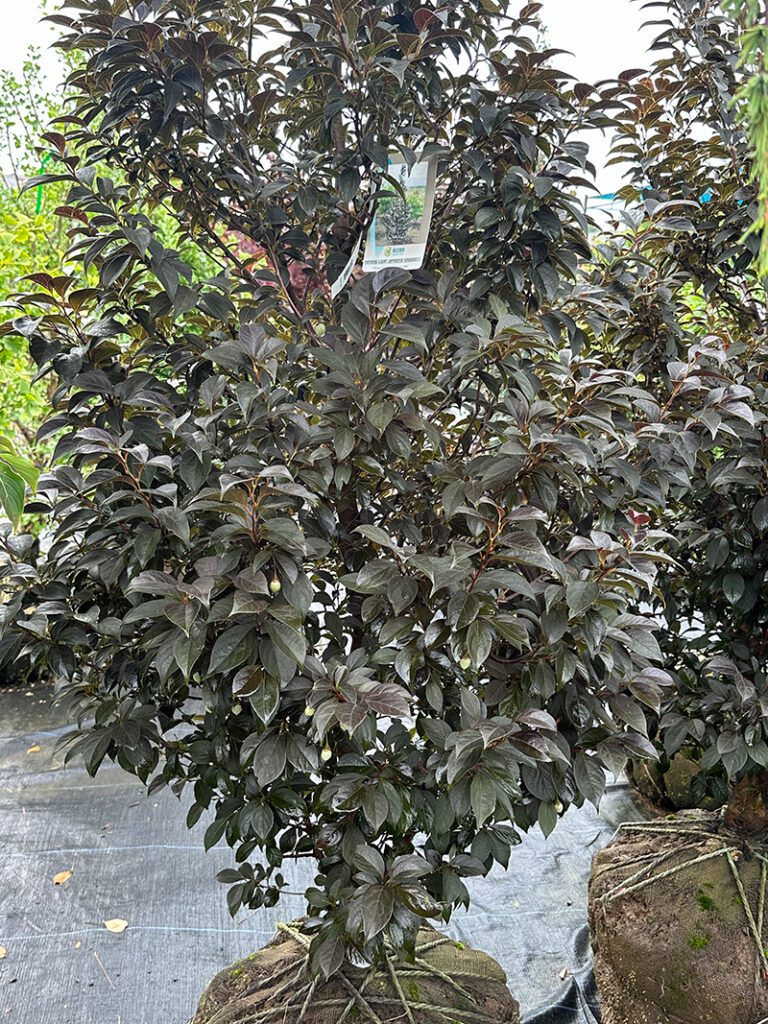
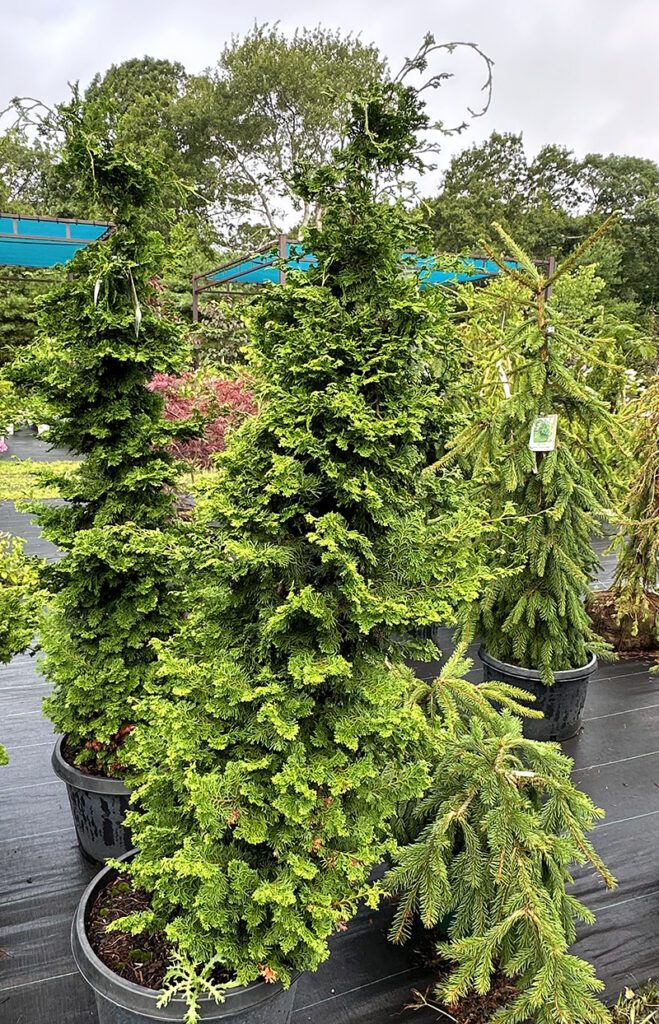
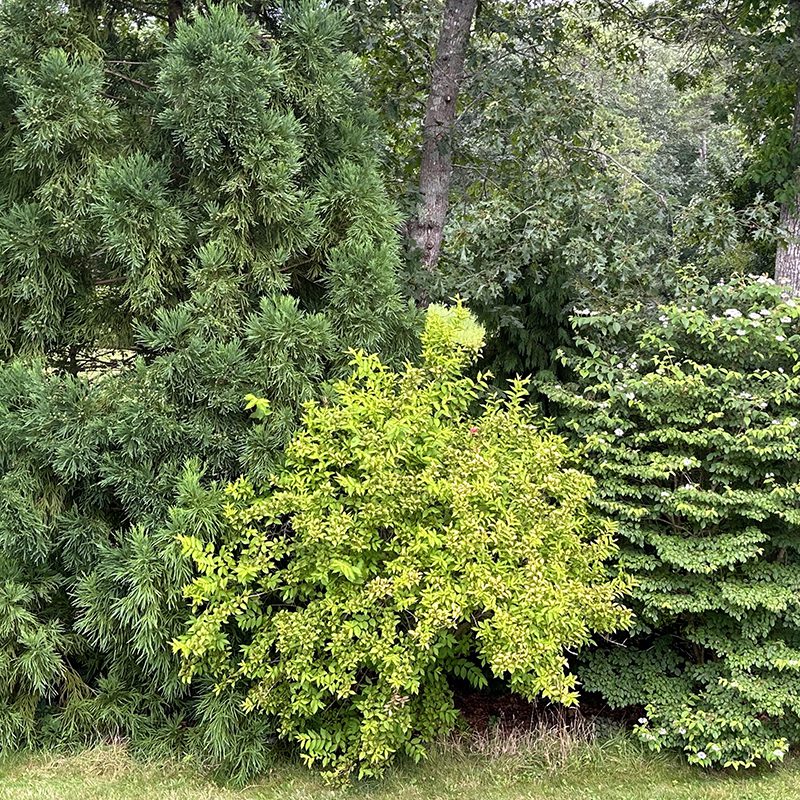
In addition to being practical, a variety of plants provides a great deal of visual interest. By planting some single plants and others in a group of three or more, there is always something interesting to look at throughout the year. And while many people like a background of evergreen plants, flowering shrubs or trees can also be included in front of or between the plants that are mostly green. Here are just a few of the great evergreens in our nursery right now, and suggestions on how to plant them.


Adding To Existing Plantings
If you’ve already got a privacy planting there good reasons to add additional plants. First of all, the aforementioned colors and textures to liven things up. And secondly, sometimes an existing screen develops gaps because of the loss of certain plants or their natural growth habits. For example, Rhododendrons are good for putting in front of Leyland Cypress, since their foliage and flowers offer a good contrast, they grow in the shade, and when the Leylands thin out at the bottom the Rhododendrons can fill in those gaps.

Planting Now, And Into The Fall
On Cape Cod we can safely plant in August as well as into the fall. The earlier you get plants in the ground, the better their roots will be established as winter arrives. Plant in the native soil, then top-dress the area around those plants with and inch or two of compost topped by an inch of mulch. Water the entire area well at least once a week through all of October.
Subscribe To Our Newsletter
Sign up for our weekly email about sales and events.