
Dealing With Unwanted Plants
Dealing With Unwanted Plants
Be they invasive, aggressive, native, or exotic: some plants just have to go.
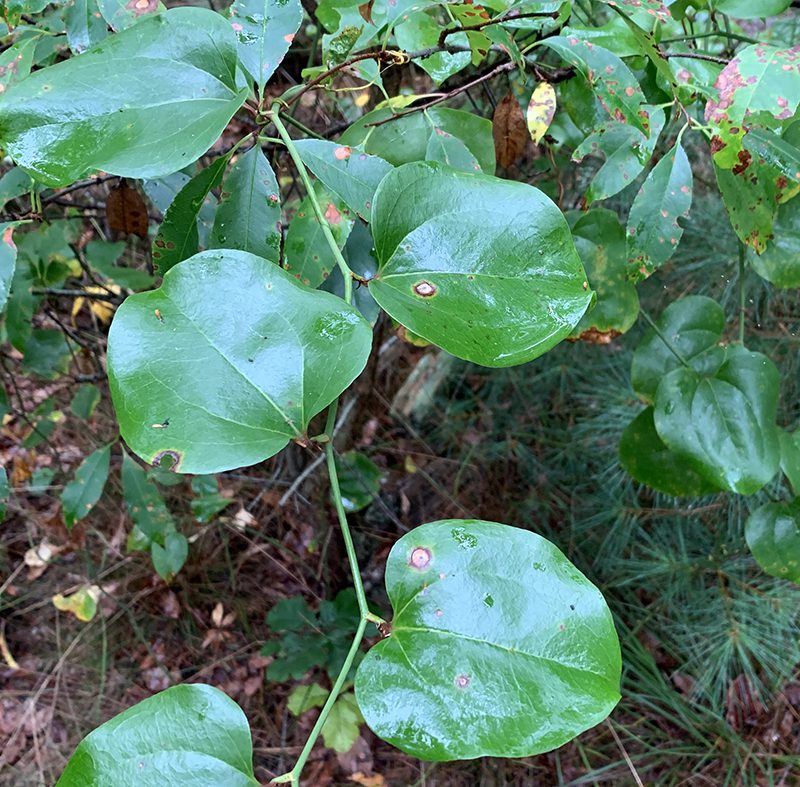
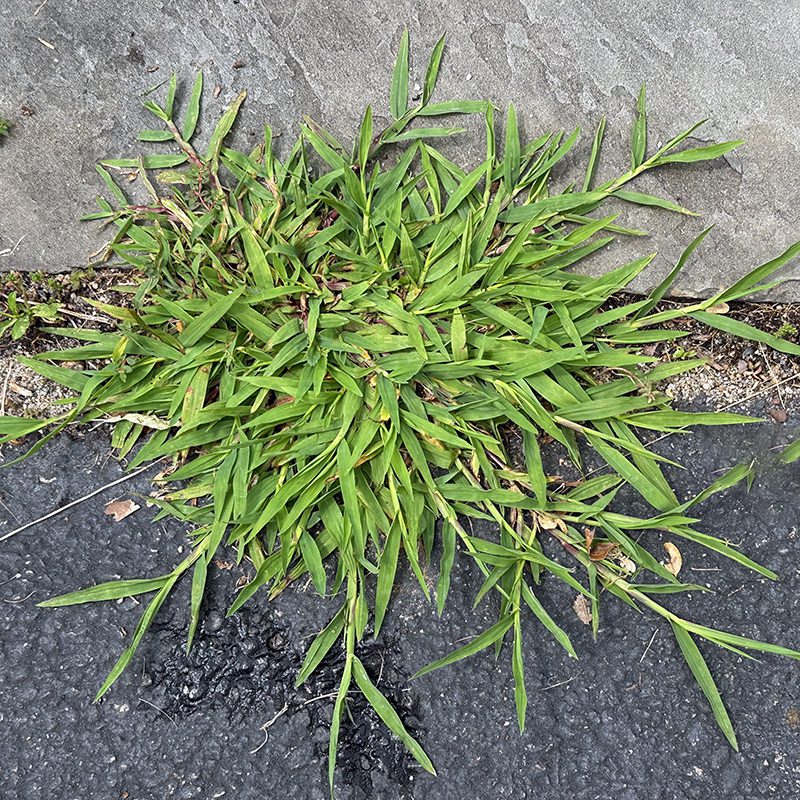
As we walk through our Cape Cod landscapes in August, it’s common to spot plants that have either appeared this summer or have escaped our attention in the past. Maybe you’re noticing the crabgrass (Digitaria sanguinalis) or spotted spurge (Euphorbia maculata) along the edges of the driveway or between stepping stones. Perhaps you’ve suddenly seen a greenbrier shoot (Smilax rotundifolia) poking out of the tops of your Rhododendrons or Hydrangeas. Or maybe when you look at the perennials in a flower bed you suddenly notice some poison ivy (Toxicodendron radicans) nestled under a daylily. Weeds happen!
Even plants that we like or have purposefully planted can sometimes be such over-achievers that they begin to take over a garden. You may have heard the saying that “A weed is any plant that’s in the wrong place.” and that said, this blog post is about dealing with unwanted plants.
Dig Them or Pull Them
One way to get rid of plants that you don’t want is to pull or dig them out. The advantage to this method is that you get all or most of the roots, so the plant isn’t likely to return. The disadvantage to this method is that it can be time consuming, physical work. Still, when you notice that small poison ivy in the perennial bed, it’s often just as quick to dig it out, and in such cases spraying an herbicide isn’t a good option because surrounding plants will be killed as well.

Cut Them Off!
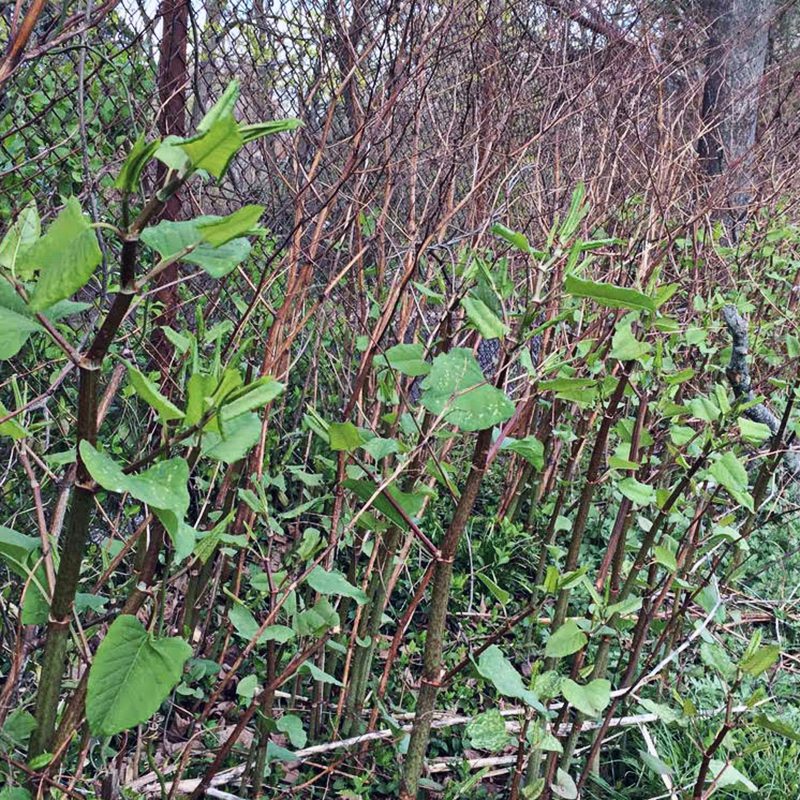
Some unwanted plants are harder to pull or dig because their roots are entwined with others, or so deep and established that it’s impossible to get them all out of the ground. In such cases, cutting them off repeatedly at ground level can, in time, lead to their demise. By cutting the plants off you are denying them photosynthesis, and every time they poke up again they are using energy from the root systems. If you don’t let those plants replace that energy, eventually you’ll starve their roots and they won’t come back. The key is to look for growth once a week and immediately cut it off.

Spray With Herbicide
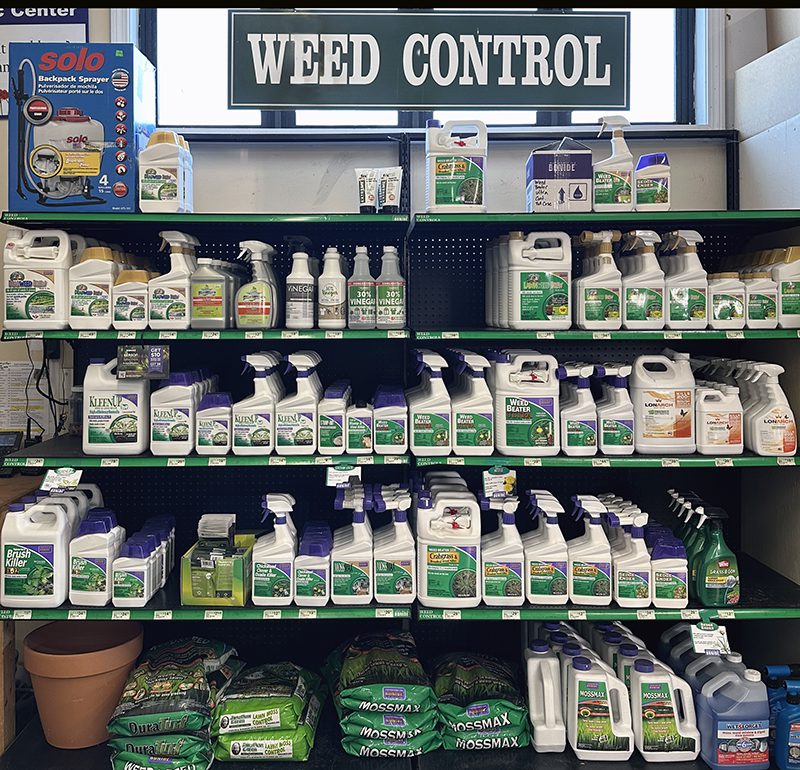
Some plants are best eradicated with an herbicide that kills them, but this method is only good in selected situations. Most herbicides kill whatever they touch, so it isn’t always practical when an unwanted plant grows among others you would like to preserve. There are organic herbicides available, as well as synthetic ones; come into the store to speak with the staff in our Garden Room about the best product for your situation.
Correct The Growing Conditions That Weeds Favor
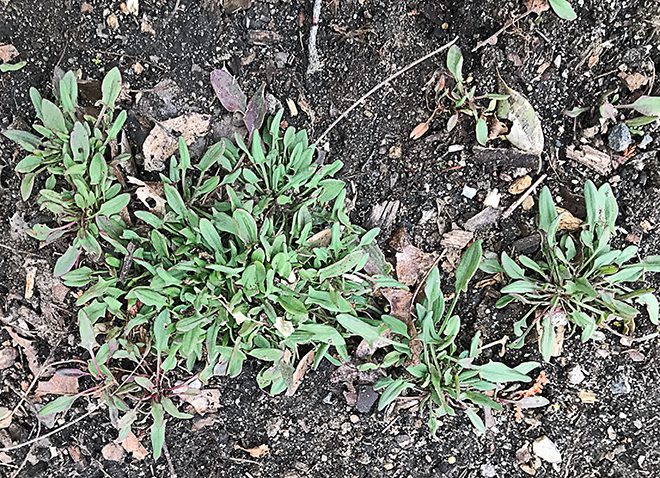
Many weeds thrive in particular conditions, and if you change that environment the weeds are less likely to grow. Sheep sorrel (Rumex acetosella), for example favors acidic soils, and spurge, crabgrass, and purslane like dry, hot areas. Plantain and speedwell show up when soil is compact. If you have weeds in your lawn or gardens, come talk with our green team in the store to learn how you can change the growing conditions there so that the turf out-competes the undesirables.
Grow More of What You Desire, and Keep That Thriving!
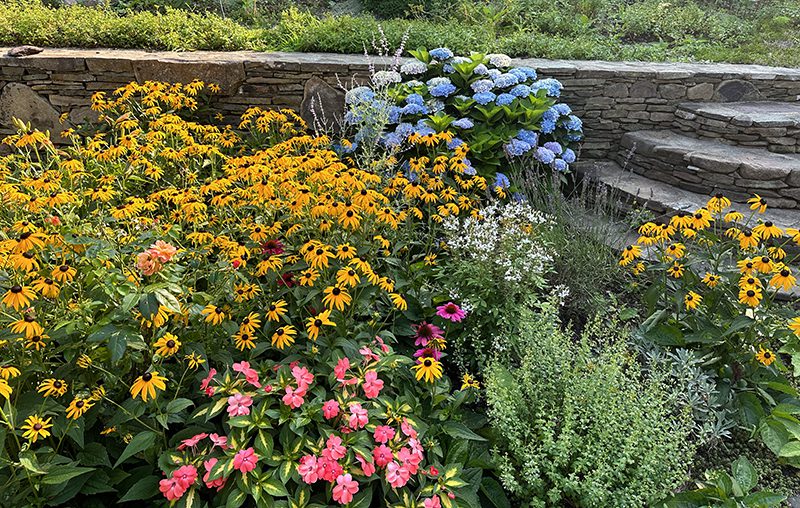
Places where your soil is bare are likely to contain weeds. Mulch can help prevent weed seeds from germinating, but where other plants are thick and healthy you already have the ground shaded. Geranium macrorrhizum, Epimedium, lady’s mantle (Alchemilla mollis) and Hosta, for example, make great weed-smothering ground covers in part to full shade. ‘Zagreb’ Coreopsis, wooly thyme (Thymus pseudolanuginosus), and creeping phlox (Phlox subulata) do the same in full sun. And a lawn where the grass or grass and clover are vigorous are much less likely to contain other plants.

For more about the vines and other invasives that commonly appear in Cape Cod landscapes, read this blog post from 2020.
Subscribe To Our Newsletter
Sign up for our weekly email about sales and events.