November Q & A
November Q & A
Our Cape Cod Customers Have Questions…and We Have Answers!
Q. My neighbor has a small maple tree with long-lasting fall color and branches that look red in the winter. What kind of tree is this?
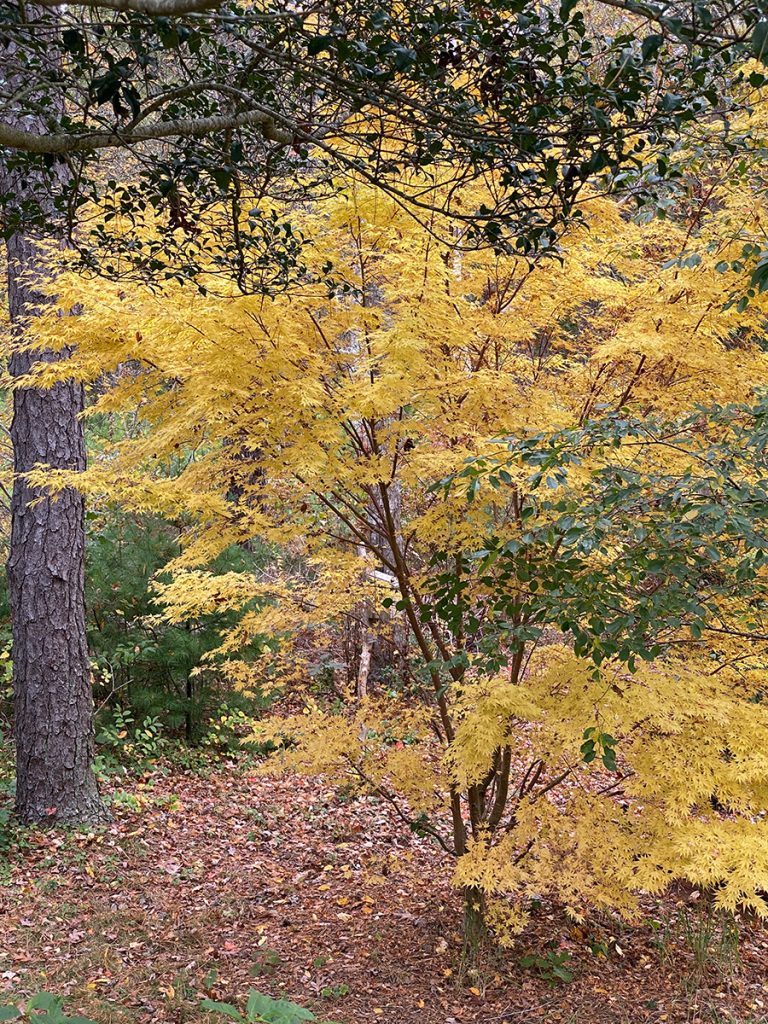
A. It sounds like a coral bark maple, Acer palmatum ‘Sango Kaku.’ Not only does this small tree have bright yellow fall color that is long lasting, but the lime-green of the spring foliage is spectacular as well. The coral bark maple grows slowly to about 20 feet tall, and the newest branches are a brilliant color in the winter and early spring. In fact, when I grew one in Osterville the neighbors used to stop and ask me if I had spray-painted that tree.
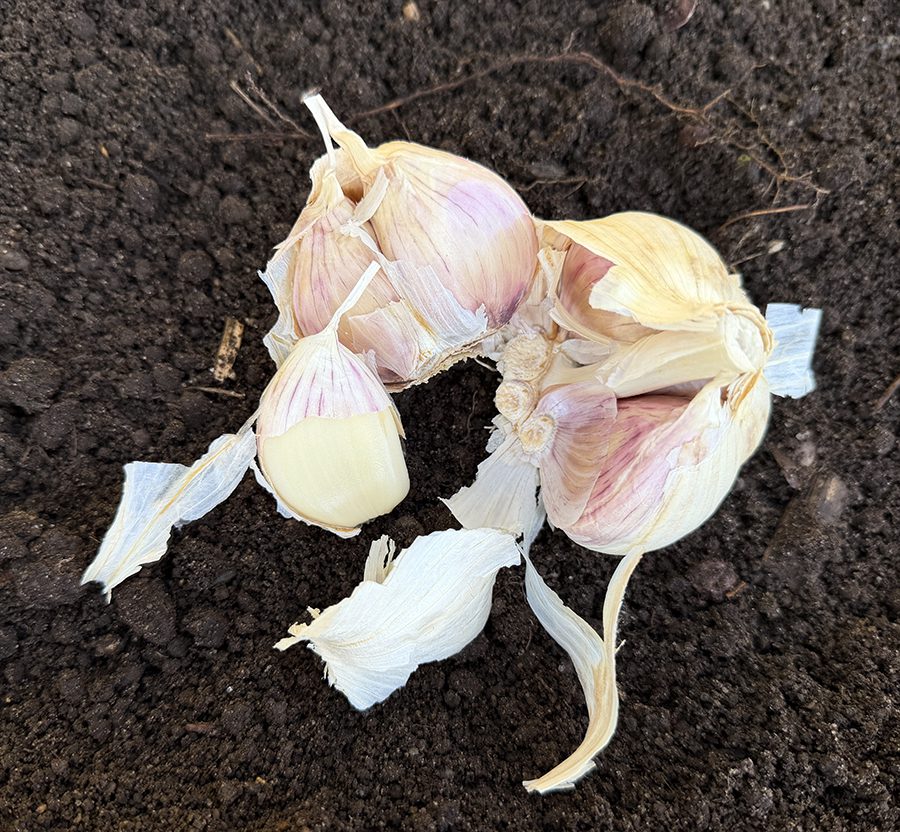
Q. When I plant my garlic, some of the paper falls off of the cloves. Is that a problem?
A. No. Don’t worry about it. You can plant those cloves with or without paper. Try not to damage the cloves when you remove them from the head, however. Sometimes it’s difficult to pry off the cloves on a head of hard neck garlic, which has a inner core that is hard like wood.
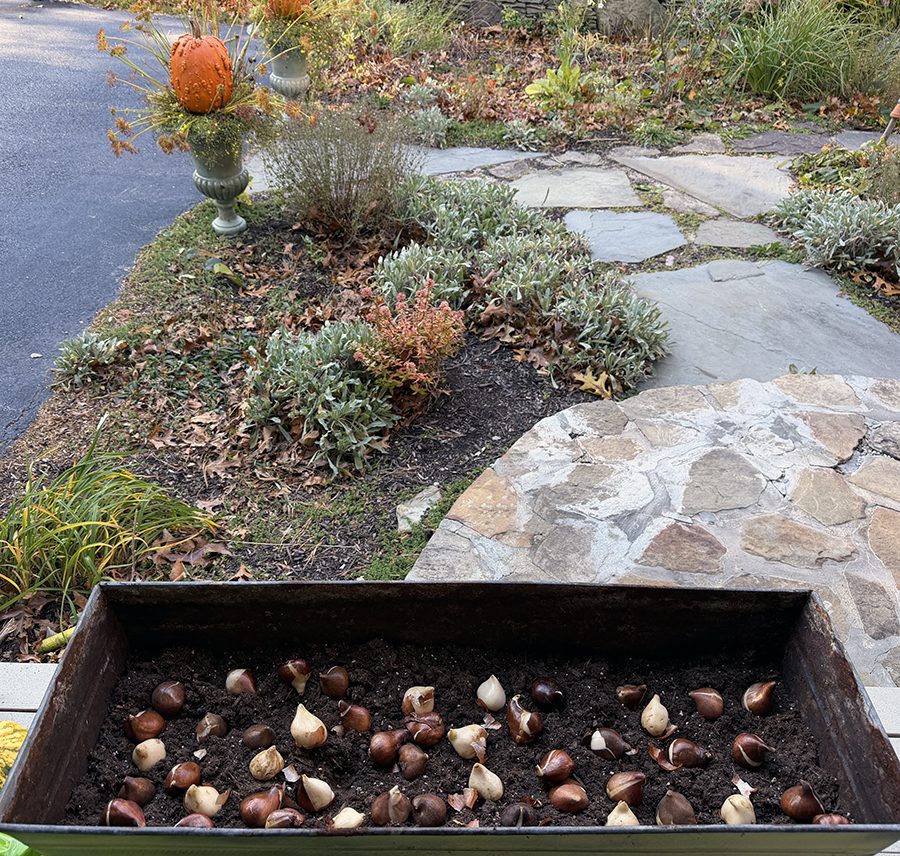
Q. Is it too late to plant tulips and daffodil bulbs?
Q. Actually, this month is the perfect time for planting spring bulbs. I put tulip bulbs in my boxes yesterday, and there have been many years when my husband and I planted daffodils in the garden on Thanksgiving weekend. I can think of no better way to spend “black Friday” then being outside, planting bulbs for spring flowers.
Q. The trees on the side of my yard are filled with round, black spots. What is this, and will it spread to my other plants?
A. This is called “tar spot” for obvious reasons. It is a fungus (Rhytisma acerinum) that only infects maple trees. In fact, it is most commonly seen on Norway maples. The good news is that this fungus is a cosmetic problem only, and doesn’t kill the trees. If you want to try and control it, clean up all of the fallen leaves in the fall and either have them removed from the property or burn them. You can also try spraying the tree with a copper fungicide in the spring when the leaves are coming out. Since Norway maples can be large you’ll need to use a hose-end sprayer.

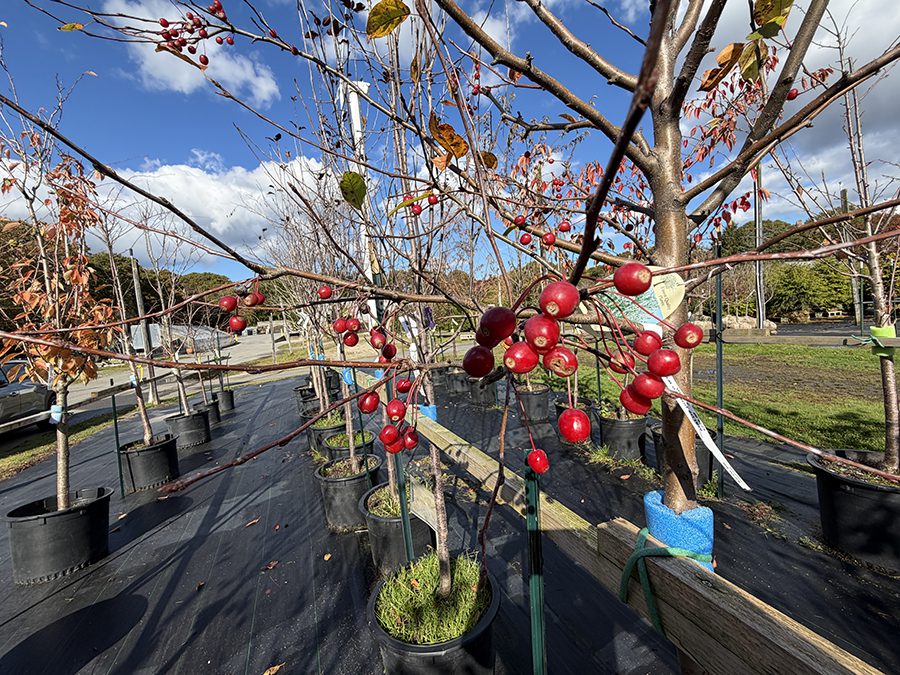
Q. We want to plant a tree when my family is here for Thanksgiving. What might you have that would be on the smaller side and be good for the birds?
A. The Donald Wyman crabapple sounds like a good choice, and at this writing we have a few still in stock. This tree has pink buds in the spring that open into single, white flowers. The fruit is a pretty red in the fall, and will be eaten by the birds later in winter.
Q. Since we can no longer buy burning bush, what can I plant that has similar brilliant red color in the fall?
A. There are many lovely alternatives to the burning bush. The fern leaf full moon maple (Acer japonicum ‘Aconitifolium’) is a good choice if you are looking for a small tree, and our native highbush blueberries also have great fall color.

Subscribe To Our Newsletter
Sign up for our weekly email about sales and events.