Notable Natives: Heath Aster and Butterfly Weed
Notable Natives: Heath Aster and Butterfly Weed
Insider Information: Asclepias tuberosa and Symphyotrichum ericoides in stock
When I was walking through the Perennial section this morning I was delighted to see two plants in stock that many ask about later in the summer. The orange butterfly weed and the white flowering heath aster are in our Natives section, and there are smaller plants available. Both of these perennials are drought tolerant and support bees and butterflies. They are also low-maintenance plants that add color in the summer or fall.
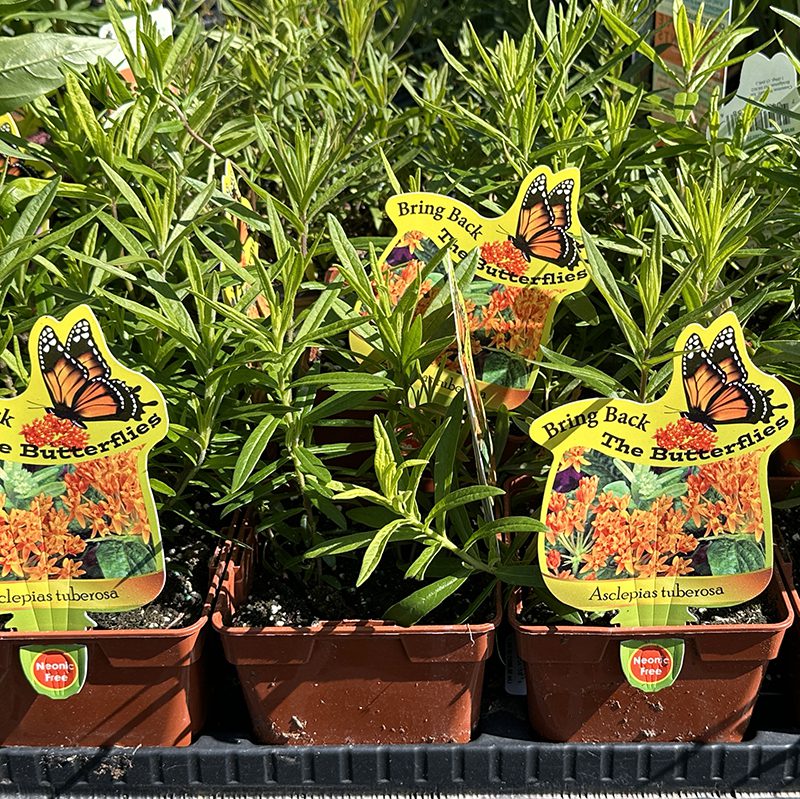
Asclepias tuberosa, Our Native Butterfly Weed

Plant Asclepias tuberosa in full sun and well drained soil. This plant grows 18 to 24 inches tall. It combines well with Stoke’s aster (Stokesia) that flowers around the same time and Sedums that bloom later in the fall. If you let the seed pods develop and open you may see self-seeded plants in your garden in future years. This perennial doesn’t usually need fertilizer and it doesn’t like being hit frequently with automatic irrigation.
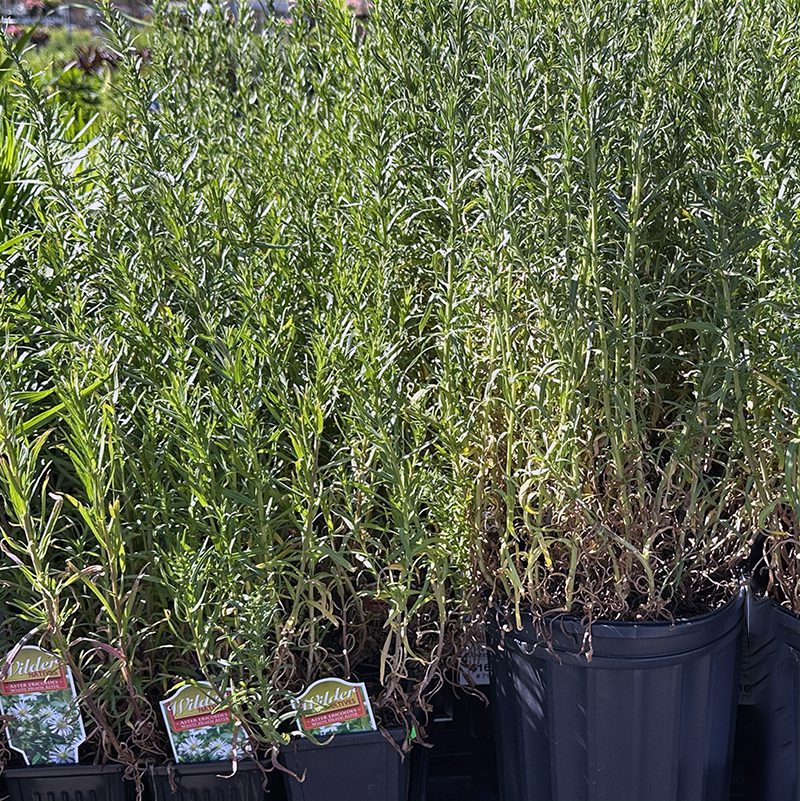
Symphyotrichum ericoides Our Native Heath Aster
There are so many reasons that you might want this plant in your gardens, but let’s start with the practicalities. The heath aster grows well in our sandy soils and is drought tolerant. It also grows well in gravelly areas or in between big stones in rock gardens and walls. The plant makes a good “filler” for bouquets, even when it isn’t in bloom.
Heath aster is useful for gardens that have many early-flowering plants but fewer blooms in the fall. This perennial is a cloud of small, white flowers in September.

Planting Native Perennials
Place native perennials in the natural soil; do not enrich the ground with lots of compost or other organic material. After planting, if you want to spread an inch of compost over the top of the garden, and place an inch or two of mulch over that to prevent weeds, that’s a good way to keep the soil healthy and the plants happy.
Although many native perennials are very drought tolerant, they need watering once a week through their first year if it doesn’t rain. Use a rain gauge so that you know if Mother Nature has delivered at least 3/4 of an inch in a week. If not, water the entire garden area, not just the individual plants by hand. You want to emulate a rainfall that soaks the entire area, not just a small rootball. Avoid automatic settings that water too frequently: a deep soaking less often is better than a little every other day.
Many native perennials will self-seed in gardens. If you want these free plants in the future, do not deadhead your perennials after blooming, and don’t cover the surrounding gardens with mulch too early in the season. Many native perennial seeds depend on sunlight to trigger germination, and some, such as the butterfly weed, need to go though the winter outside as well. For this reason it’s best not to collect the seeds and keep them inside your house all winter. It’s more effective to press the seeds on top of the soil where you wish the plants to grow, and water them right away to help them to settle into that area.


Subscribe To Our Newsletter
Sign up for our weekly email about sales and events.