
Cape Cod Hydrangeas in May
Cape Cod Hydrangeas in May
This will be another great hydrangea year!
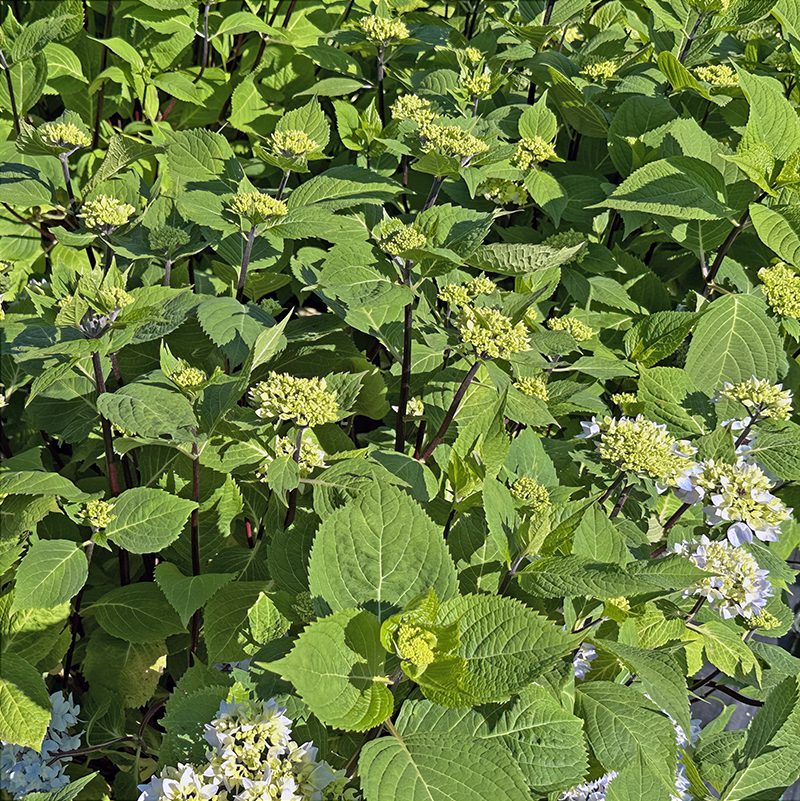
Yes, for the most part our hydrangeas have come though the winter in good shape. That said, here are 8 tips for caring for Cape hydrangeas in May.
1. Prune off any dead, bare stems now.
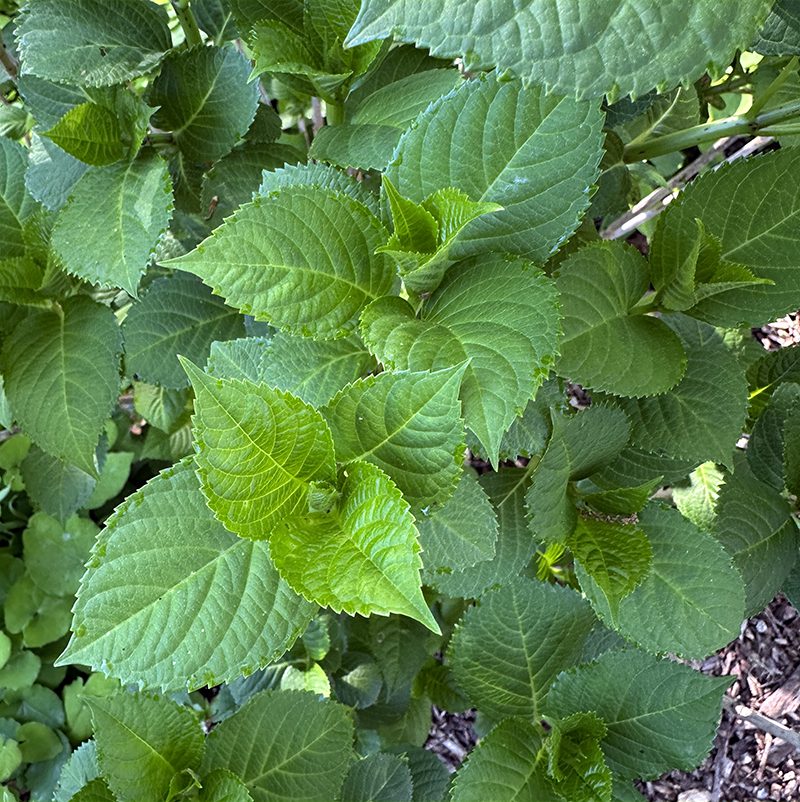
All of the Hydrangeas, be they smooth (H. arborescens), bigleaf (H. macrophylla) or panicle (H. paniculata) have broken dormancy at this point so it’s easy to see where stems have died back. If a cane or branch doesn’t have green, growing leaves on it at this time, you can safely remove those. In fact, it’s good to do so now before the leaves get larger.

2. You can limb-up panicle hydrangeas into a tree form if you wish.
Some panicle hydrangeas grow quite large. If your Limelight or other variety of Hydrangea paniculata is wider than you wish, a good solution is to prune the lower limbs back to the upright trunks, which will create a small, multi-stemmed tree form. Prune up to 1/3 of the plant’s size, from the ground up, the first year. When you do this, don’t cut from the top down, but let the plant grow and form flowers on the canopy.

3. Hydrangeas form flower buds at different times.
Don’t worry if you don’t see flower buds yet on your hydrangeas. Some varieties form flowers earlier than others, and mid-May is still early days. If your bigleaf (blue mophead) hydrangeas were cut down in the fall or spring, however, they will be producing new canes from the ground. Older varieties will not flower early in the season on such new stems, but some of the newer plants in the Let’s Dance™ series will flower earlier. If your Hydrangea macrophylla plants were trimmed back or cut down, make a note not to do the same in future years.

4. You may see a few black buds on your bigleaf and mountain hydrangeas.
Since the bigleaf (Hydrangea macrophylla) and mountain (Hydrangea serrata) types form their stem and flower buds in the late summer, flowering depends on those buds lasting through the winter. In general, most of them growing on Cape Cod made it through the cold season this year. Occasionally, however, people have seen some of those buds that are now black and not opening. This is usually because of our dry summer, dry fall, and dry winter, combined with the cold, desiccating winds in January and February. Even plants that were irrigated last summer have shown signs of drought stress and winter kill this spring, be they Rhododendrons, Hydrangeas or others. On some plants entire stems have died, while on others just the buds formed last summer have been zapped.

5. Can I plant hydrangeas now?
Yes, you can. Since our weather is so warm this year we already have a great supply of new hydrangeas in the nursery. We will continue to bring in new plants from now into July, so if you don’t see the variety you want one week, be sure to check back in the future. At this time of year we typically see new shrub deliveries every week.

6. What is that funny leaf growth on my Annabelle Hydrangeas?
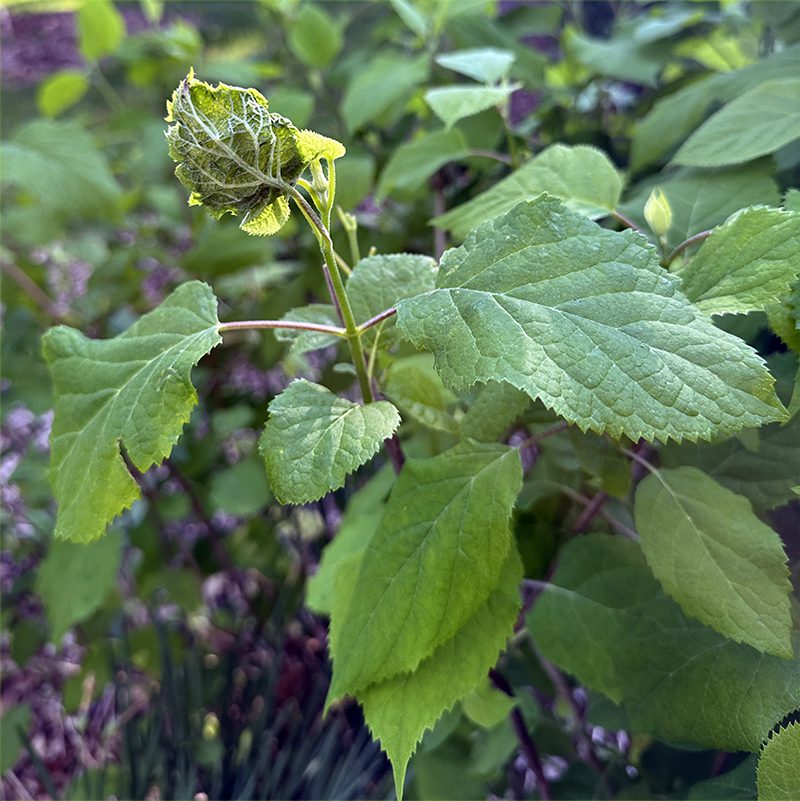
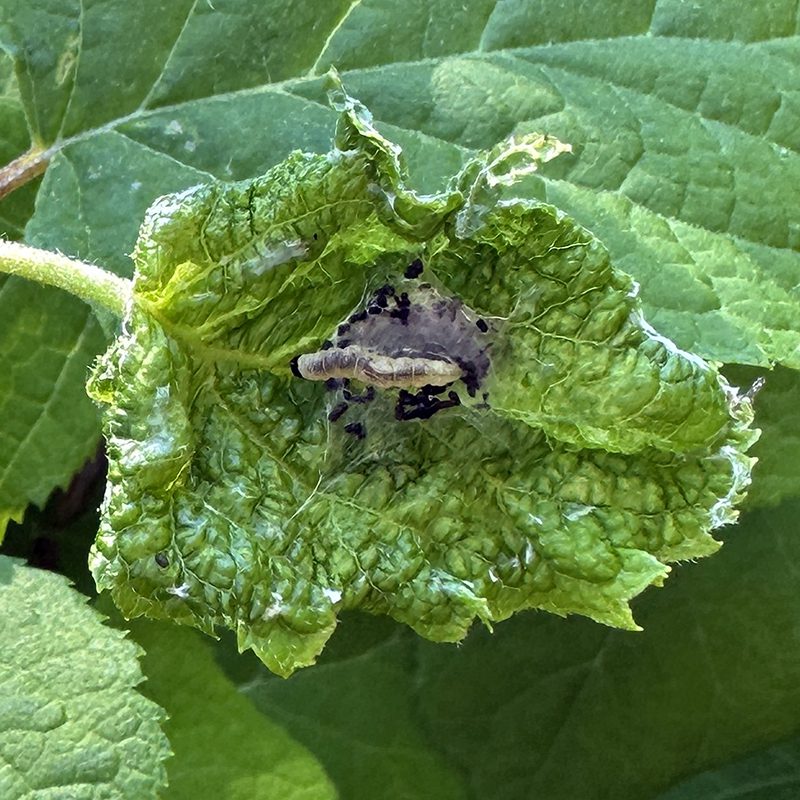
When you see the leaves form small packets on smooth hydrangeas (H. arborescens), that is the hydrangea leaf tier. This moth (Olethreutes ferriferana) lays its eggs on the tip of varieties such as Annabelle and when the larva hatches out it knits the leaves together into little “purses” so that it’s protected as it eats the developing flowers inside. If you see this on your plants you can carefully open the leaves up and smash the larvae or leave them exposed for the birds to find. Alternatively, you can snip off those packets and throw them away. The plants will create more stems with flower buds.
7. What can I plant around my hydrangeas?
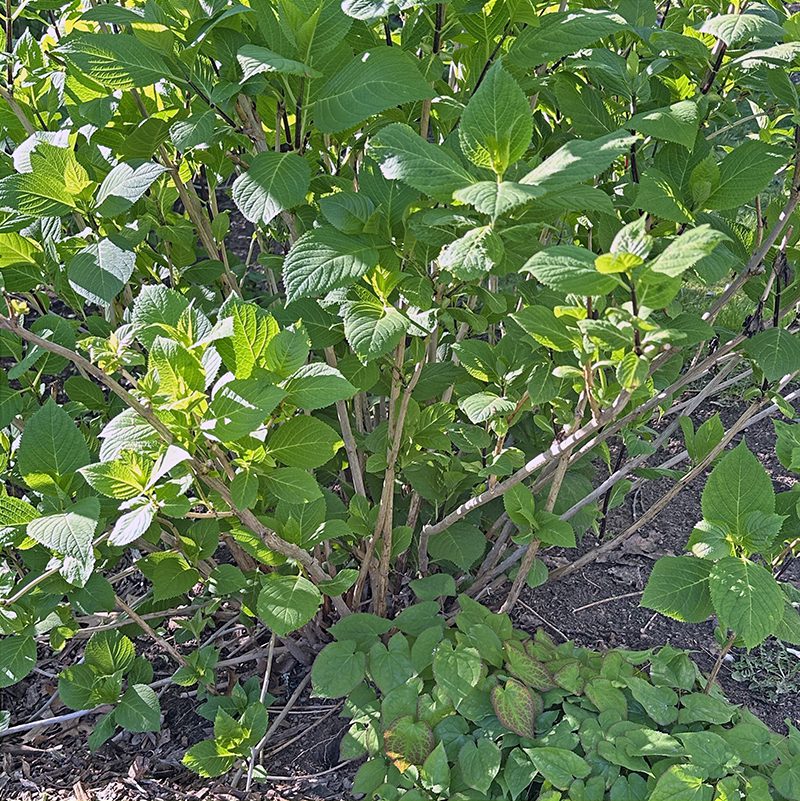
There are several plants that make good “socks and shoes” for hydrangeas. In part-shade, around your bigleaf and mountain varieties, look for Epimedium x versicolor ‘Sulphureum,’ Geranium macrorrhizum ‘Bevan’s Variety,’ or Hakonechloa macra ‘Aureola.’ For planting around panicle types such as Limelight, consider Coreopsis verticillata ‘Zagreb’, Nepeta racemosa ‘Walker’s Low,’ or Geranium × cantabrigiense ‘Biokovo.’
8. Is it too late to fertilize? How can I keep my hydrangeas healthy?
It’s not too late to fertilize. Come into the store to talk with our staff in the “Garden Department” about the best product for your plants. If you haven’t mulched around your plants yet, an inch of compost spread over the surface of the soil, followed by an inch of the mulch of your choice, will go a long way to keeping your hydrangeas happy.
Although we usually have enough rain in the spring for hydrangea growth, this may slow in the summer. If Mother Nature hasn’t delivered over an inch of rain in a week, water these plants well. In very hot weather hydrangeas may need watering twice a week, especially if it’s been windy.
ALERT: The Cape Cod Hydrangea Festival opens the evening of July 10th at HCG and runs through the 20th, Cape-wide.
Subscribe To Our Newsletter
Sign up for our weekly email about sales and events.