
Edible Landscaping: Blueberries
Edible Landscaping: Blueberries
Do you want more native plants, edibles and colorful shrubs in your yard and garden? If so, highbush blueberries (Vaccinium corymbosum) should be on your must-plant list this year. Whether you’re wanting to feed the birds, eat fresh blueberries for breakfast, or add stylish, low-maintenance plants to a shrub border, blueberries belong in your garden or even in pots on your deck and patio.
Here are 10 tips for growing blueberries in the home garden.
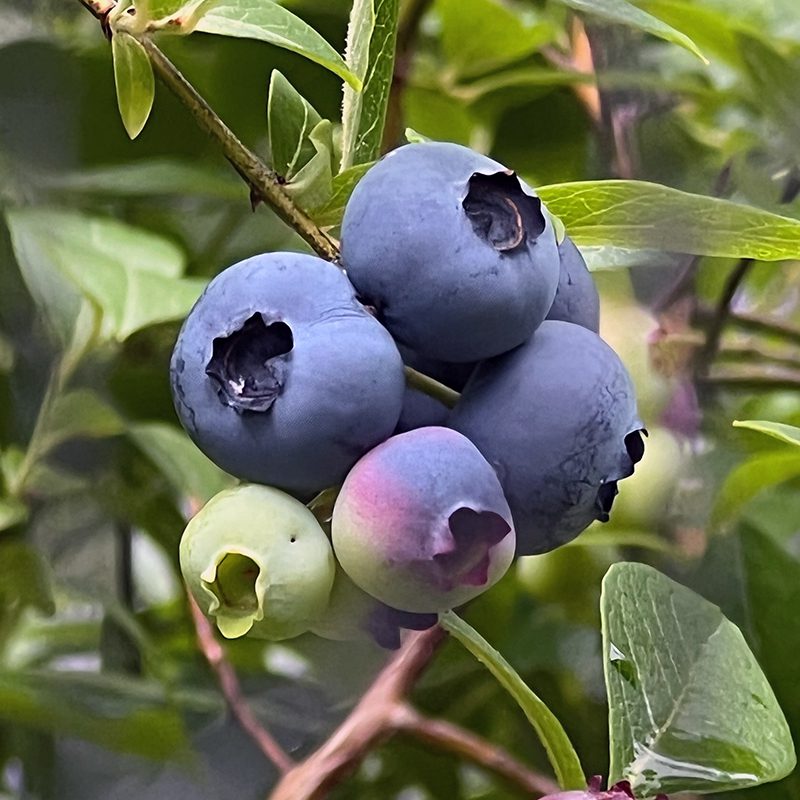
1. Highbush blueberries grow to about 6 feet tall and up to 10 feet wide. Place them accordingly.
2. Grow blueberry bushes in full sun to part shade.
3. Blueberries require acidic soil. Since Cape Cod soils area naturally acidic, you don’t have to worry about this unless the area you’re going to plant in has had routine applications of lime. If you’re starting a new planting of blueberries where a lawn used to be, you might want to buy a soil pH test or have your soil tested at the Cape Cod Cooperative Extension. We have home pH tests in the store. When fertilizing blueberries, use Holly-tone, which is an acidifying fertilizer.
4. For best berry production, plant three or more shrubs in the same area for cross pollination.

5. Improve soil around your blueberry bushes by spreading an inch or two of compost in the spring or fall, from the stems to at least a foot beyond the dripline. You can top that with an inch of mulch for weed control and moisture retention.
6. Blueberries are fairly pest-free plants. However, there is a fruit fly, the spotted wing drosophila, (Drosophila Suzuki) that can infest the berries. For more information about this tiny fruit fly, see an extension site such as this one from the University of Michigan.

7. The best way to prune an established blueberry bush is with the following procedure: Remove one or two of the oldest, fattest stems about 6″ from the ground. This prompts the plant to put up new canes, which will bear more fruit their second season. Next, look for branches that are heading into the center of the plant and remove those so that twigs and stems aren’t crossed and rubbing each other. Finally, prune off any parts of the plant that are weak or damaged. Dead stems can be pruned off any time.
8. Blueberries make a good native alternative to the invasive burning bush. Their foliage typically turns a brilliant red in the fall.

9. There are smaller varieties of blueberry bushes that make an attractive and native alternative to boxwood for bordering gardens. These small types are also appropriate for pots and boxes for decks and patios, and they can be left outside during the winter if the containers aren’t a material that will break.

10. The biggest challenge in raising blueberries is beating the birds to the fruit. Most people who want to harvest their berries instead of feeding the wildlife end up building a cage or structure to hold netting over the plants. It doesn’t work well to just drape netting over the shrubs because birds can eat the fruit right though the netting, and they can get caught in the fabric.
Subscribe To Our Newsletter
Sign up for our weekly email about sales and events.