Cape Cod’s Native Roses
Cape Cod’s Native Roses
How can you tell if you have a native rose planted on your property?
There are quite a few telltale signs! First, check your plant for pollinators. Do you see a constant influx of bees and butterflies? Have you seen hummingbirds hovering around?
Second, do you observe birds eating and nesting year-round, without having to keep up with a bird feeder?
Next, do you brag about how easy your rose is to grow?
Lastly, do you use fresh rose hips from your garden to make tea or jam?
If you answered “yes” to these questions, then you are playing your part in supporting the balance of the Cape Cod ecosystem and living harmoniously with nature as the proud owner of a native rose (or many!). If you answered “no” to these questions, read ahead to find out if adding native roses to your landscape is right for you!
There are three roses native to Cape Cod, which are actually easy to identify, as they are distinct from hybrid roses. Fragrant and long-lasting blooms are pink with yellow centers, yielding vibrant red and orange edible berries (rose hips) in late summer, and burgundy fall foliage that adds interest to your landscape. Depending on your growing conditions, you may choose Carolina rose, Virginia rose, or Swamp rose.
Benefits of native roses:
- They are disease resistant and have more longevity
Many cultivated (hybrid) rose varieties are grafted, meaning that the roots of the plant are of a vigorous and more adaptable variety, while the top of the plant has been chosen for desirable features such as growth speed and bloom color, size, and scent. The grafted portion of these plants are more susceptible to environmental stressors that lead to a shorter lifespan. For many, beauty trumps the frustrations. For others who want a charming rose without the identity crisis, natives are naturally hardy and less susceptible to common diseases and foliar problems compared to hybrid roses.
- They are low maintenance and drought tolerant
Native roses form natural (and prickly) barriers and are often used as hedging and to naturalize an area. They require little watering or soil amendment once established and don’t need to be pruned. Fertilizing your native rose is not necessary.
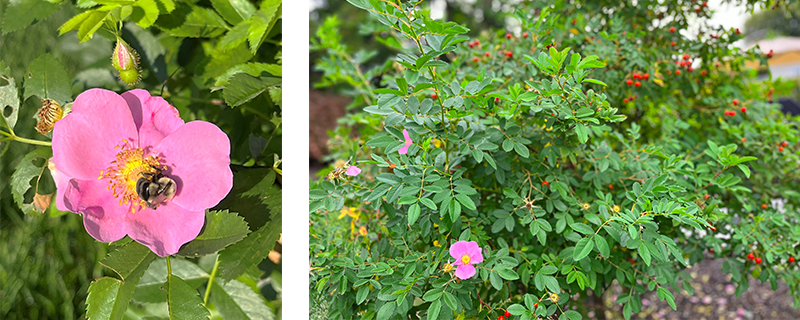
The Virginia rose (rosa virginiana) is listed in the Mass.gov list of plants for coastal landscaping. This plant thrives along beach walkways, preferring sandy soil and salty air.
- They are conservation approved
Plant native roses for a restoration project or as a foreground on lakeside properties. Rosa palustris, or Swamp rose, enjoys damp conditions and would be the perfect choice!

Capecodnativeplants.org
- They provide year-round habitat for nesting birds
The dense thickets formed by native roses are a safe and reliable place for birds to nest. Many songbirds may call these plants home including sparrows, robins, cardinals, catbirds, and warblers.
- They provide food for both birds and you!
Rose hips make a lovely tea or jelly and support birds in the winter months when food is scarce.
- They are great for controlling soil erosion
- Both rabbits and deer steer clear of these plants
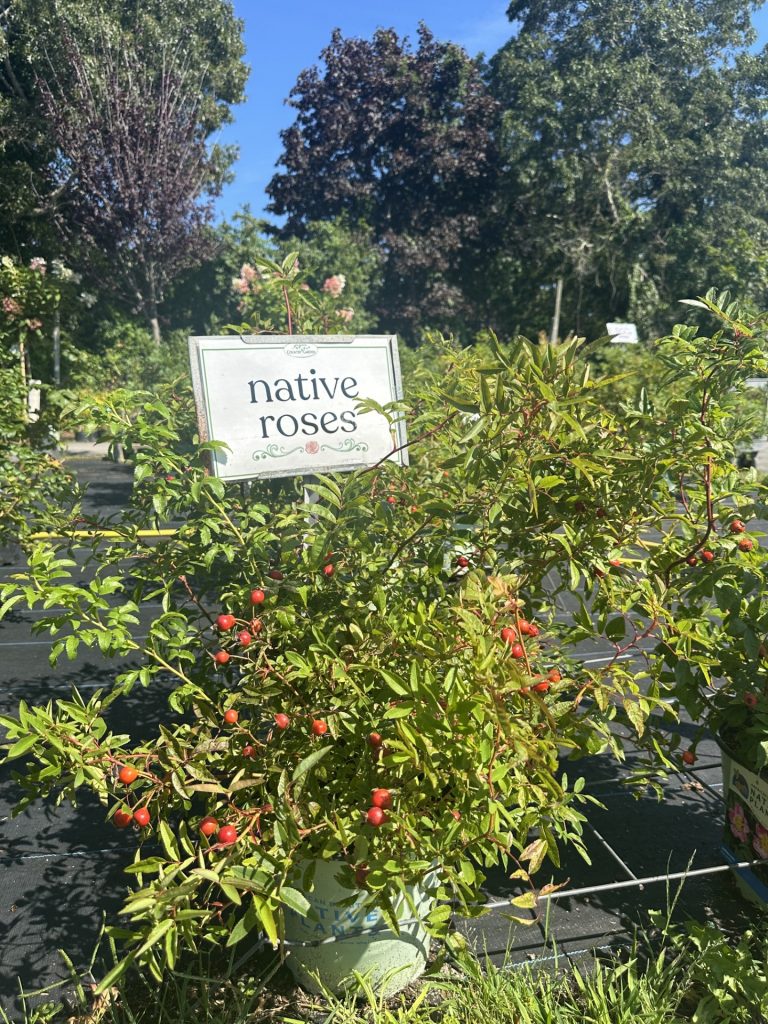
Rosa carolina, or Pasture rose, pictured in our Native Rose section is covered in rose hips! This rose grows lower than the other two varieties and has a moderate tolerance for salt spray, making it the most appropriate option for properties not right on the water.
Choosing native plants helps preserve history and culture, reinforces sense of place, and supports wildlife as natural habitats continue to decline. You can pick up any of these plants now for 50% off while supplies last!
Subscribe To Our Newsletter
Sign up for our weekly email about sales and events.