
Enjoying Your Holiday Flowering Cactus
Enjoying Your Holiday Flowering Cactus
For much of the year you can find Schlumbergera plants flowering in our greenhouse. From early November through the winter, several shades of the plants we call “Thanksgiving Cactus” or “Christmas Cactus” are available. These plants are easy to grow and bring back into flower from year to year if you remember a few key points about their care.
These are tropical plants, not a true desert cactus.
The common name of “cactus” sometimes causes people to treat these plants like the drought-tolerant, full sun loving cacti that thrive in the desert. Schlumbergera, however, are epiphytes (meaning they grow on trees) from Brazilian rainforests, so they need more humidity and less intense sun than typical cacti. A bright location is fine, and they thrive when put out into dappled shade for the summer.
How to tell if you have Christmas cactus or Thanksgiving cactus.
Most of these plants sold today are actually Thanksgiving cactus (Schlumbergera truncata) because they are more robust growers so easier to ship without damage. They are also available in a wide range of colors, so growers can offer peach, yellow and orange shades in early November, and reds or pinks at Christmas time. Because a grower can manipulate hours of daylight and temperatures, they can easily be brought into flowering anytime from fall through spring.
Thanksgiving cactus (Schlumbergera truncata) has jagged points on the edges of their leaves. Christmas cactus (Schlumbergera x buckleyi) have edges that are smoother.

Great drainage is important for all of these plants.
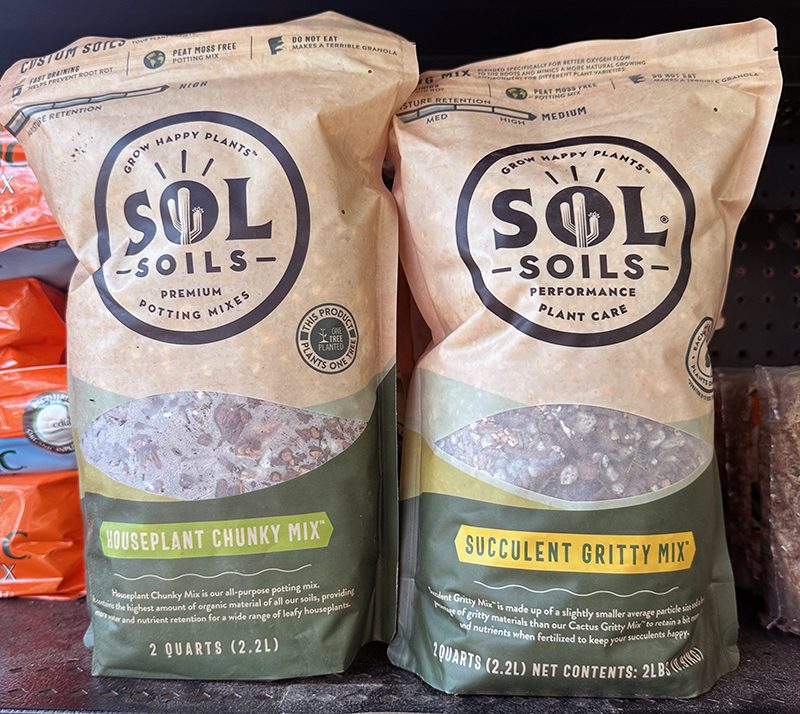
Remembering that these are plants that grow in trees gives you good information about how to pot them and grow them over time. Since all Schlumbergera can last for years, growing large and heavy, it’s best to transplant them into a clay pot after they flower for the first time. Clay pots are less likely to blow over if placed outdoors for the summer. Use a chunky plant mix, or combine a cactus growing mix with orchard bark.
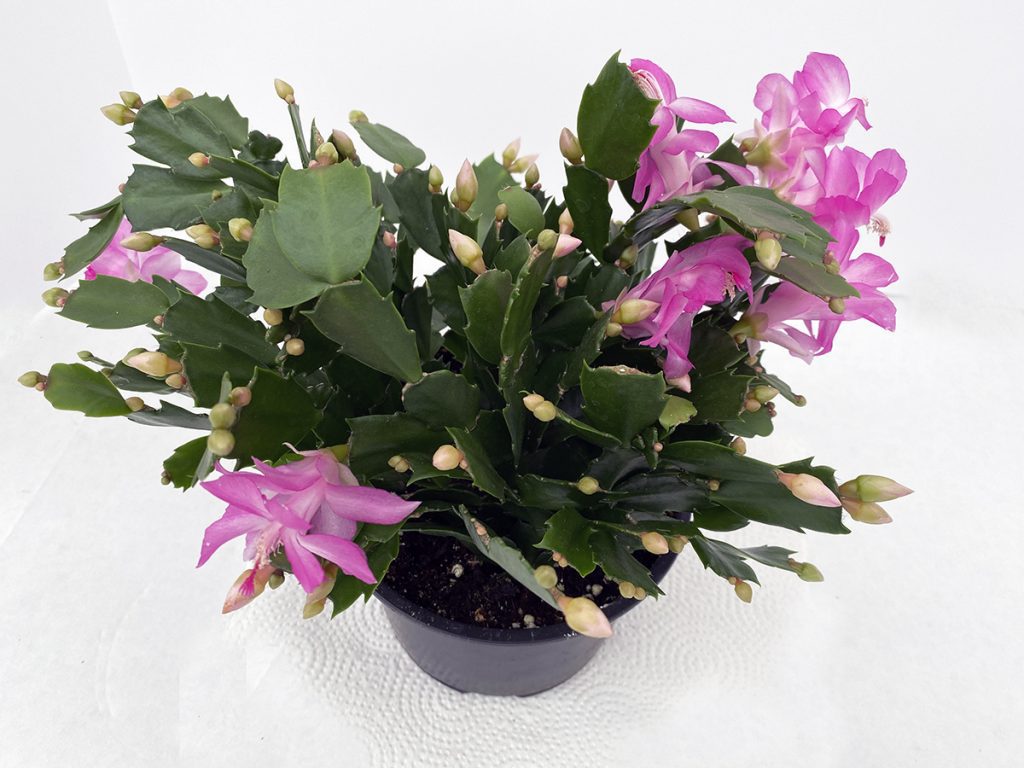
Fertilize plants in the spring and early summer.
Whether you put your plants outdoors in dappled shade, or keep them indoors, fertilize them in the spring and early summer when they are actively growing. Use the fertilizer of your choice according to directions, and stop fertilizing at the end of July.
Repot to keep the growing mix draining well.
Since these plants are so long-lived, and they don’t need to be repotted because their pots are too small, many people don’t think to refresh the growing mix every four or five years. Potting soils are mostly organic matter such as bark, compost and peat, and these break down over time resulting in pots that don’t drain well. Even plants that are only watered once a week can get root or crown rot in such conditions. You can remove a plant from the pot, clean the pot and pull much of the old growing media off of the roots. Then replace in the same pot with fresh potting mix.
Bringing them into bloom again.
On Cape Cod, the easiest way to bring such plants back into flower every year is to put them outside for the summer and leave them there through September. We seldom have a frost in September, and the shortening days and cooler nights give these plants the signal that it’s time to bloom. By bringing your plants back indoors in early October, you are likely to find that they will bud up quickly on their own.
If your plants haven’t been outside, you can get them to flower by putting them in a room that is cool (around 60°) at night and where no artificial lights come on after sundown. Once the buds form in response to those conditions, the plant can be placed in a more prominent location.
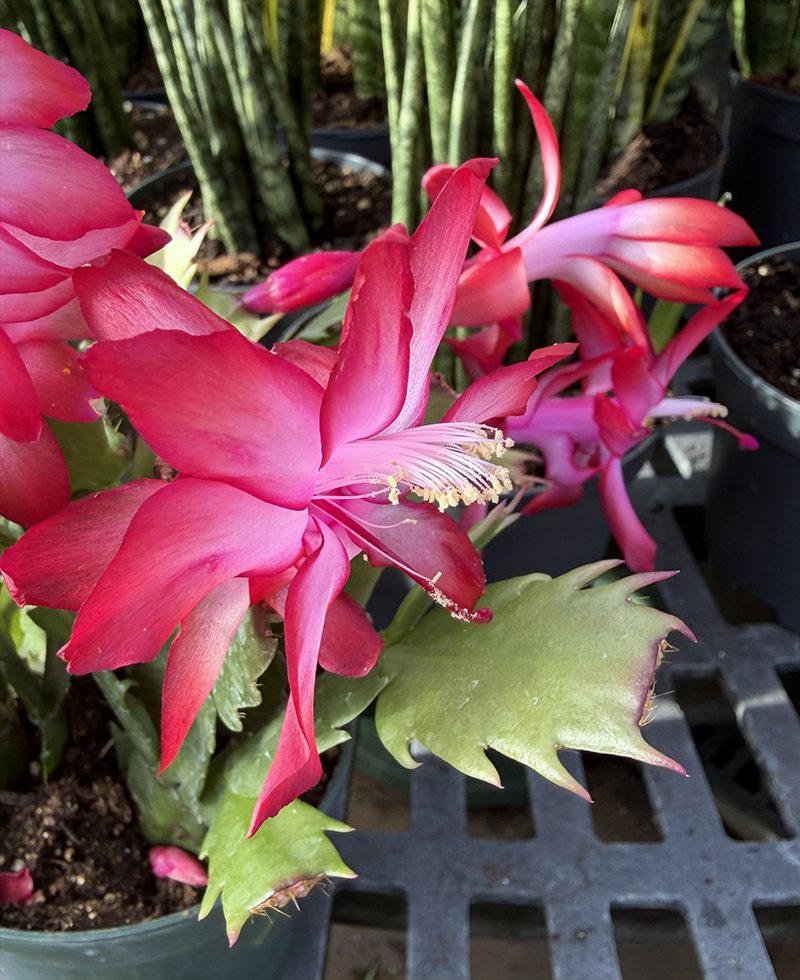
Schlumbergera truncata often flower twice.
Another reason that it’s easier to find Schlumbergera truncata, the Thanksgiving cactus, is that many of them flower twice. Give your plant the longer nights after it flowers, and frequently you’ll see buds again in March.

Subscribe To Our Newsletter
Sign up for our weekly email about sales and events.