Hyannis Country Garden Blog
Talking Plants, Products, Landscaping, Seasonal Situations and More…Let's Keep In Touch!
  white_hardy_hibiscus

What Every New Vegetable Gardener Needs To Know

In the past week several customers have asked a question and then concluded by saying, “I’m planting my first vegetable garden.” We want these customers to be successful with their veggie garden, so we’re offering these words of advice.

  1. If you’re making raised beds, don’t put landscape fabric or plastic on the bottom. Till up (or turn over with a shovel) the native
  2. Till up your soil before planting and work in compost or composted manure along with an organic fertilizer. The loosening of the soil is important because this allows the roots to spread into the area quickly.
  3. soil first and put the mix of loam and compost on top of that. If the raised bed is going on top of lawn you can leave the grass and turn it under.
  4. Water young plants every other day if it’s sunny but once they start to grow taper off the watering so that you’re doing it for a longer time less often. Most vegetable gardens do fine with a deep soaking (use a sprinkler or soaker hose, not hand watering) every five to seven days depending on the temperatures.
  5. Stay on top of the weeds. Mulch helps prevent their germination so get mulch down early for less maintenance. Small weeds are easily controlled with a hoe but the larger they grow the more time it will take to remove them from your garden. Weeds take resources like nutrients and water away from your vegetable plants
  6. Feed plants with an organic fertilizer at twice in the summer. Some of our employees use Neptune’s Harvest Fish and Seaweed Emulsion, and others mix up Organic Plant Magic.
  7. In this area be prepared for the following pests and problems.

Holes in broccoli, cabbage or Brussels sprouts leaves: cabbage moth larvae. Mix spinosad (Captain Jack’s Deadbug Brew) with some Turbo (a spreader-sticker that helps the spinosad stick on the plant) and spray the plants every other week as they grow.

Dust newly planted plants or small seedlings with diatomaceous earth. This prevents slug and earwig damage when the plants are small and tender. Slugs can also be controlled with Sluggo Plus.

Spray all squash and cucumbers with Actinovate or Green Cure once a week starting when they are small. This helps delay powdery mildew, which most squash and cucumbers get in on the Cape.

Watch for signs of early blight on tomatoes. The lower leaves get spots and turn yellow. Spraying weekly with Actinovate from the time you plant them on can delay or prevent the disease. Once you see the signs of early blight switch to Copper fungicide.

Use bird netting to keep crows away from your tomatoes and either netting or “Harvest Guard” floating row cover to keep     bunnies from eating your plants.

8. Inspect your plants frequently and bring any questions into us right away. Most problems are easier to solve if the situation is   diagnosed and dealt with early. We want to help you be successful so that you’ll have lots of fresh veggies to eat!

Mugwort: the weed that looks like chrysanthemum

“It this a perennial or is it a weed?”

Customers frequently come into our store in Hyannis with bunches of foliage and ask that question. Early in the season it’s sometimes hard to tell which plants are desirable perennials and which ones are unwanted weeds. One of the plants that frequently fools gardeners is mugwort (Artemisia vulgaris), a persistent and invasive weed with foliage that looks like mums. If you have mugwort, you’ll want to dig it out as quickly as possible and continue the prompt removal of returning shoots. Here is a pictorial to help you know if mugwort has invaded your garden.

There are three different species of plants in this small group and they are very similar. It's no wonder that gardeners get confused!

This is a leaf from a perennial chrysanthemum (aka Dendranthema) The image on the left shows the underside of the leaves, and the image on the right is right-side-up.

This is mugwort foliage. Notice how the leaves are more pointed. One easy way to tell mugwort from other perennials and weeds is by looking at the underside of the leaf: the images on the left and the bottom right corner are of the underside, which is more silver or gray in color. The greener leaves are the top side of the foliage.

Here is a plant that's similar to mugwort that's often found in perennial gardens. This is feverfew (Tanacetum parthenium), a self-seeding biennial that has little white daisy flowers in June and early July. Many gardeners leave some young plants where they want them but pull the unwanted and excess seedlings out. This is a plant that requires a gardener's controlling hand!

The Danger of Ivy in Trees

One of the problems of using ivy as a ground cover is that it isn’t content to just cover the ground. Given a few years it will cover the ground, grow over perennials and shrubs, swallow buildings and climb up the trees. English and Baltic ivy wants to take over the world.

Although many people realize that they need to pull ivy off of buildings and beat it back from perennial gardens, they often allow it to climb up their trees. Although this might seem harmless enough, ivy can ultimately put trees in danger. Once in the canopy ivy makes a tree a great deal heavier than it would normally be. This added weight means that an ivy filled tree is more likely to bend or break in high winds or heavy wet snow. So an ivy covered tree is in danger during storms.

If you have an ivy ground cover, keep clipping it when it tries to climb your trees. If the ivy is already growing up a tree, clip the stems of the ivy down near the base of the tree so that the top will die and eventually fall off.

Ivy will not only climb well into the tree's canopy, but as it grows vertically it develops larger leaves making this vine even heavier on top.

Ivy will not only climb well into the tree's canopy, but as it grows vertically it develops larger leaves making this vine even heavier on top.

Here is an oak tree that bent right over from the combined weight of ivy and heavy, wet snow.

Landscape Vegetables: You Can Grow That!

It used to be that a vegetable garden was a rectangular patch of soil in the backyard, often fenced to keep out the rabbits. Next came the popularity of the raised bed garden, and many people decided to make their rectangles smaller and raise them off the ground.  Although some still choose these styles, the range of vegetable garden designs has broken out of the backyard box!

Since growing veggies depends on full sun, and that direct sunshine isn’t always in the backyard, many now choose to grow their edibles in other locations. Here are just a few suggestions for places and ways to grow food.

1. Containers: Large pots and boxes can be placed where the sun is, whether that’s on a deck, patio, side yard or driveway. Use large containers and consider Earth Box planters that have a watering reservoir for even levels of soil moisture. Vegetable containers can be grouped or placed throughout existing gardens. Add pots of flowers around your boxes of tomatoes for a colorful collection.

2. Expand Foundation Beds: If the sunniest place you have is in the front of your house one method of growing edibles is to expand your foundation bed by about three feet. Dig up the lawn, add composted manure and turn the soil over to loosen it. Add a birdbath to dress it up and plant away! Most vegetables are quite ornamental.

3. Don’t Forget The Sides: Most side yards become passageways from the front to the backyard, but for some this is a sunny area. Long beds, raised or not, can be placed along the sides of houses with a path that runs through them.

4. Down By The Street: It’s a traditional Cape Cod look to have a small fence near the road that is planted with shrub or rambling roses. Just behind that fence you could plant a vegetable garden! Leave the roses in place is you wish, and expand the bed to three or four feet wide. Amend the soil with compost or composted manure, plant your herbs and veggies and you’ll soon be harvesting dinner!

This gardener raised the bed with large, ornamental rocks and created a vegetable garden that is modern, ornamental and a great deal of fun!

Dwarf Sweet Box

Got shade? Have we got a plant for you! Dwarf sweet box (Sarcococca hookeriana var. humilis) grows to about 18″ high, is dark green and is as handsome as its botanical name is long.

How many plants do you know of that look as good during and after a cold winter as they did in August? How many ground covers do you know that out compete the weeds and spread steadily but don’t become invasive problems? Well here’s a plant that meets both those criteria. It’s low growing, dark green, weed-smothering, and handsome. It’s also fragrant when it blooms in the early spring.

Plant sweet box (which is not the same as boxwood) as a low-maintenance shrub around taller shrubs. Use it in shady foundation plantings or around patios. Once you get acquainted with this plant you’ll wonder why it hasn’t crossed your path until now.

Sarcococca hookeriana var. humilis is a mouthful, so just remember "dwarf sweet box."

Planning Your Herb Garden

Are you interested in edible landscaping? Do you want to add healthy, low-calorie flavors to your cooking? Would you love to be uplifted by the fragrances and tastes of summer? If so, you need an herb garden and it’s the perfect time to plan one. Here are some tips for planting herb gardens:

  • Choose an area with at least five hours of sun. Try to locate an herb garden as close to the kitchen door as possible so that it will be convenient to dash out for a sprig of this or a snip of that.
  • Most herbs appreciate well drained soil so don’t amend this bed with any peat moss. If your soil is very sandy or rocky a bit of compost is a fine soil amendment, but herbs actually have more flavor when grown in soil that is less-fertile.
  • Plant perennial herbs such as sage, thyme, oregano, and chives early in the spring. Parsley, cilantro, and rosemary can be planted early in the season as well.
  • Wait to plant basil and lemon verbena until the end of May on Cape Cod. Basil, in particular, is more cold sensitive.
  • Plan on growing mint in a large container instead of planting directly in your herb garden…mint spreads aggressively and is difficult to edit out once it has taken root. Oregano is also a plant that is prone to rapid spreading so is best grown in a container in small gardens.
  • Grow bay trees in a container so that you can bring them indoors for the winter. Sometimes rosemary over-winters on Cape Cod but often it doesn’t; you can either bring rosemary inside for the winter or plant it as an annual and be willing to be delighted if it lives through the winter.
  • Water newly planted herbs deeply about two times a week for the first three to four weeks…then ease off and water them deeply once a week if it doesn’t rain. Most herbs are quite drought tolerant once they’re established.
  • In new herb gardens lettuce makes a good filler in between herb plants while they are getting established. Plant your herbs at least 2 feet apart and scatter lettuce seeds in between. The lettuce plants will be pretty, fill the area, choke out weeds and you can eat it! Once the first crop is harvested you can sow more lettuce seeds all summer.
  • If you have room you can add flowers to your herb garden for color: those annuals that are edible such as pansies, marigolds and calendula are especially appropriate.
  • Herbs grow pretty quickly so don't hesitate to start small!

    Herb gardens can be formally laid out or informally planted. Choose a style that suits your existing landscape and home.

When Can I Plant?

It’s a common question at this time of year. When is the best time to plant? The answer depends on what you are planting. If you’re wanting to put in new shrubs and trees you can plant these as soon as they arrive in the nursery as long as the plants you’re buying look similar to what is currently in the landscape. It might be problematic, for example, if you see roses for sale that are in full flower while the ones in local landscapes are just breaking dormancy. In this case you could buy the plants you want but delay planting for two to three weeks so that if the temperatures are predicted to go near freezing you can pull those plants into a shed or garage for protection. If the plants in the garden center look similar to those in area yards and gardens, however, you can place these in the ground.

If the annuals and vegetable at your garden center are in a greenhouse instead of being outdoors, there is a reason that they are protected. In most cases you’ll want to wait until temperatures warm before planting these outside.  At Hyannis Country Garden we advise people to wait for planting most summer annuals and veggies until the night temperatures are reliably above 50 degrees. As you walk around the garden center you’ll see which plants we have outside and which selections are still being protected: use this as a guide.

Wait until later in May to plant seeds for summer veggies such as summer squash and beans. Plant annual seeds such as nasturtiums and zinnias at the end of May as well. You can plant peas and lettuce seeds in April, however, and Swiss chard as well.

When in doubt, call your local independent garden center for advice. We not only want you to be successful, but we’re plant people too.

All of these plants in our nursey look similar to those in the landscape at this time of year. That's your signal that these are fine to put in the ground now.

A Sunny Day? You Can Grow That!

Every day is filled with sunshine if you grow Sunflowers. This annual plant, Helianthus annuus, makes a cheerful addition to any flower bed, vegetable plot, or bird garden. Best of all, they are easy to grow! Don’t look for annual sunflowers in the garden center, however. These plants are best planted from seed.

Put sunflower seed in the ground in mid to late May on Cape Cod once all danger of frost is past. If you plant another group of seeds a month after the first you’ll extend your sunflower blooming season. Poke the seeds down about an inch and plant them at least a foot apart. Water the ground well after planting so that the squirrels and crows won’t know you’ve put their favorite food in the ground.

Watch the area where you’ve planted carefully. Young sunflower sprouts are a favorite food of slugs, but if you dust these shoots and the area around them with diatomaceous earth immediately when they appear you’ll prevent this slug damage.

Water sunflower plants deeply but less often – a good deep soaking with a sprinkler every four to seven days will help the plants to have strong, deep root systems. Cut sunflower blooms when they have just fully opened, slicing the stems at an angle and placing them in water right away.

A Walk On The Sunny Side? You Can Grow That!

Caring For Your Holiday Gift Hydrangea

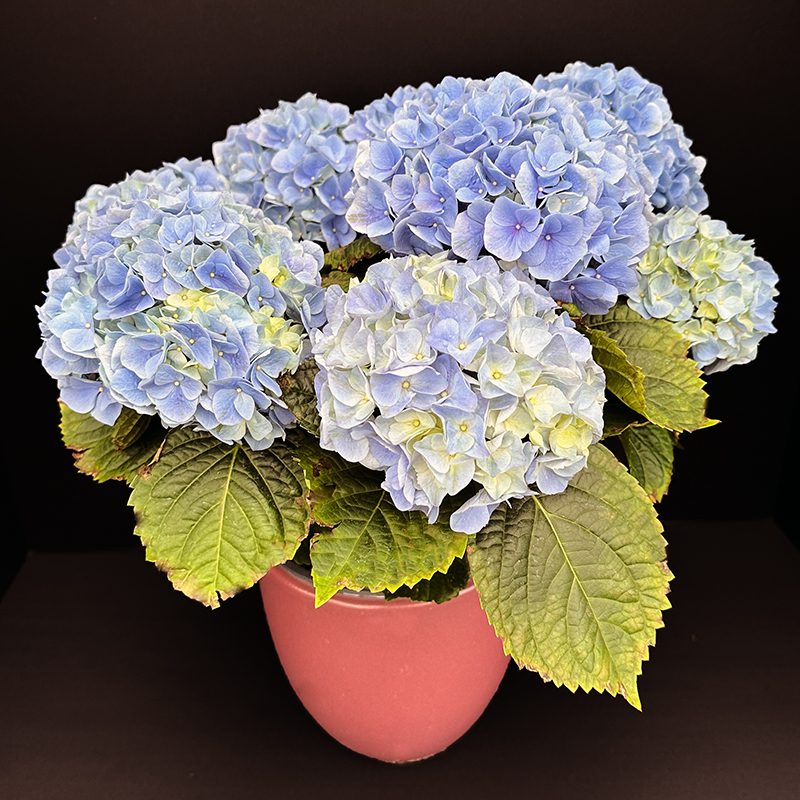
You say that someone gave you a greenhouse grown Hydrangea as a gift? These are popular spring gifts for Easter, Mother’s Day and other occasions, and they are beautiful plants. But you’re probably thinking “Can I plant this Hydrangea outside and will it live and bloom again?” or “When can I plant it outside and how do I take care of it in the meantime?” Good questions, and here is the information you need to know:

1. If you live in a warm zone 6 and above you can plant these Hydrangeas in your yard and they will bloom every summer. They will most likely not make more flowers the first summer that they’re in your garden, however, so give them this time to get established and spread their roots. If you live where the temperatures go down to zero or below in the winter, however, your hydrangea might live but it probably won’t flower for you. When the temperatures go below 5 degrees fahrenheit the germ of the flower bud gets zapped by the cold and they leaf out but don’t bloom.

2. You can plant the Hydrangea outside at the time when it’s safe to plant out your summer annuals like marigolds and geraniums. A good rule of thumb is to wait until the temperatures at night are reliably above 50 degrees. In the meantime, keep your Hydrangea in an eastern or western facing window indoors.

3. The main way people kill a greenhouse grown Hydrangea is by letting it get too dry. In general, you have to take the “hydra” part of their name seriously, and these plants can dry up quickly indoors! One way to help it not to wilt when you’re away from home or have forgotten about watering is to plant it in a larger pot right away. If you transplant your Hydrangea into a pot that is at least two inches larger on all sides and two inches taller, that will provide a good layer of moist soil around the roots and the plant won’t wilt so quickly. Be sure to get the potting soil wet before you put it and the plant in the new pot, and don’t cover the drainage hole or put any rocks or shards in the bottom of the pot.

4. Water the plant well when you do water, and then wait until the top of the soil starts to dry before you water it again. Don’t leave the pot standing in a saucer full of water for hours or days…these plants like it moist but not swampy!

5. Don’t fertilize when the plant is in the house…it was well fed at the grower. When you plant it outside you can scatter some organic fertilizer such as Flower-Tone in the area where you are planting. Be sure to mulch with an inch or two of either compost or bark mulch after the plant is in place.

6. Water the newly planted shrub deeply at least once a week in average weather and twice a week in hot weather. The ideal location to plant a hydrangea is where it will get 3 or 4 hours of morning sun but be shaded in the afternoon.

Enjoy!

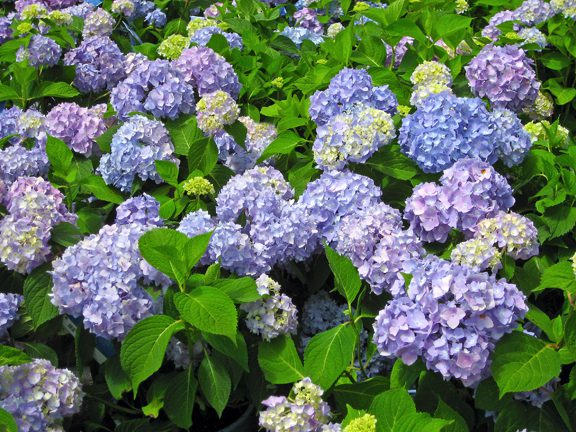
If you have acidic soil your hydrangea will stay blue or turn blue. If you have alkaline soil the flowers will be pink no matter what color they were when you got the plant. White flowers stay white and will never turn blue.


Impatiens Downy Mildew Update – Spring 2013

Since most of Cape Cod was hit by Impatiens Downy Mildew in 2012, those who love this annual are asking, “Now what?”

Here’s what we know about this problem:

  • We know that IDM is an oomycete, or water mold. The spores move and spread quickly in cool, wet conditions. All varieties and hybrids of Impatiens walleriana, the common impatiens, are susceptible.
  • You might have seen the following symptoms on your plants last year. Your Impatiens might have sulked, failing to grow. Leaves might have yellowed and curled under, eventually dropping off so you were left with groups of plants that look as if the leaves had been eaten. Some people noticed this early in the summer, and others didn’t see these symptoms until the fall. This presentation of the problem corresponds with periods of cool, damp weather; those who planted early when the conditions were constantly moist had early onset of the disease, while those who planted later saw the development in the fall once the temperatures fell and regular rain resumed.
  • Studies show that plants can be infected with the disease and not show many symptoms until damp, cool weather returns. We also know that impatiens which are nutrient-deficient show signs of the disease before those that are well fertilized.
  • Spores of IDM can not only reside in the soil but are also wind born from other infected plants, so replacing the soil in gardens, pots, or window boxes won’t necessarily prevent infections. Spores also overwinter in colder temperatures than we have on Cape Cod, so it’s likely that this problem will be with us for a while.
  • Those who want to try planting impatiens in spite of the risk of downy mildew should plan to delay planting until warmer weather. On Cape Cod the weather often warms and becomes drier around the second week of June, but this varies tremendously from year to year so let the current forecasts be your guide.
  • Proper irrigation techniques should also be practiced. Don’t water impatiens beds too frequently. Never water in the evenings or overnight. Automatic irrigation that comes on daily or every other day before daybreak is practically a prescription for downy mildew since it is keeping the plants damp at the coolest part of the day. Instead, set systems to water deeply every four or five days in the morning.
  • Fungicides can be applied to slow the progression of the disease but the products that are effective against IDM need to be applied by a professional who has proper certification. Homeowners can try using Actinovate (active ingredient Streptomyces lydicus) first as a soil drench and later applied to plants as directed. Combined with later planting, proper irrigation, and repeat applications according to directions this might suppress IDM for the summer. There is no “silver bullet” cure at this point, however.
  • The only way to be totally free of this disease is not to plant varieties of Impatiens walleriana. Other impatiens such as New Guinea and Sunpatiens are not susceptible and can still be planted. There are also many colorful alternatives that can be used in shade and part-shade gardens and you can download a pdf list of such plants here and on our resources page.


Coleus Kingswood Torch is a colorful plant for shade and doesn't need deadheading.

Look how well this Whopper begonia displays the colorful flowers.